

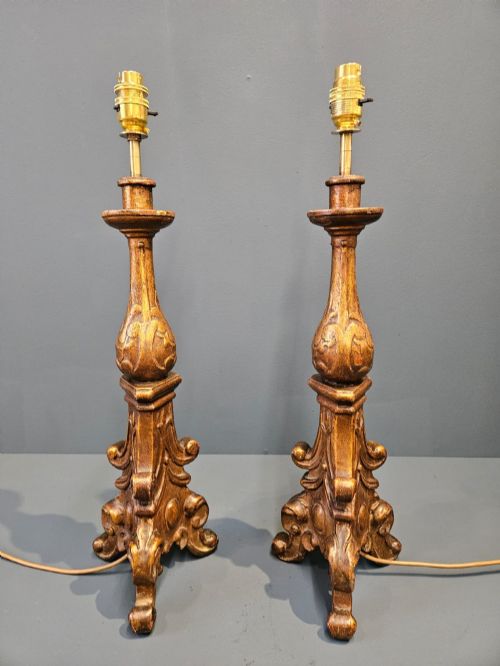


Baroque Style Candlestick Lamps
Baroque style candlestick lamps bring dramatic sculptural form and rich metallic or gilded surfaces into a room.
Baroque Style Candlestick Lamps
When you search for baroque style candlestick lamps, you encounter lighting converted from traditional candle holders or built large from timber and bronze. These pieces draw on 18th century forms as well as Victorian and early 20th century revivals.
You meet both tall standard floor lamps and shorter table lamps on this page. The designs frequently incorporate Italian Florentine, Italianate, and English Baroque aesthetic traditions.
Most examples rely on heavy wooden or metallic cores shaped with classical turns, acanthus motifs, and tripartite bases. Giltwood, carved timber, brass, and ormolu dominate the forms available here.
How they were made
Carved timber and wood serve as the foundation for many of these lamp bases, shaped by hand before receiving coats of gesso and metallic leaf. Craftsmen utilised silver leaf and gold leaf to build up reflective surfaces that caught candlelight and later electric light.
Foundry-cast brass, ormolu, and gilt bronze provide the metallic alternative to wood. These cast components demonstrate precise chasing and assembly, often joining heavy weighted bases to slender stems designed to resemble original altar or dining candlesticks.
Baroque Style Candlestick Lamps Retail Price Guide 2026
Typical asking prices for baroque style candlestick lamps among the pieces listed under this phrase on Sellingantiques today, from the lower quarter to the upper quarter. They describe what is for sale here now, not the wider market.
Listings span from the 18th century through Victorian revivals and into the 1920s and 1930s.
What varies in quality
Depth of carving and the handling of the gilt surface dictate the upper tier of these lamps. Hand-carved timber with intricate gesso preparation and genuine leaf application holds visual weight far beyond simpler turned substitutes.
The integrity of the casting in metal pieces or the structural joinery in large standard lamps separates domestic workshops from finer makers. Heavier gauge brass and solid timber cores ensure the lamp stands straight without wobble when supporting a heavy shade.
The Baroque Style Candlestick Lamps Glossary
- Giltwood
- Wood that has been coated with fine gold leaf over a prepared gesso ground. This technique creates a rich decorative surface typical of baroque furnishings.
- Ormolu
- Finely chased and gilt bronze used for decorative mounts and lamp stems. The term derives from the French for milled gold.
- Standard lamp
- A tall floor-standing lamp designed to illuminate a room from a corner or beside seating. These often adapt heavy candlestick proportions to reach a functional height.
- Gesso
- A plaster-like mixture applied to wood surfaces as a smooth base for gilding or painting. It allows artisans to carve crisp decorative details before applying metal leaf.
Baroque Style Candlestick Lamps: Frequently Asked Questions
Are these lamps converted from old candlesticks?
Some pieces begin life as actual candle holders before receiving electrical wiring and fittings at a later date. Others are constructed specifically as tall lamps while mimicking antique candlestick proportions.
Examine the central channel and base entry points to understand how the wiring passes through the structure. Both converted items and purpose-built lamp bases appear across the periods represented here.
How do I choose between a table lamp and a standard lamp?
Table lamps require a sideboard, desk, or occasional table to reach the correct height for reading or accent lighting. Standard lamps stand directly on the floor and anchor empty corners or sit beside larger seating.
Consider the scale of your room and the furniture placement before selecting a height. The tall standard versions demand floor space and adequate clearance for their wider bases.
How do I clean a gilded wooden lamp base?
Gilt surfaces require gentle dusting with a soft, dry brush or a clean microfiber cloth. Moisture and modern chemical cleaners damage delicate gold leaf and historical gesso.
Take care around carved recesses where the leaf may be thin or worn from past handling. Regular light maintenance preserves the original metallic sheen without disturbing the underlying finish.
What distinguishes Victorian revivals from 18th century originals?
Eighteenth century pieces carry the tool marks, timber shrinkage, and wear consistent with significant age and continuous use. Victorian and early 20th century revivals interpret the same baroque vocabulary using production methods and wood conditioning typical of later workshops.
Look closely at the joinery, surface patination, and wear patterns to read the age of the piece. Both eras produce grand, heavy lamps suited to traditional interiors.