
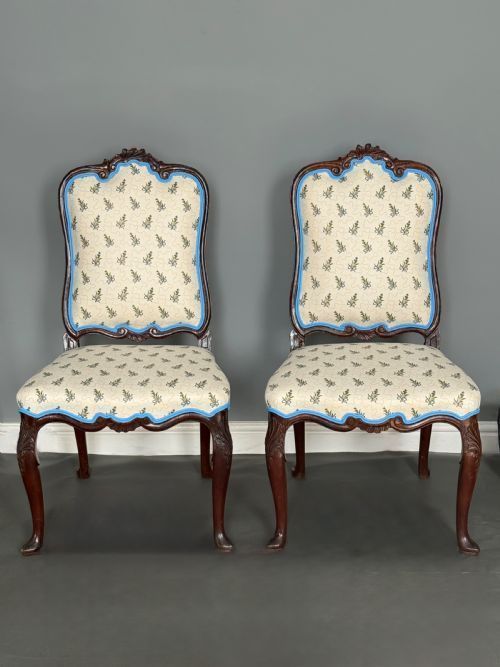
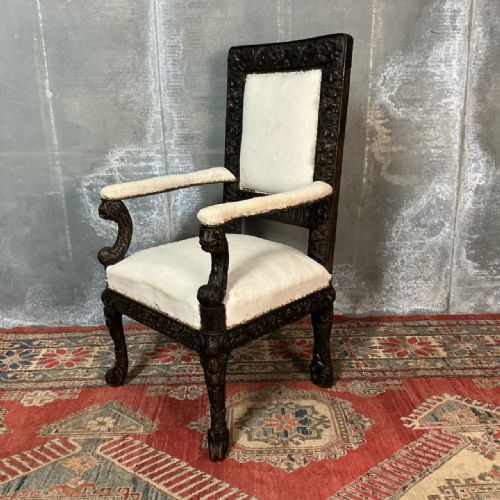
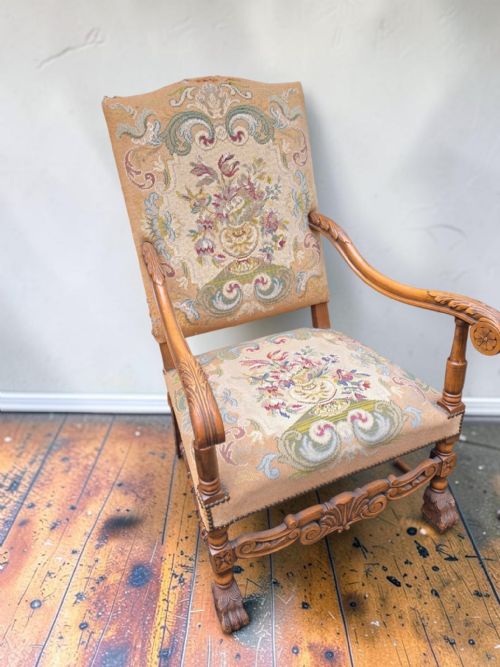
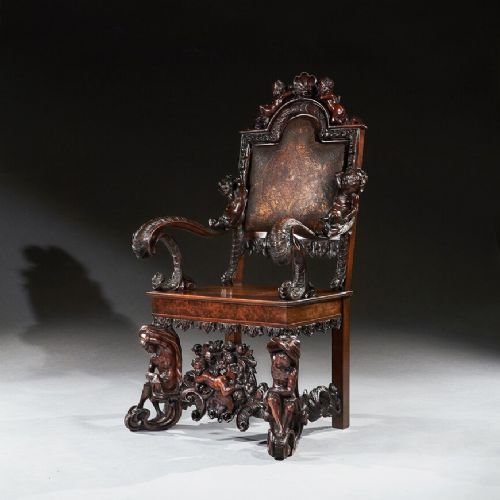




Baroque Style Accent Chair
A baroque style accent chair brings theatrical presence and rich historic carving into a room, offering both seating and undeniable visual weight.
Baroque Style Accent Chair
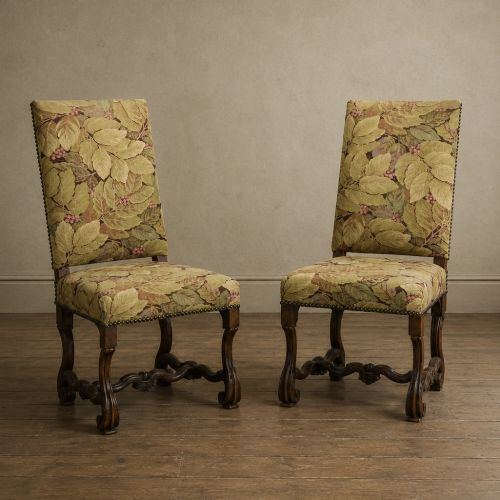
A baroque style accent chair encompasses heavily carved seating forms, predominantly armchairs, elbow chairs, and hall chairs drawn from centuries including the seventeenth, eighteenth, and nineteenth. When searching for a baroque style accent chair, buyers encounter revival interpretations from the nineteenth century alongside period pieces from the seventeenth and eighteenth centuries.
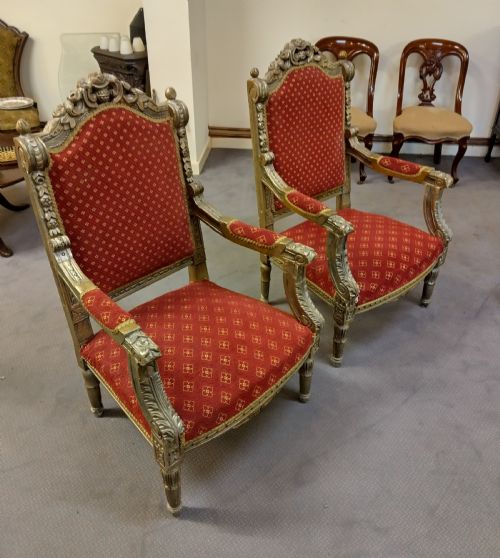
The regional variations appearing in these listings stretch across Italian, French, Dutch, and English expressions, often taking the form of high-back armchairs, throne chairs, and fauteuils. Walnut and oak form the structural backbone of these seats, frequently paired with gilt finishes, velvet, tapestry, needlework, and silk upholstery.
The selection ranges from robust Carolean and William and Mary revival designs to grand Italian and French giltwood armchairs. Buyers find pairs as well as individual statement pieces suited for drawing rooms and hallways.
Materials and Construction
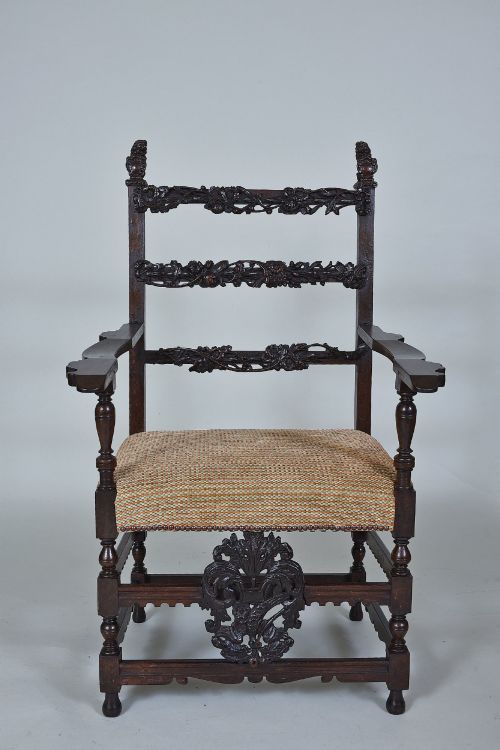
Carpenters shaped these frames primarily from solid walnut and oak, utilising dense hardwoods capable of supporting deep, sculptural relief carvings. Artisans often applied giltwood finishes or parcel gilding directly to the wood to catch the light in formal reception spaces.
Upholstery techniques relied on textiles such as velvet, silk, needlework, and tapestry, secured with brass detailing or traditional webbing. Bobbin turning and elaborate hand-carved motifs defined the structural framework of the legs, arms, and tall backs.
Some chairs demand an audience simply by existing, turning a quiet hallway corner into a royal court.
Markers of Quality
Depth and crispness of the hand-carving separate standard revival output from exhibition-quality works attributed to specific makers or fine workshops. The integrity of the original wood frame, combined with the quality of period textiles like needlework or silk, dictates the standing of a piece.
Proportion and scale play a definitive role, particularly in throne chairs and high-back armchairs where balanced symmetry enhances the architectural impact of the carving.
Andrea Brustolon
The Baroque Style Accent Chair Glossary
- Fauteuil
- An open-armed upholstered armchair originating in France, featuring exposed wooden framing around the back and seat.
- Giltwood
- Timber treated with gold leaf or a gold-coloured finish to create a brilliant, reflective surface.
- Bobbin turned
- Wood turned on a lathe to resemble a series of rounded spheres or bobbins strung together along the length of a leg or stretcher.
- Carolean
- Pertaining to the reign of Charles the Second in England, known for exuberant carving, cane panels, and scrolling woodwork.
- Savonarola chair
- A folding armchair constructed from multiple intersecting wooden curves, forming an X-shaped frame.
Baroque Style Accent Chair: Frequently Asked Questions
How do I identify a revival piece?
Nineteenth-century revival pieces often mimic seventeenth and eighteenth-century forms, utilising machine-assisted elements alongside hand-carving. Closer inspection of joint construction and timber ageing helps clarify the true production period.
Makers of the Victorian and Edwardian eras frequently drew on Louis XIV, William and Mary, and Carolean precedents, combining historical silhouettes with contemporary upholstery methods.
Where should I place a heavy armchair?
These substantial chairs suit reception rooms, libraries, or grand hallways where their carved frames and tall backs can command the space. They function well away from walls as freestanding sculptural objects.
Because many examples feature high backs and elaborate gilt or walnut frames, pairing them with simpler surrounding furniture prevents visual crowding.
What is the difference between an armchair and an elbow chair?
Armchairs generally provide full upholstered or padded armrests designed for extended seated comfort. Elbow chairs often feature shorter, more architectural wooden armrests that support the elbows rather than full-length arm support.
Both forms appear frequently in pairs across seventeenth and nineteenth-century inventories.
How should I care for antique upholstery?
Historic textiles like silk, velvet, and needlework require gentle surface cleaning and protection from direct sunlight to prevent fibre degradation. Professional conservation safeguards fragile tapestries and older fabric covers.
Wooden frames benefit from occasional dusting with a dry cloth, avoiding modern chemical polishes that can damage historic finishes.