




Baroque Oak Cabinet
A baroque oak cabinet brings substantial presence to a room, combining architectural timber work with the deep tones characteristic of the period.
Baroque Oak Cabinet
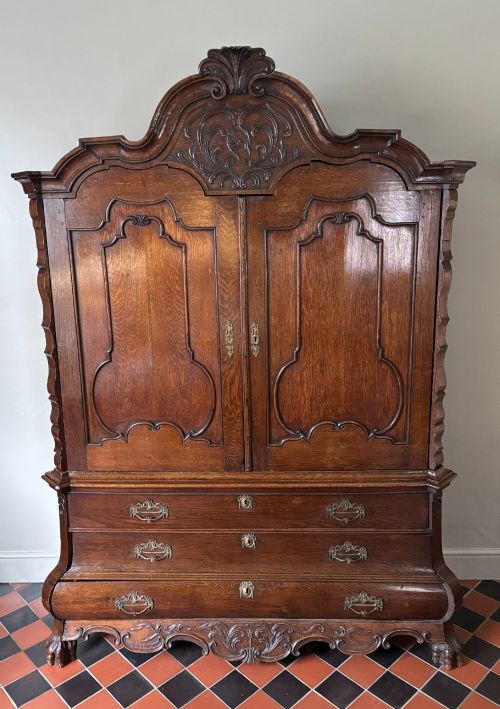
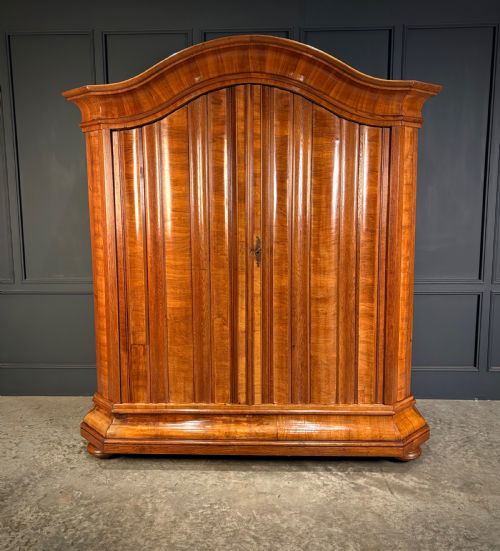
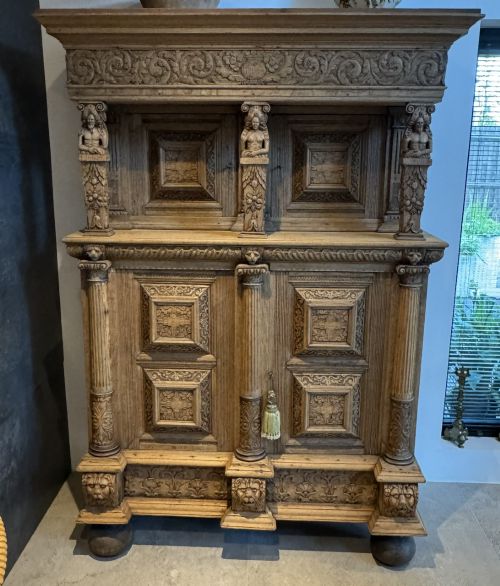
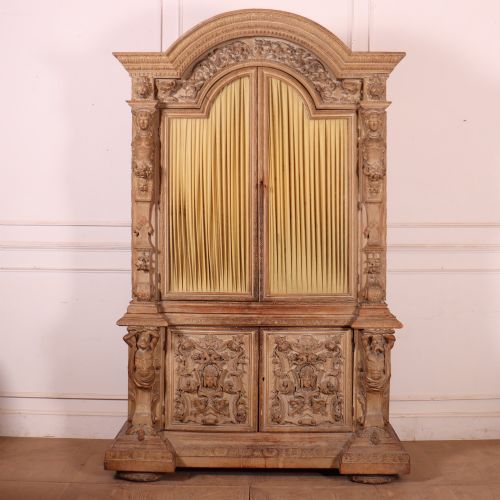
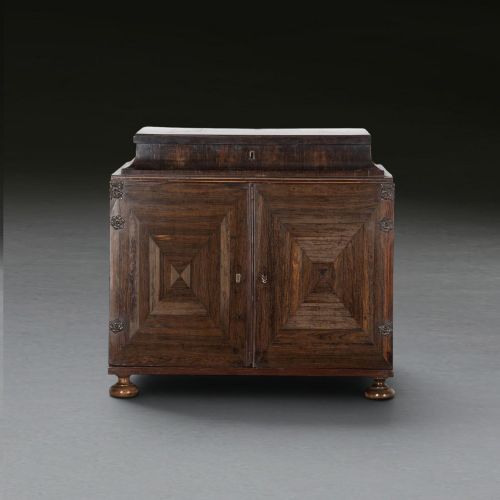
A baroque oak cabinet is a substantial storage piece originating mainly from the seventeenth and eighteenth centuries across continental Europe, including Dutch, Flemish, Spanish, and Scandinavian workshops. These pieces include armoires, linen presses, press cupboards, side cabinets, and bureau bookcases constructed to anchor a room.
The version most commonly met on this page is the seventeenth or eighteenth-century Dutch or Flemish linen press or armoire, built from heavy timber and often accented with secondary woods.
Makers utilised oak as the primary structural material, frequently combining it with panelled doors, carved mouldings, and deep cornices that define the architectural quality of the baroque style.
How they were made
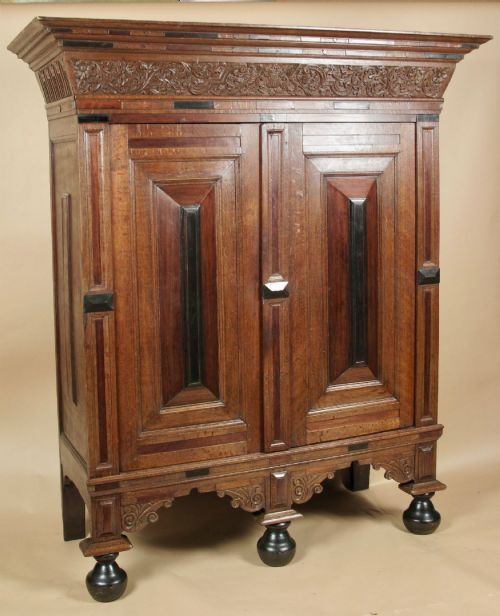
Construction relies heavily on solid oak timber framed with mortise and tenon joints, providing the structural integrity needed for large wardrobes and press cupboards. Secondary woods such as rosewood, ebony, and walnut appear as mouldings, veneers, or contrasting inlays.
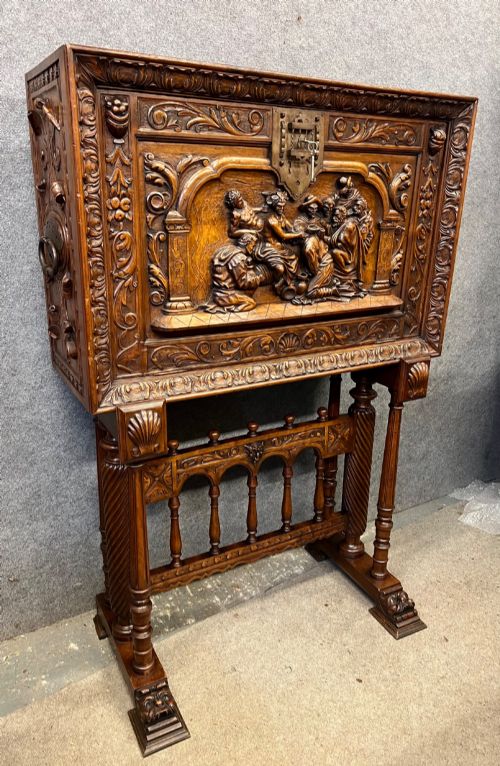
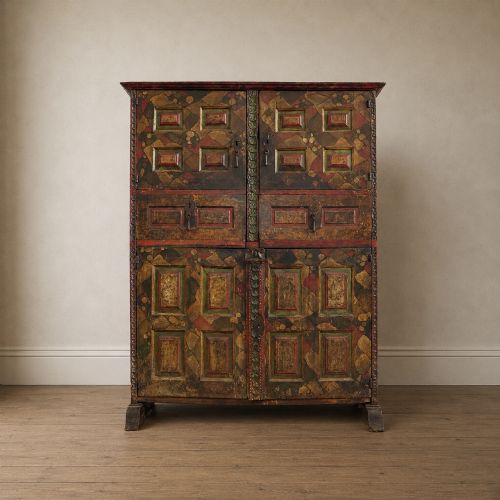
Surface decoration involves detailed hand carving, polychrome paintwork, and contrasting timber highlights, alongside forged iron and brass hardware used for hinges and locks.
Baroque Oak Cabinet Retail Price Guide 2026
Typical asking prices for baroque oak cabinet among the pieces listed under this phrase on Sellingantiques today, from the lower quarter to the upper quarter. They describe what is for sale here now, not the wider market.
Some seventeenth-century housekeepers kept their most important ledgers behind locked oak doors painted with cheerful historical scenes.
What varies in quality
The standard of a baroque oak cabinet depends upon the crispness of the hand carving and the architectural proportion of the mouldings and cornices. Pieces with well-integrated secondary wood veneers and original iron or brass hardware hold greater visual coherence.
Condition varies according to the survival of original surface finishes, pigment, and structural framing, separating heavily altered examples from those retaining their early seventeenth or eighteenth-century character.
The Baroque Oak Cabinet Glossary
- Kast
- A large, freestanding Dutch or Flemish wardrobe or cupboard used for linen and garments. These pieces often feature prominent architectural cornices and cushion-moulded doors.
- Gelderse Kussenkast
- A specific type of Dutch cabinet characterised by cushion-moulded panels on the doors. This regional variant typically incorporates contrasting timbers such as ebony and rosewood.
- Linen Press
- A tall storage cupboard designed with internal sliding trays or shelves for textiles. The lower section frequently incorporates drawers beneath the main cupboard doors.
- Bureau Bookcase
- A combination furniture form featuring a sloping desk flap that opens for writing, surmounted by a glazed or panelled bookcase cabinet. These pieces require complex interior compartment joinery.
- Polychrome
- Painted in multiple colours directly onto the timber surface. This technique appears on specific regional pieces to decorate panels and mouldings.
Baroque Oak Cabinet: Frequently Asked Questions
What is a baroque oak cabinet used for?
These large storage pieces serve as focal points in a room while providing deep shelving, hanging space, or compartmentalised storage for textiles and household goods.
Historically, they housed valuable household linens and garments, reflecting the status of the household through their scale and decorative presence.
How do I date a seventeenth century cabinet?
Dating relies upon examining the construction methods, such as hand-cut joints, iron hardware, and the specific style of mouldings characteristic of the period.
Regional variations in timber selection and decorative carving also help narrow down the decade of manufacture.
Where should I place a large oak armoire?
These cabinets require a wall with sufficient height and depth to accommodate their substantial architectural cornices and heavy timber doors.
Placing them away from direct heat sources helps protect the dry oak timber and any applied rosewood or ebony veneers.
What is the difference between a kast and an armoire?
A kast is a traditional Dutch or Flemish term for a large freestanding cupboard with heavy architectural mouldings, while an armoire is a general continental wardrobe term.
Both serve similar storage functions but often display distinct regional joinery and decorative panel arrangements.