




Baroque Marble Top Table
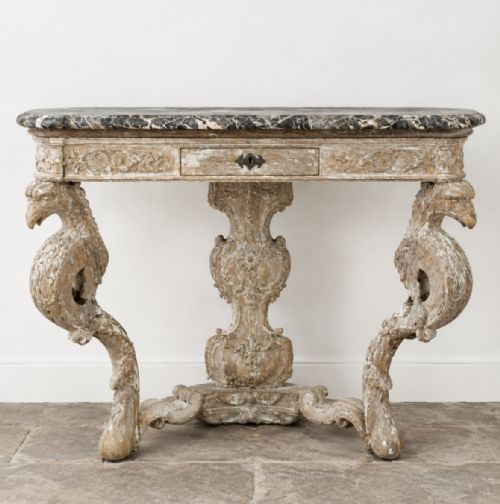
These baroque marble top table pieces are heavy, carved furnishings topped with stone, chosen for grand hallways and formal rooms.
Baroque Marble Top Table
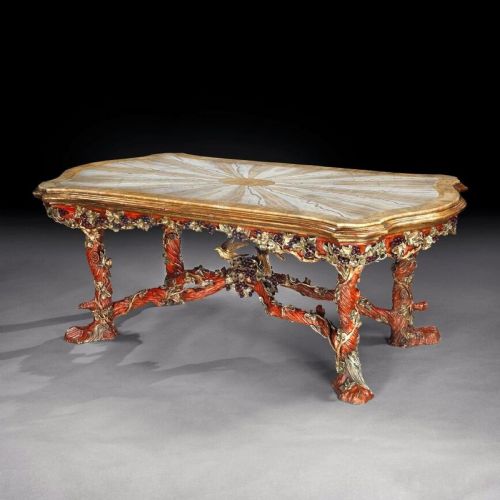
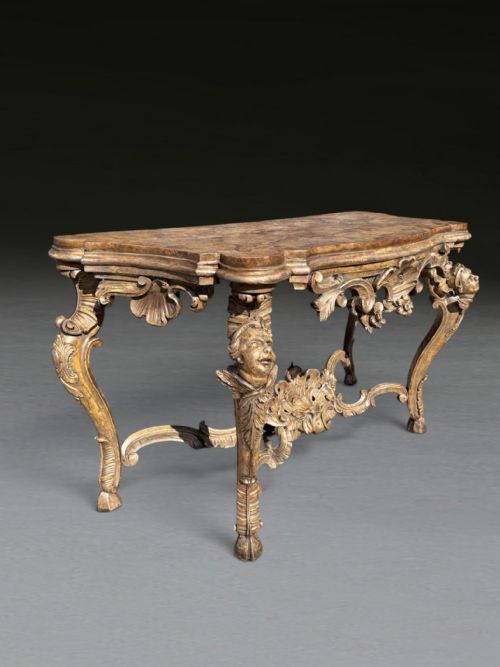
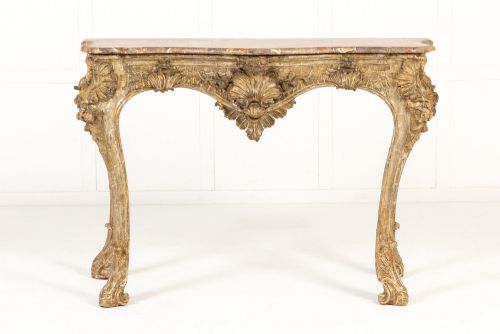
A baroque marble top table combines heavy stone surfaces with ornate wooden frames, appearing in forms such as console tables, centre tables, side tables, and coffee tables. When exploring a baroque marble top table selection, buyers encounter pieces originating from the eighteenth and nineteenth centuries, alongside revival works from later decades.
The surviving examples draw heavily on Italian workshops and continental design traditions, often featuring wall-mounting console formats or freestanding centre tables. Walnut, lime wood, and oak provide the structural timber underneath elaborate surface gilding and polychrome treatments.
How they were made
Makers shaped solid woods like walnut, lime, and oak using deep relief carving techniques to create scrolling foliage, animal supports, and figurative elements. Giltwood and gesso applications layered gold leaf over prepared wooden surfaces to achieve a brilliant metallic sheen.
Slabs of marble, breccia, onyx, and pink Salome stone were cut, polished, and fitted to the tops of these heavy wooden bases. Metal components, including brass and copper, appear alongside carved wood to secure the weighty stone surfaces.
Listings feature items from the seventeenth, eighteenth, and nineteenth centuries, alongside revival pieces from the twentieth century.
What varies in quality
The depth and vigour of the wood carving dictate the distinction between standard production and exceptional craftsmanship. Crisp undercut details in foliage and figures show superior skill compared to softer, shallower shaping.
The selection and finishing of the stone top also influence overall character, with finely figured marble slabs matching the scale and ambition of the carved wooden bases beneath them.
Amleto Bertoni·B Battioli, Varese
The Baroque Marble Top Table Glossary
- Console table
- A table designed to stand against a wall, historically supported by brackets or ornate legs rather than four freestanding posts. These pieces frequently feature elaborate front supports such as lions' paws or putti.
- Giltwood
- Timber coated with a thin layer of gold leaf over a prepared gesso base. This finish creates a bright reflective surface characteristic of formal European interiors.
- Breccia marble
- A composite stone made of broken rock fragments embedded in a fine-grained matrix. It provides colourful, highly patterned surfaces for table tops.
- Centre table
- A freestanding table finished on all sides for placement in the middle of a room. These forms allow viewing from any angle.
Baroque Marble Top Table: Frequently Asked Questions
Where should a console table go?
Console tables sit flat against a wall, frequently in entrance halls or reception rooms where floor space is limited. Their design prioritises frontal display.
Because they often rely on wall fixings or front legs for stability, pairing them with the right wall space ensures proper balance.
How do I clean a marble top?
Marble requires gentle cleaning with a soft cloth and neutral soap to avoid scratching the polished surface. Acidic liquids can etch the stone.
Keeping the heavy stone free from harsh chemicals preserves the natural figuring and historical finish.
Are centre tables freestanding?
Centre tables are finished on all four sides so they can stand in the middle of a room without backing against a wall. They function as central display surfaces.
Their detailed carving extends around the entire perimeter, unlike wall-mounted console designs.
What wood lies under the gilding?
Carved frames are typically built from woods such as walnut, lime wood, oak, or general softwoods before receiving layers of gesso and gold leaf. The timber provides a sturdy armature for the heavy stone.
Examining un-gilded areas or underside surfaces reveals the base wood used by the workshop.