




Baroque Carved Oak Panels
Baroque carved oak panels are robust architectural remnants carrying deep relief work, prized by collectors for bringing tactile historical gravity into modern interiors.
Baroque Carved Oak Panels
Baroque carved oak panels encompass architectural salvage, wall reliefs, and furniture elements spanning from the seventeenth century through the nineteenth century. These pieces frequently display regional European characteristics, including Dutch, Flemish, and German origins, alongside English and Spanish colonial examples.
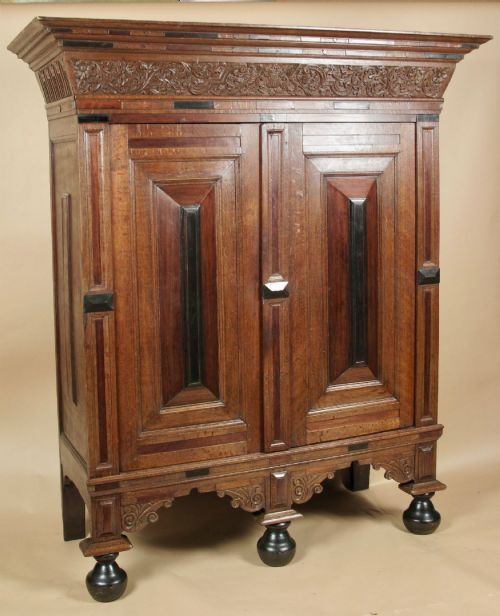
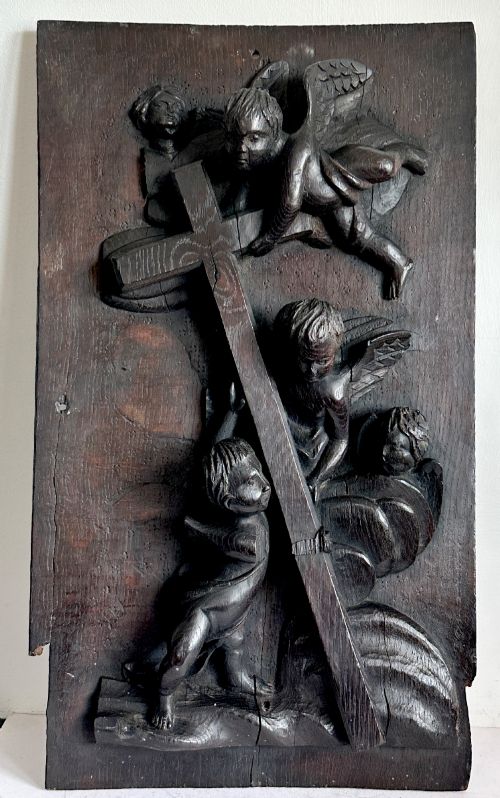
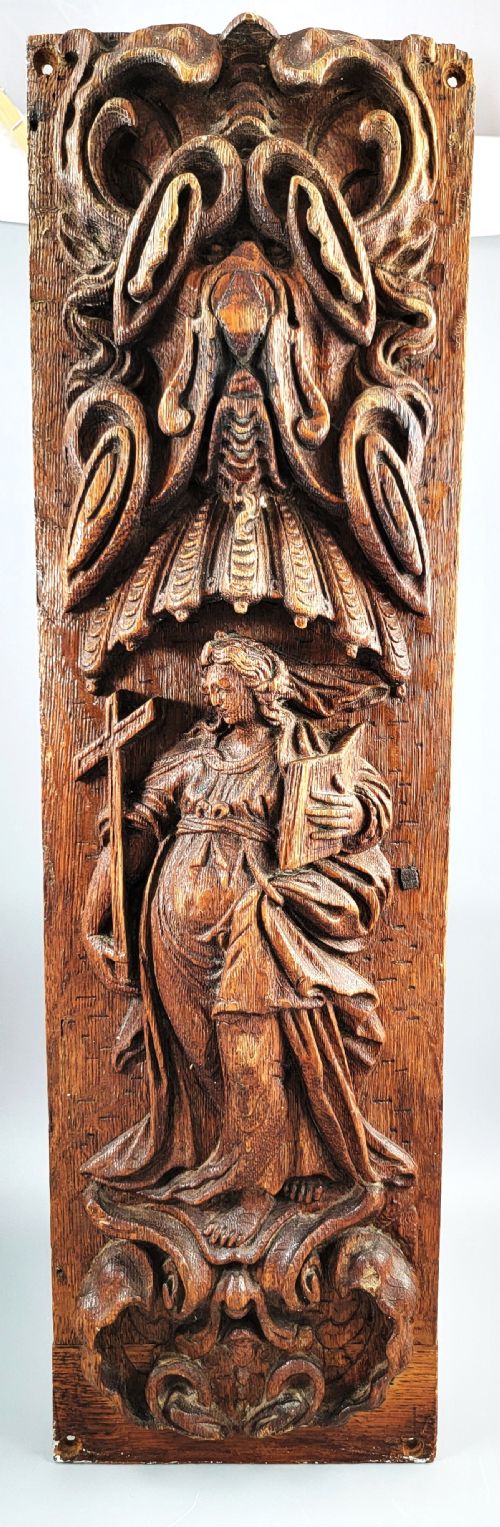
The selections on this page range from overdoor panels and staircase sections to carved plaques depicting mythological figures or religious allegories. Buyers encounter various forms, such as pierced acanthus leaf carvings, framed saints, and substantial armoires integrated with oak, rosewood, and ebony.
While many date strictly to the seventeenth century, later nineteenth-century revivals also appear, showing how subsequent eras reproduced the dense, theatrical ornamentation typical of the Baroque style. Each panel tells a story of historic joinery and dynamic sculptural composition.
Materials and construction methods
Oak serves as the primary structural and carving medium, chosen for its strength and rich grain, occasionally accented with contrasting timbers like ebony, rosewood, and walnut. Artisans employed hand-carving techniques to achieve deep undercutting and high relief, creating dramatic plays of light and shadow.
Joinery and structural integrity often involved traditional framing methods, sometimes incorporating secondary metals such as iron and brass hardware. Paint finishes also appear on certain items, enhancing the visual depth of the carved motifs.
Baroque Carved Oak Panels Retail Price Guide 2026
Typical asking prices for baroque carved oak panels among the pieces listed under this phrase on Sellingantiques today, from the lower quarter to the upper quarter. They describe what is for sale here now, not the wider market.
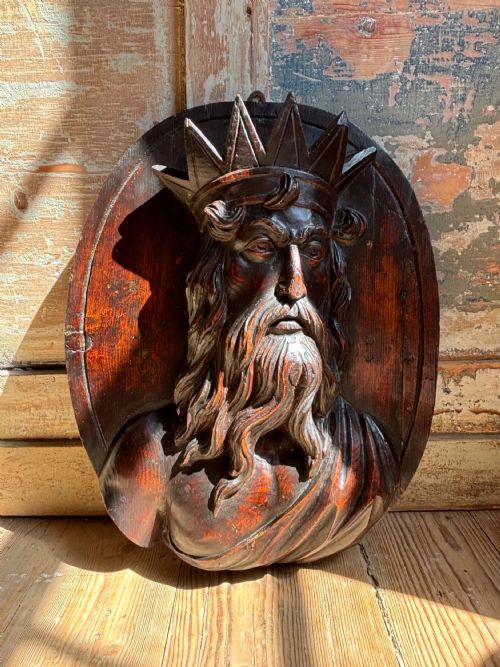
Neptune once kept watch over a seventeenth-century living space from a carved oak plaque.
Factors of quality and execution
The depth and crispness of the chisel work distinguish superior carvings from simpler productions, with master carvers achieving remarkable anatomical and botanical detail. The complexity of the iconography, such as allegorical figures or armorial bearings, elevates the artistic ambition of the piece.
The integrity of the timber and the retention of original surface patination strongly influence the desirability of each panel. Attribution to documented makers or specific regional workshops adds a layer of historical significance that separates standard architectural fragments from exceptional collector items.
Edward Pearce
The Baroque Carved Oak Panels Glossary
- Baroque
- A European style spanning the seventeenth and early eighteenth centuries, characterised by exaggerated motion, deep relief, and drama. It prioritises grandeur and ornate sculptural decoration.
- Acanthus
- A classical leaf ornamentation heavily utilised in Baroque wood carving. It curls gracefully to frame panels and architectural elements.
- Kast
- A large, heavy Dutch or Flemish wardrobe or cupboard. These pieces frequently feature prominent paneling and rich secondary woods like ebony and rosewood.
- Architectural salvage
- Building elements removed from historic structures for preservation or reuse. Panels and overdoors rescued during renovations fall into this category.
- Relief
- A sculptural technique where figures or ornamentation project from a flat background. High relief involves elements standing far out from the backing timber.
Baroque Carved Oak Panels: Frequently Asked Questions
How were baroque carved oak panels originally used?
These panels originally formed parts of grand domestic interiors, ecclesiastical furnishings, or heavy case furniture such as cupboards and armoires.
They lined the walls of substantial townhouses and country estates, serving both an ornamental function and a display of status.
Are these panels suitable for modern wall hanging?
Many panels function well as wall art, provided their weight is properly supported by sturdy wall anchors and brackets.
Because they originate as architectural salvage or furniture components, proper professional mounting ensures the heavy oak timber remains secure.
How do I distinguish seventeenth-century work from nineteenth-century revivals?
Seventeenth-century panels display period tool marks, oxidised patination, and construction methods consistent with early joinery.
Nineteenth-century revival pieces often reveal machine assistance, different timber seasoning characteristics, or stylistic interpretations typical of later historical revivals.
What maintenance do antique oak panels require?
Antique oak benefits from stable indoor humidity levels to prevent timber shrinkage, warping, or cracking over time.
Occasional dusting with a dry, soft cloth suffices, avoiding modern silicone polishes that can degrade historical wood finishes.