





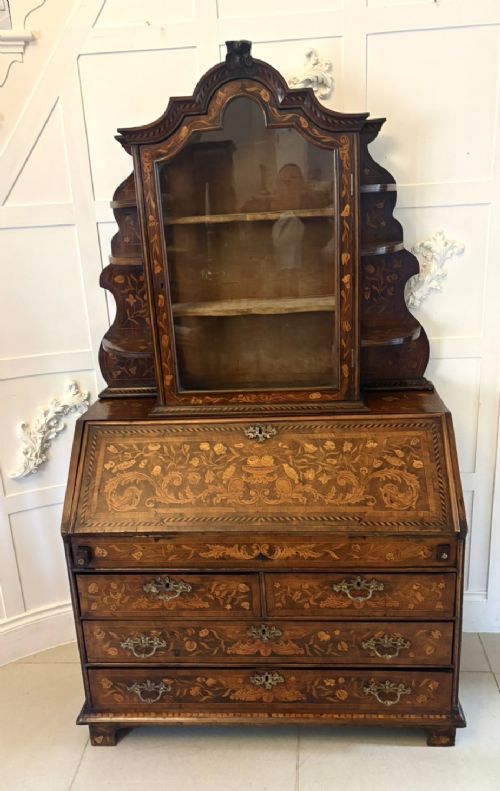


Baroque Bureau
A baroque bureau brings architectural presence and intricate timberwork into a room, offering a sloping fall-front desk combined with deep storage.
Baroque Bureau
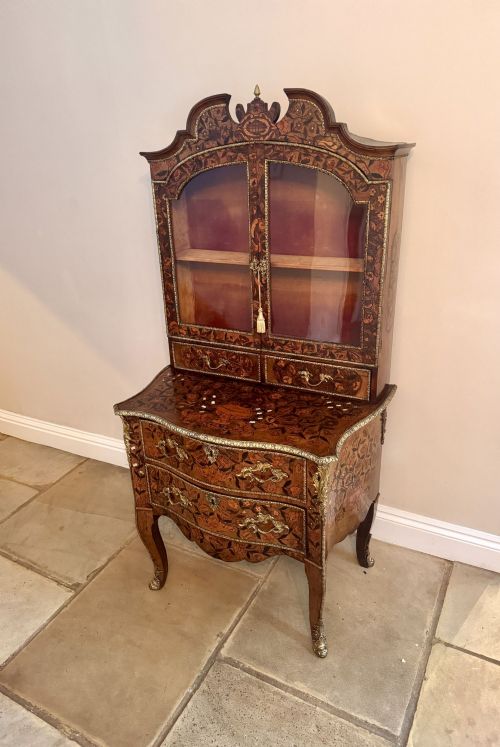
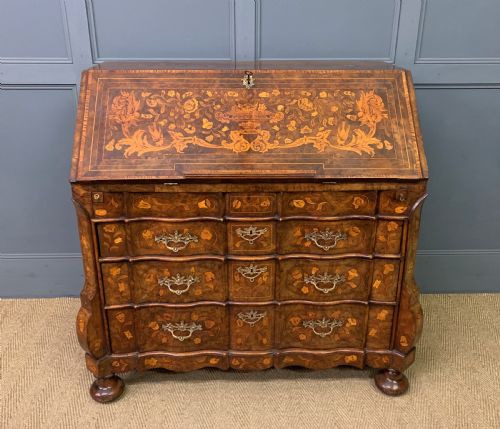
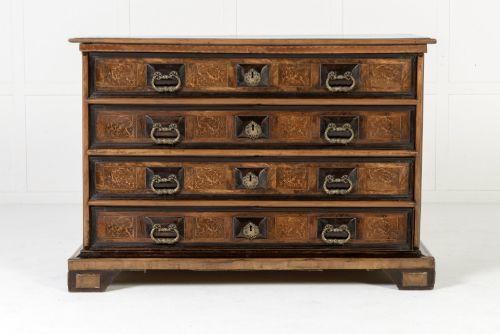
A baroque bureau combines a writing slope with functional storage, appearing here in regional variations such as Dutch, South German, and Scandinavian forms. These pieces often feature fitted interior compartments alongside lower drawers or bookcase upper sections.
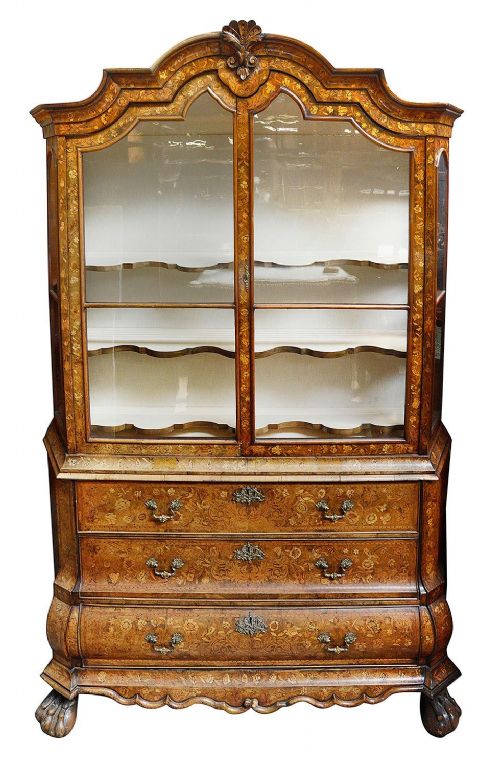
Regional origins shape the silhouette significantly, from the swelling bombé profiles of the Netherlands to the architectural pediments of German cabinets. Walnut and burr walnut dominate the selection, frequently enhanced by floral marquetry inlay.
The material palette spans centuries of cabinet-making, incorporating fruitwood, oak, and occasionally rosewood or glass panels in display sections. Pieces range from grand bureau bookcases to compact table top escritoires and simpler writing desks.
What varies in quality
The precision and complexity of the marquetry inlay set individual examples apart, with floral designs showing varying degrees of shading and botanical accuracy. Timber selection also dictates standing, particularly the choice use of highly figured burr walnut veneers across broad surfaces.
Structural ambition separates standard writing desks from grand bureau bookcases and bombé shaped cabinets, which required advanced joinery to achieve their curved forms. The integrity of original brass fittings and the preservation of early surface patination further influence the stature of each piece.
Baroque Bureau Retail Price Guide 2026
Typical asking prices for baroque bureau among the pieces listed under this phrase on Sellingantiques today, from the lower quarter to the upper quarter. They describe what is for sale here now, not the wider market.
Listings feature walnut, burr walnut, fruitwood, oak, and rosewood across continental European periods spanning the seventeenth to the twentieth centuries.
The Baroque Bureau Glossary
- Marquetry inlay
- Decorative patterns formed by fitting small pieces of veneer into a prepared ground. This technique allowed cabinet-makers to create elaborate floral and pictorial scenes across the front and sides of a bureau.
- Bombe
- A swelling, outwardly curved contour found on the front and sides of certain case furniture. Originating in continental design, this profile requires skilled timber shaping.
- Bureau bookcase
- A two-part form uniting a sloping writing desk below with a shelved cabinet or vitrine above. Upper doors are frequently glazed for the display of books or collections.
- Escritoire
- A portable or table-top writing cabinet equipped with a fall-front and internal compartments. These smaller pieces provided private spaces for correspondence.
- Secretaire
- A designated writing cabinet or desk featuring a pull-out or drop-down writing surface. It conceals pigeonholes and small drawers designed for stationery.
Baroque Bureau: Frequently Asked Questions
How do I use a bureau daily?
Lower the hinged fall-front to create an immediate writing surface while keeping correspondence organised within the internal pigeonholes and small drawers.
The lower drawers and upper bookcase sections provide substantial storage for household items, combining practical utility with display space.
Where should I place a bureau?
Position the piece against a principal wall in a study or living area where adequate natural light reaches the writing surface.
Ensure there is sufficient clearance in front of the bureau to lower the fall-front and pull out any integrated desk components comfortably.
How do regional styles differ?
Dutch examples frequently showcase elaborate floral marquetry inlay and pronounced bombé curves, emphasising decorative surface work and swelling silhouettes.
South German and Scandinavian pieces often lean toward architectural form, incorporating stepped pediments, carved oak details, or painted finishes.
What woods were used?
Walnut and burr walnut serve as the primary timbers across the majority of pieces, prized for their rich grain patterns and warm colour.
Secondary woods like oak and fruitwood appear in carcass construction and marquetry details, occasionally joined by rosewood or glass.