








Baroque Bureau Cabinet
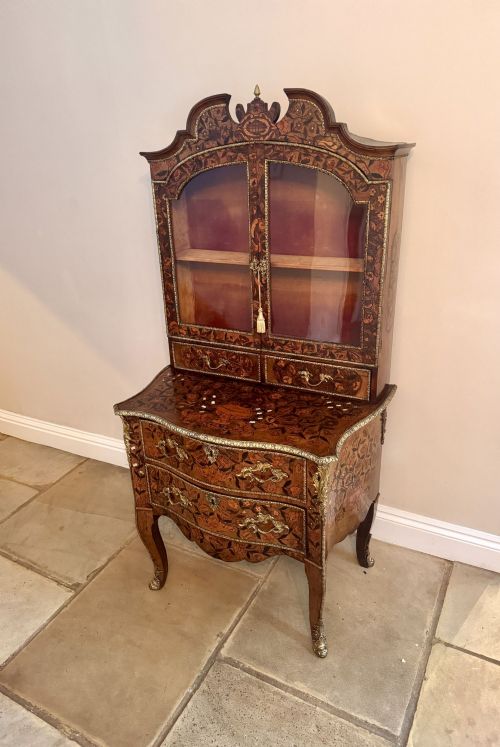
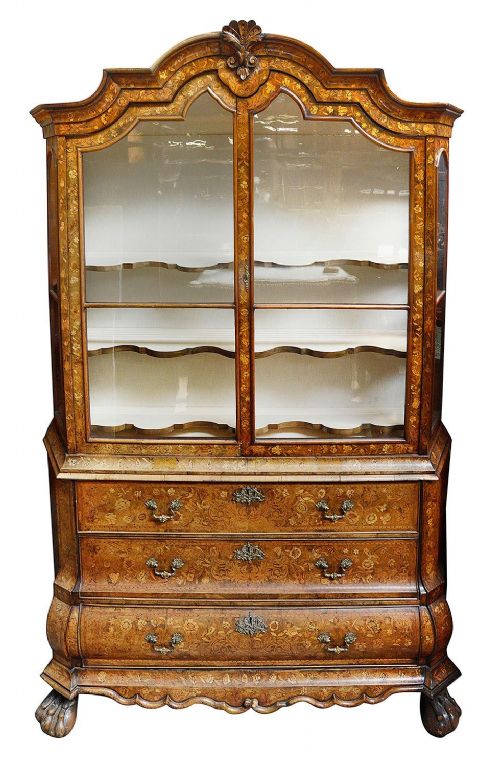
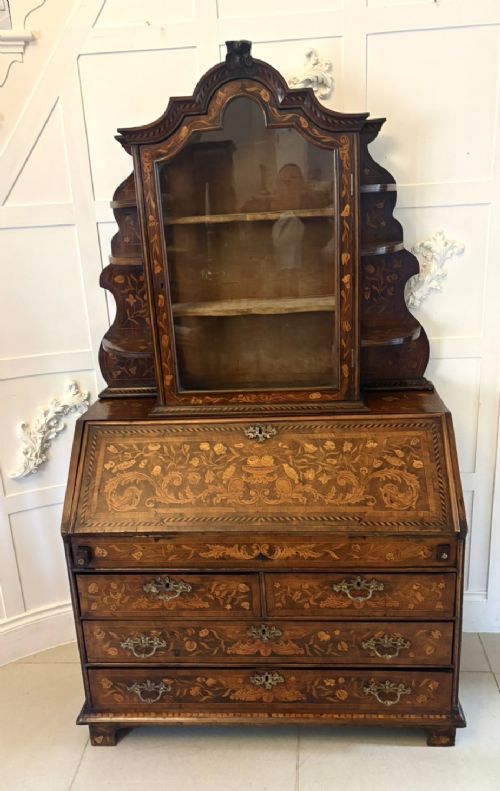
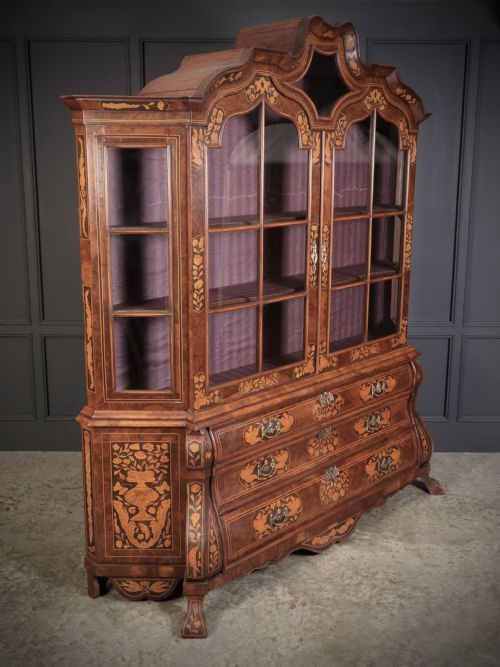
A baroque bureau cabinet brings together a fall-front desk and a shelved upper display section, combining architectural presence with intricate marquetry.
Baroque Bureau Cabinet
A baroque bureau cabinet serves as a grand storage piece that combines a writing surface with upper display shelving or enclosed cabinet doors. These pieces appear in forms such as bureau bookcases, vitrines, and tabletop escritoires.
The selections encountered here span the seventeenth century through to the twentieth century, alongside revivals from nineteen twenty. Regional styles represented include Dutch, South German, Scandinavian, and Spanish interpretations of the baroque aesthetic.
The primary forms include bureau bookcases and writing desks featuring fall-front writing flaps and fitted interior compartments. Many examples pair lower drawer chests with upper bookcase sections designed to display collections.
How they were made
Detailed carving defines regional work, particularly on Norwegian oak examples and South German walnut pieces. Metalwork hardware relies on cast brass for drop handles, escutcheons, and hinges.
Glazing appears in the upper cabinet doors of display pieces, housing glass panes alongside internal shelving. Bone inlays occasionally accent the intricate floral and figural marquetry scenes.
Baroque Bureau Cabinet Retail Price Guide 2026
Typical asking prices for baroque bureau cabinet among the pieces listed under this phrase on Sellingantiques today, from the lower quarter to the upper quarter. They describe what is for sale here now, not the wider market.
Some tabletop escritoires conceal revolving tabernacles behind miniature doors, offering secret hiding spots for tiny valuables.
What varies in quality
The intricacy and precision of the floral marquetry inlay dictate much of the visual distinction across these pieces. Fine examples display complex botanical motifs executed with tightly fitted contrasting veneers.
Structural proportion and timber selection separate standard builds from superior examples. The use of burr walnut veneer and figured fruitwood across primary facades demonstrates higher ambition in workshop production.
The complexity of internal fitted compartments behind the fall-front desk influences overall refinement. Elaborate small drawers, secret compartments, and revolving tabernacles indicate advanced cabinetmaking skill.
The Baroque Bureau Cabinet Glossary
- Marquetry
- Decorative veneer work arranged in geometric or floral patterns across a wooden surface. Craftsmen cut thin slices of different timbers to create pictorial designs.
- Bureau bookcase
- A combination furniture piece featuring a sloping writing flap above lower drawers and an upper shelved cabinet. This form provides both working space and enclosed storage.
- Vargueno
- A traditional Spanish cabinet form featuring a rectangular drop-front box placed on a stand or lower chest. The interior typically houses numerous small drawers and compartments.
- Bombé
- A swelling, convex furniture contour that curves outward on the front and sides. This technique requires skilled shaping of the underlying wooden carcase.
Baroque Bureau Cabinet: Frequently Asked Questions
What is a baroque bureau cabinet?
A baroque bureau cabinet is a substantial storage and writing piece featuring a hinged writing desk paired with an upper bookcase or display section.
These pieces combine architectural mass with decorative elements like floral marquetry, burr walnut veneers, and shaped cornices.
How do I use one at home?
These cabinets function as focal points in studies, living rooms, or hallways, offering practical workspace and display capacity.
The upper glass-fronted sections hold books or collections, while the drop-front desk conceals small drawers and pigeonholes for modern writing materials.
How do I distinguish regional styles?
Regional characteristics appear in the timber choice, carving depth, and marquetry subjects.
Dutch examples often rely heavily on floral marquetry and walnut veneers, whereas South German and Norwegian pieces demonstrate deeper carved elements and distinct architectural proportions.
What timber was used?
Makers constructed these cabinets using structural woods like oak and fruitwood, applying decorative veneers over the primary carcase.
Walnut and burr walnut dominate the exterior surfaces, accented by contrasting marquetry woods and cast brass hardware.