

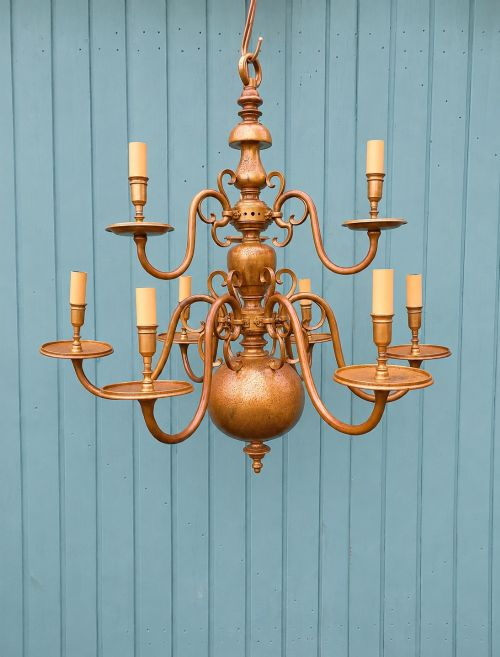
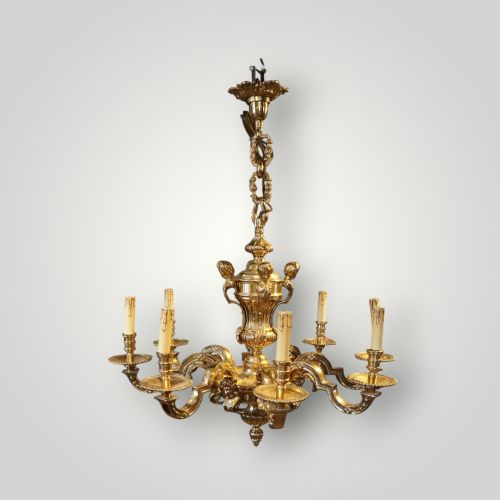

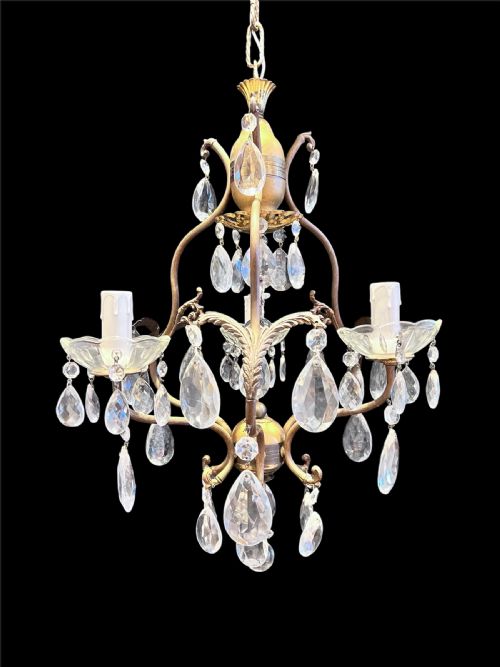


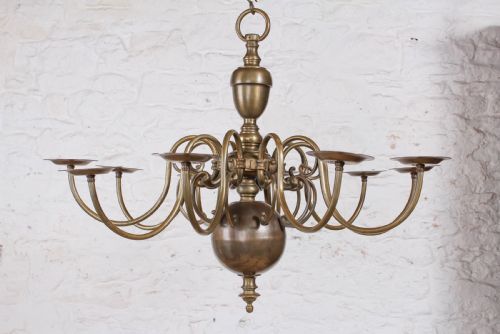


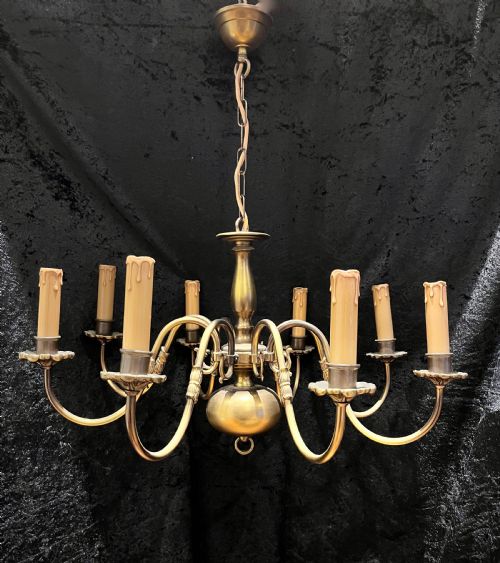
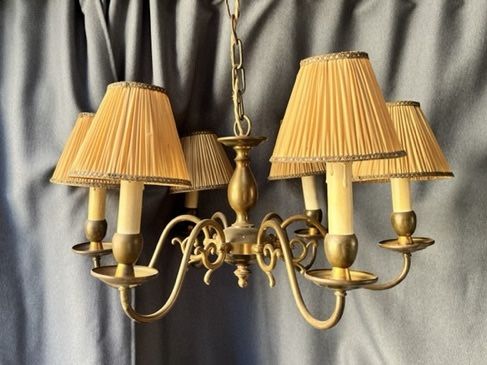


Baroque Brass Fixture
A baroque brass fixture brings substantial weight and theatrical presence to a room, offering grand illumination shaped by centuries of revival design.
Baroque Brass Fixture
A baroque brass fixture encompasses overhead lighting forms such as multi-armed chandeliers, ceiling lights, and pendants designed to project volume and historical drama. When searching for a baroque brass fixture, buyers encounter pieces spanning the eighteenth century through to early twentieth-century revivals.
The selection ranges from grand multi-tiered chandeliers with numerous branches to more compact pendants. These pieces draw on distinct regional interpretations, including Dutch, Flemish, Italian, and French revival aesthetics.
Most examples originate from the Edwardian era and the early decades of the twentieth century, alongside nineteenth-century works and occasional eighteenth-century survivals. These later revivals capture the ornate proportions of earlier periods while adapting to domestic ceiling heights.
How they were made
Construction relies primarily on cast brass, solid brass, and bronze, often enhanced through fire gilding or ormolu finishes. Metal components are cast in sections, chased, and joined to create complex multi-branched structures that support heavy armatures.
Many designs incorporate glass and crystal elements suspended from the metal framework to refract light. Surface treatments vary from polished silver plating to unpolished copper and warm patinated bronze.
Baroque Brass Fixture Retail Price Guide 2026
Typical asking prices for baroque brass fixture among the pieces listed under this phrase on Sellingantiques today, from the lower quarter to the upper quarter. They describe what is for sale here now, not the wider market.
Some eighteen-light chandeliers weigh more than a generous medieval feast.
What varies in quality
Quality rests in the depth of metal casting and the crispness of chased detail across the arms and central stems. Heavier metal gauge and intricate hand-finishing separate substantial architectural pieces from lighter commercial interpretations.
The integrity of the assembly and the quality of integrated crystal components define the upper tier of surviving examples. Richness of original patination and the complexity of multi-tiered branch arrangements further distinguish finer pieces.
The Baroque Brass Fixture Glossary
- Ormolu
- A technique of applying finely ground high-carat gold to a bronze object using a mercury amalgamation process. This finish provides a warm, durable golden lustre characteristic of high-status lighting.
- Chasing
- The manual tooling of metal surfaces with punches and hammers after casting to refine details and textures. It brings crispness to the floral and scroll motifs found on fixture arms.
- Palladian
- An architectural style based on symmetry and classical proportions that influences certain heavy revival lighting designs. It balances ornate baroque ornamentation with structured architectural restraint.
- Pendant
- A light fixture suspended from the ceiling by a single rod, chain, or cord rather than fixed directly to the plaster. These forms range from simple single-bulb drops to multi-armed chandeliers.
Baroque Brass Fixture: Frequently Asked Questions
How do I hang a heavy chandelier safely?
Heavy chandeliers require direct anchoring into ceiling joists or structural steel rather than relying on standard plaster lath boxes. A professional electrician should assess the weight load before installation.
Weight distribution must be managed using rated chains and fixings appropriate for bronze and brass bodies.
What distinguishes Dutch styles from Italian lighting?
Dutch designs typically feature robust, wide-spreading brass branches with solid central bulbs and straightforward, utilitarian metalwork. They emphasise sturdy craftsmanship and heavy proportions.
Italian lighting often incorporates gilded bronze, crystal drops, and lighter, more fluid scrolling arms with distinct theatrical flair.
Can these chandeliers be adjusted for modern wiring?
Most antique fixtures accept rewiring to meet contemporary electrical standards without altering the external metal structure. Rewiring ensures safe operation while preserving the original sockets and internal channels.
Qualified restorers thread modern flex through the existing hollow arms and central stems.
How should I clean polished brass fixtures?
Dusting with a soft, dry cloth prevents grime accumulation without disturbing the historic patination. Avoid abrasive chemical cleaners that strip the aged surface finish.
For crystal components, gentle wiping with a damp cloth maintains clarity without touching the surrounding metal.