



Barley Twist Walnut Cabinet
A barley twist walnut cabinet brings domestic warmth and intricate turned timber to any room through rich figures and tactile columns.
Barley Twist Walnut Cabinet
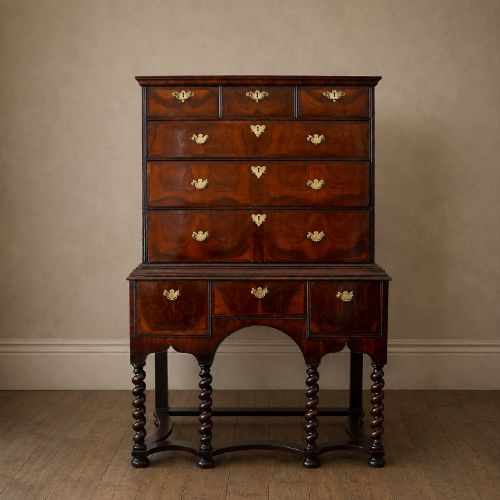
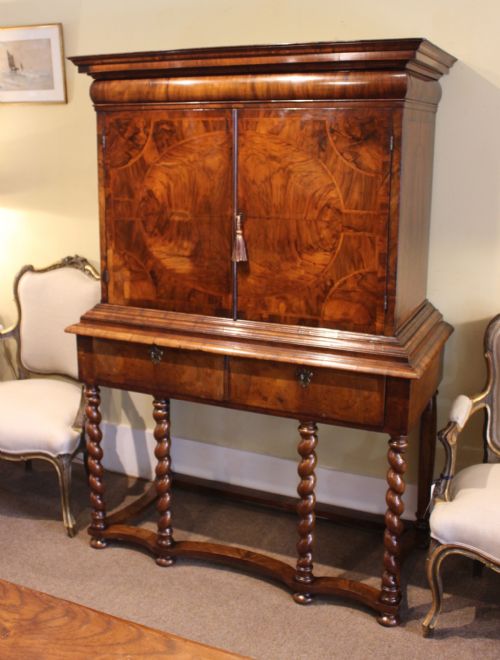
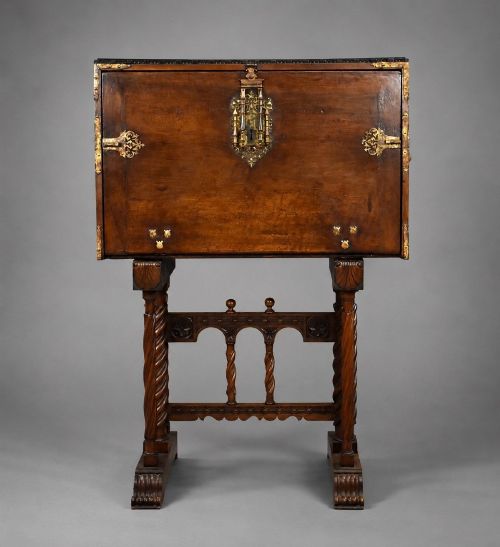
A barley twist walnut cabinet combines architectural turned uprights with functional storage forms, ranging from tall chests on stands to compact writing bureaux. You will frequently encounter seventeenth-century styles alongside Victorian interpretations, reflecting enduring admiration for earlier craftsmanship.
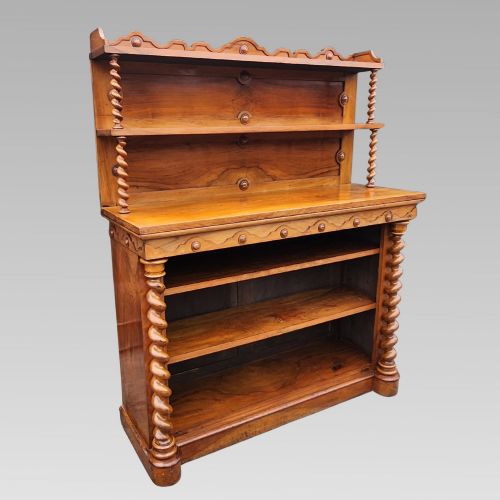
The primary forms on this page include cabinets on stands, escritoires, and sideboards, often elevated on legs joined by stretchers. These pieces originate across several periods, from the seventeen-hundreds up to the early twentieth century.
Makers and workshops across Britain and continental Europe utilised walnut to create practical storage that doubled as display furniture. Buyers select these items for their rich timber tones and the rhythmic detail of their turned columns.
Markers of quality
Quality rests in the crispness of the spiral turnings and the depth of the walnut figure across the primary surfaces. Superior examples display careful book-matching in their veneers and harmonious proportions between the stand and the upper cabinet.
The integrity of the timber and the subtlety of secondary woods reveal the care taken by the original workshop. Finer pieces maintain original brass mounts and well-fitted internal drawers that operate smoothly.
Barley Twist Walnut Cabinet Retail Price Guide 2026
Typical asking prices for barley twist walnut cabinet among the pieces listed under this phrase on Sellingantiques today, from the lower quarter to the upper quarter. They describe what is for sale here now, not the wider market.
The Barley Twist Walnut Cabinet Glossary
- Barley twist
- A spiral turning resembling a twisted rope, commonly used on furniture legs and column supports. This decorative form gained prominence in seventeenth-century British and continental design.
- Oyster veneer
- Small circular or oval slices of branch wood laid to resemble the pattern of oyster shells. This technique creates a distinctive rippled surface texture across cabinet fronts.
- Escritoire
- A writing cabinet featuring a fall-front desk section that conceals small drawers and pigeonholes. These items combine the utility of a desk with the enclosed storage of a cabinet.
- Burr walnut
- Timber taken from the growth excrescence of a walnut tree, yielding dense and swirling grain patterns. It was highly prized for decorative drawer fronts and panel surfaces.
- Chest on stand
- A case piece raised on an open frame with legs and stretchers, typical of late seventeenth and early eighteenth-century design. This form lifts heavy storage visually off the floor.
Barley Twist Walnut Cabinet: Frequently Asked Questions
How do I date a barley twist walnut cabinet?
Dating relies on examining construction methods, secondary woods, and the specific style of the hardware and turnings. Earlier pieces from the seventeen-hundreds often feature hand-cut dovetails and pegged frames.
Later Victorian interpretations tend to use machine-cut elements and different internal framing while emulating seventeenth-century aesthetics.
Where should I place a cabinet on stand?
These cabinets suit living spaces, studies, or hallways where their turned columns and figured timber can be appreciated without obstruction. Ensure they sit away from direct sunlight and heat sources to protect the walnut veneer.
Because many include stands with stretchers, keeping them on a level floor prevents structural strain on the joinery.
What is the difference between a bureau and an escritoire?
An escritoire generally refers to a more formal writing cabinet, often incorporating internal compartments behind a hinged writing surface. Bureaux frequently feature a sloping fall-front that opens to reveal similar inner drawers.
Both forms utilise the rich grain of walnut and frequently incorporate barley twist supports across various periods.
How do I care for walnut veneer surfaces?
Maintain walnut veneer by dusting gently with a dry cloth and avoiding silicone-based polishes that build up over time. Applying occasional traditional wax feeds the timber and preserves the natural lustre of the grain.
Keep room humidity stable to prevent the veneer from lifting or cracking across large panel surfaces.