
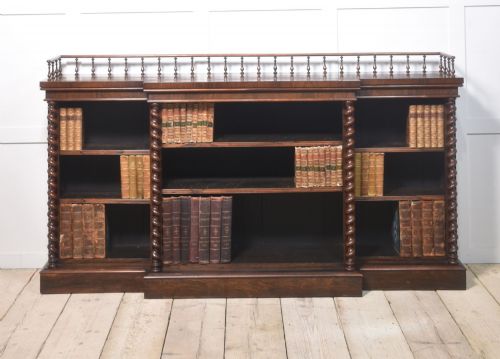
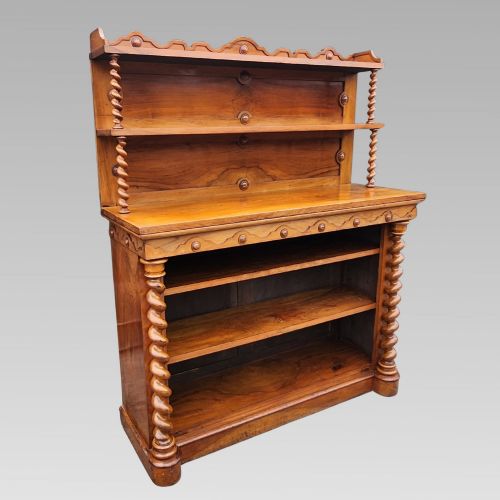


Barley Twist Shelves
Barley twist shelves bring stacked display surfaces into a room, joining turned timber supports with the open tiers of traditional whatnots.
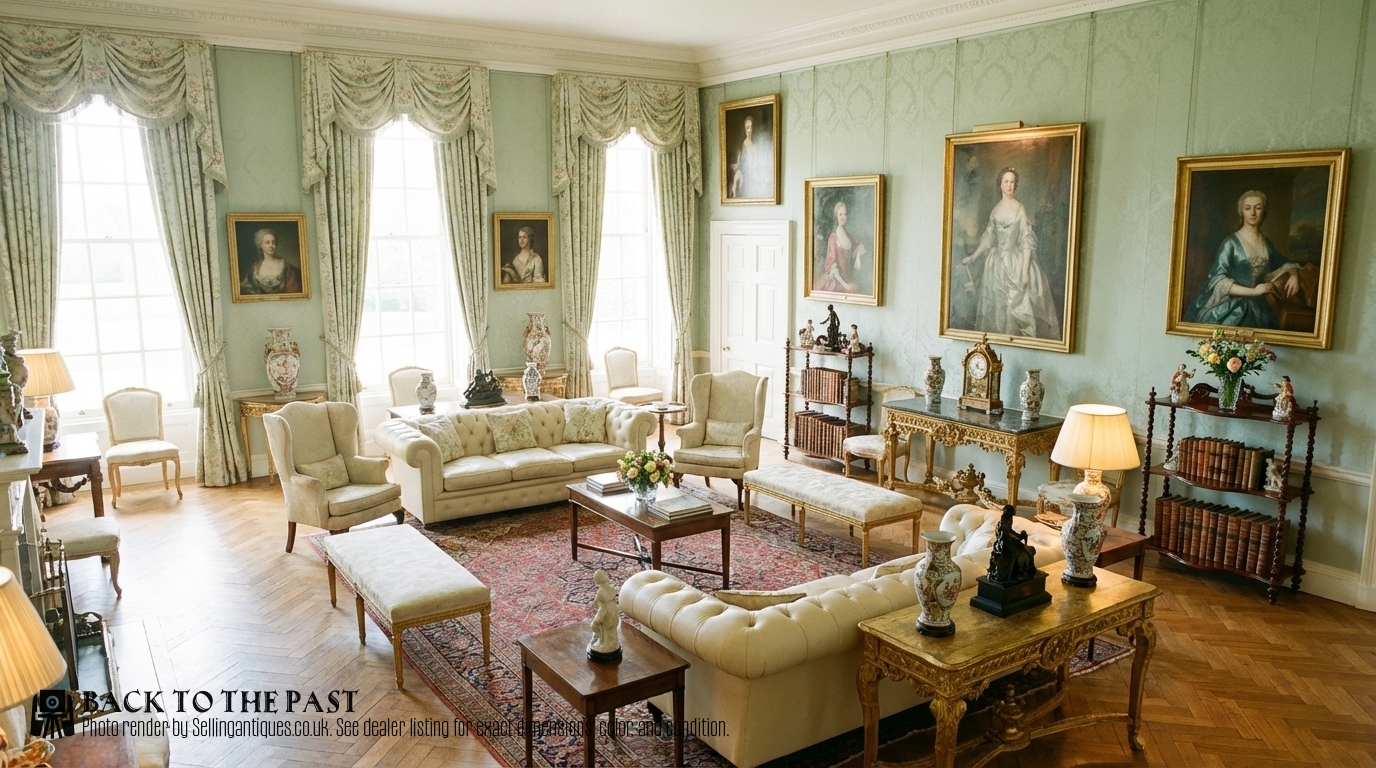
Barley Twist Shelves
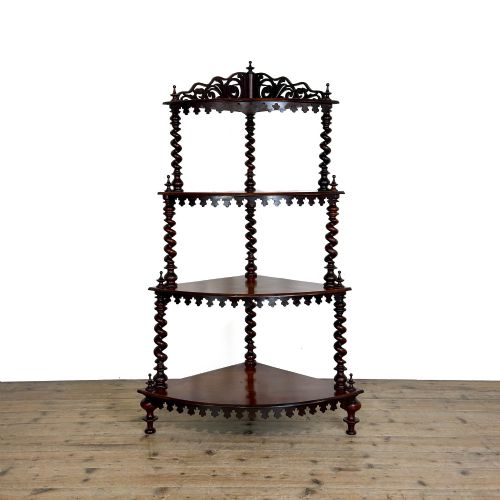
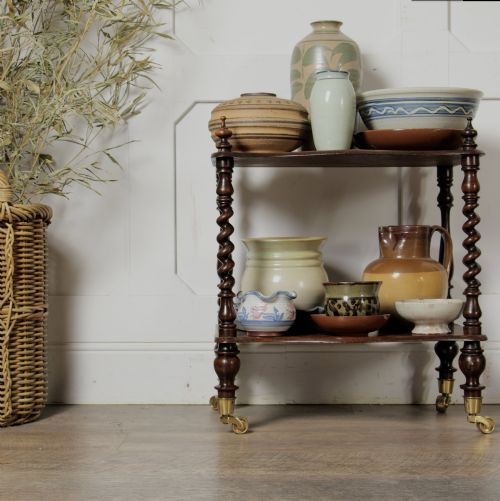
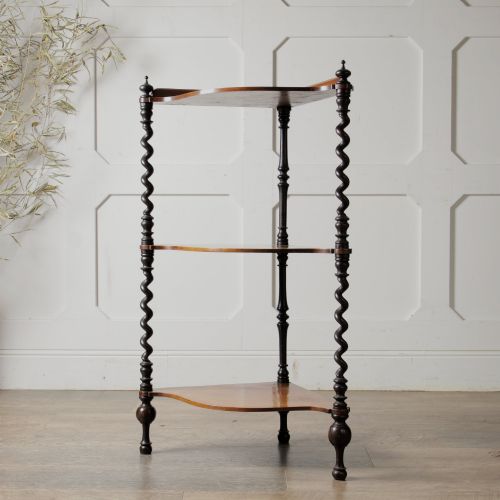
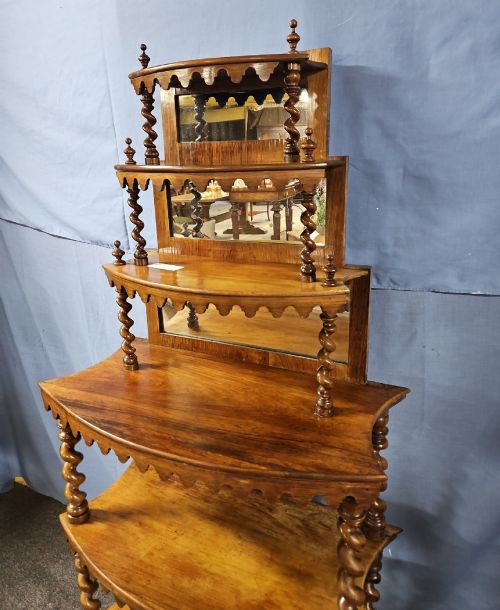
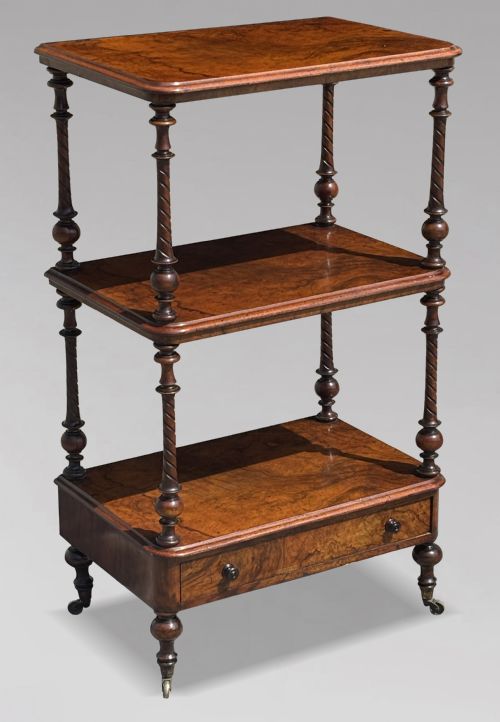
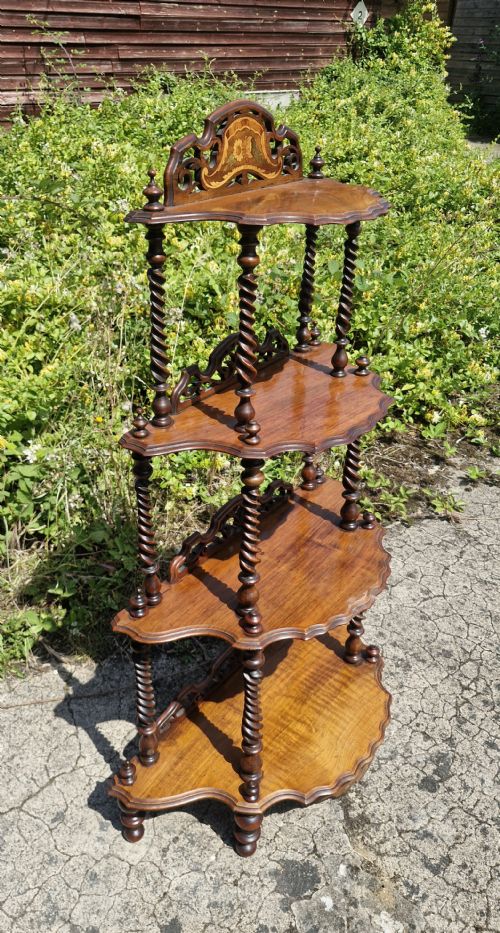
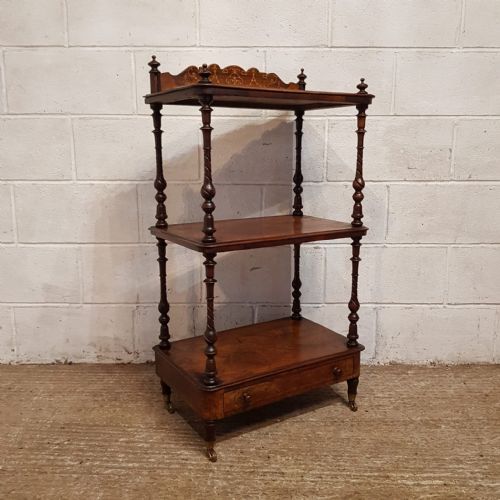
Barley twist shelves appear primarily within Victorian and Edwardian periods, often taking the form of multi-tiered whatnots, etageres, and corner stands. These pieces function as open display units designed to hold books, ceramics, and ornaments across several levels.
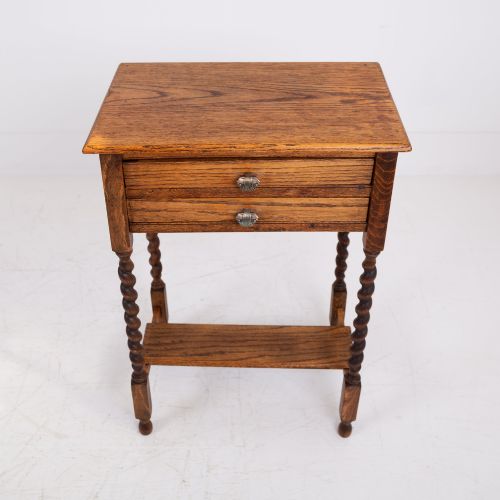
The materials span walnut, burr walnut, mahogany, and rosewood, alongside oak variants from the early twentieth century. Makers constructed these units as freestanding floor models, corner adaptations, and occasional hanging wall shelves.
Victorian examples dominate the selection, frequently incorporating turned columns and multi-tier shelving systems. Pieces emerge from various design contexts including Jacobean Revival and Arts and Crafts movements.
Materials and construction
Workshops utilised dense hardwoods like mahogany, walnut, and rosewood to support stacked tiers without warping under weight. Burr walnut veneers appear frequently on top-tier surfaces, providing rich grain patterns.
Turnery techniques produced the characteristic helical columns that define the upright supports, paired with brass fittings and glass elements in select hybrid cabinets.
The inventory records pieces spanning the Victorian, Edwardian, and Regency periods, constructed in walnut, mahogany, rosewood, and oak.
Gradations in manufacture
The precision of the woodturning dictates the visual rhythm of the upright supports, where crisp helical cuts separate standard production from finer work. Timber selection also defines the tier construction, ranging from plain hardwoods to figured burr walnut veneers.
Structural integration between the shelves and the turned columns determines stability across multi-tier arrangements. Tier count and corner alignment further distinguish standard domestic utility pieces from elaborate display furniture.
The Barley Twist Shelves Glossary
- Whatnot
- An open set of tiered shelves designed for displaying ornaments, books, or small decorative objects. This form gained popularity during the eighteenth century and remained a staple through the Victorian era.
- Etagere
- A piece of furniture consisting of a set of open shelves for displaying small articles. The term derives from French and often applies interchangeably with whatnots.
- Barley twist
- A type of woodturning shaped to resemble a twisted stalk of barley. This decorative motif appears on furniture legs, uprights, and structural columns.
- Burr walnut
- Timber taken from a tree growth where the grain has burl formation, producing intricate swirling patterns. Cabinet makers prized this veneer for principal display surfaces.
Barley Twist Shelves: Frequently Asked Questions
What rooms suit barley twist shelves?
These tiered units function well in living spaces and hallways to display books and ceramics without closing off the room.
Corner variants fit into unused angles, while freestanding multi-tier etageres anchor larger walls.
How do I date a whatnot?
Dating relies on timber choice, such as rosewood and burr walnut for mid-nineteenth century pieces versus oak for later twentieth century items.
Construction joints and the profile of the turned columns also point to specific stylistic periods.
Were these units used for books?
Makers designed open tiers primarily for ornamental displays, decorative ceramics, and small collections.
Sturdier multi-tier versions also accommodated smaller volumes and reference books in studies.
What is the difference between a whatnot and an etagere?
Both terms describe multi-tiered open shelving units intended for display.
Regional preferences and maker terminology determined which label appeared on the piece.