

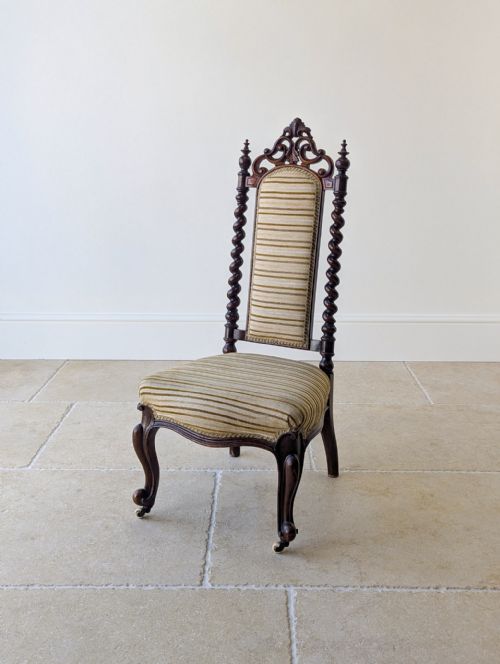
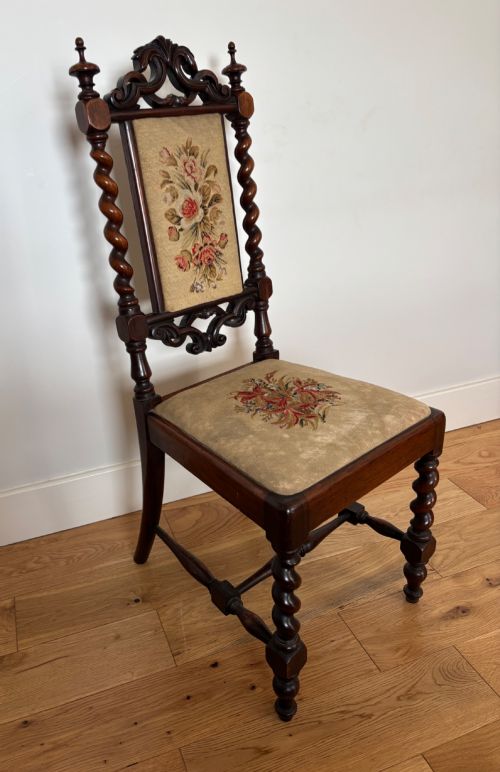
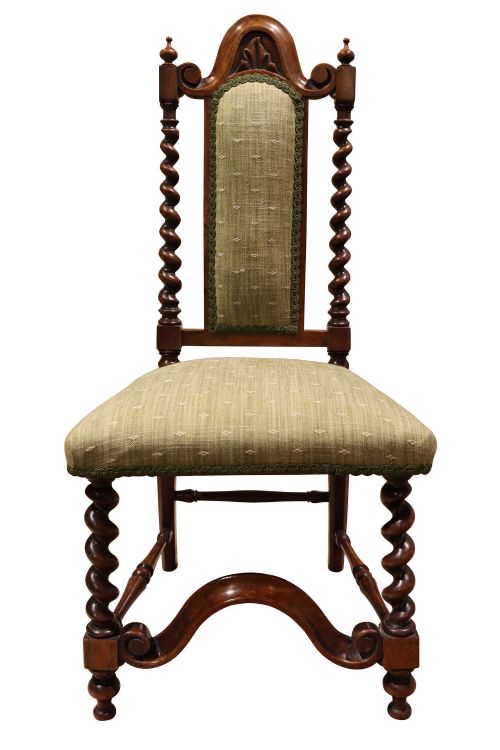



Barley Twist Nursing Chair
A barley twist nursing chair brings characteristic nineteenth-century turned woodwork into a domestic interior.
Barley Twist Nursing Chair
Buyers browsing this selection will encounter various iterations from the Victorian era, spanning walnut, rosewood, and mahogany woods. Many examples incorporate turned supports alongside upholstered elements such as velvet, textile, and needlepoint coverings.
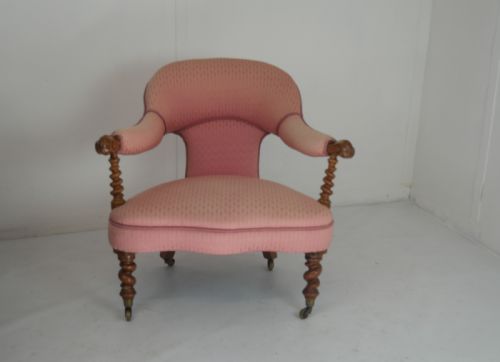
The inventory includes related seating forms such as parlour chairs, child's chairs, side chairs, armchairs, and prie-dieu hall chairs alongside dedicated nursing chairs. These pieces share stylistic roots in the Victorian period and the Gothic Revival movement.
Distinguishing quality in period seating
Quality in these Victorian chairs rests upon the precision and depth of the woodturning along the frame. Crisp, well-defined spiral turns demonstrate greater skill from the maker than shallow or softened edges.
The choice of primary timber significantly influences the overall character of the piece. Dense, richly grained rosewood and figured walnut impart a different visual weight compared to standard hardwoods.
The integrity of the original structure and the harmony between carved woodwork and upholstered surfaces determine the refinement of the chair. Surviving needlepoint or period textile coverings add distinct historical context to the seating.
Barley Twist Nursing Chair Retail Price Guide 2026
Typical asking prices for barley twist nursing chair among the pieces listed under this phrase on Sellingantiques today, from the lower quarter to the upper quarter. They describe what is for sale here now, not the wider market.
The Barley Twist Nursing Chair Glossary
- Barley twist
- A form of woodturning resembling a spiralling rope or barley sugar stick, popular in seventeenth-century furniture and revived during the Victorian era. This decorative motif appears on the uprights and stretchers of chairs.
- Nursing chair
- A low-seated Victorian chair originally intended for nursing infants or for general bedroom and parlour use. The lowered seat height distinguished it from standard dining or drawing-room seating.
- Prie-dieu
- A devotional chair featuring a high, narrow back designed for kneeling and prayer. Victorian examples often incorporate turned woodwork and upholstered arm rests.
- Gothic Revival
- An architectural and decorative style drawing inspiration from medieval forms, prevalent during the nineteenth century. Pieces in this style often display pointed arches and heavy timber construction.
- Needlepoint
- A type of canvas work embroidery used historically for chair seats and back panels. Hand-stitched wool designs frequently adorn mid-nineteenth-century upholstery.
Barley Twist Nursing Chair: Frequently Asked Questions
What is a barley twist nursing chair?
A barley twist nursing chair is a nineteenth-century seat featuring distinctive spiral-turned wooden supports and a low profile. These pieces were historically designed for comfortable domestic tasks in bedrooms and parlors.
Today, they function well as accent seating in living spaces, adding period character and tactile warmth through their turned woodwork and upholstered panels.
How do I date a Victorian nursing chair?
Dating these chairs involves examining the primary timber, turning style, and upholstery methods. Mid-nineteenth-century examples frequently utilise solid walnut or rosewood with hand-turned spiral components.
Stylistic cues such as early Gothic Revival motifs or specific Victorian proportions help narrow down the decade of manufacture between 1850 and 1870.
Where were nursing chairs used originally?
Nursing chairs were placed primarily in Victorian bedrooms and nurseries where a low seat height was practical for domestic duties. Their compact proportions also suited intimate parlor settings.
In modern homes, they fit easily into corners, dressing rooms, or reading areas as decorative occasional seating.
What woods were used for these chairs?
Victorian cabinetmakers selected dense hardwoods such as walnut, rosewood, and mahogany for their strength and fine grain. These timbers supported the intricate demands of spiral woodturning.
Secondary woods were occasionally employed for internal framing, while decorative brass elements added subtle metallic contrast to the polished timber.
Are needlepoint covers original?
Needlepoint and velvet coverings on nineteenth-century chairs can be original or later replacements depending on the history of the piece. Hand-stitched needlework was common during the Victorian period for upholstery.
Assessing the textile involves looking at the wear patterns, backing materials, and how the fabric attaches to the wooden frame.