

Barley Twist Legs
Barley twist legs bring turning and texture to tables, desks, and chairs across several centuries of cabinetmaking.
Barley Twist Legs
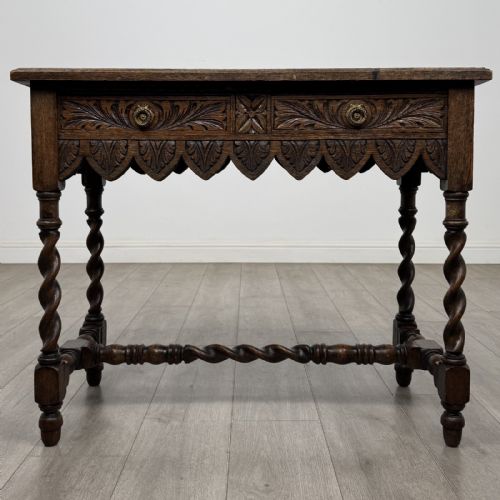
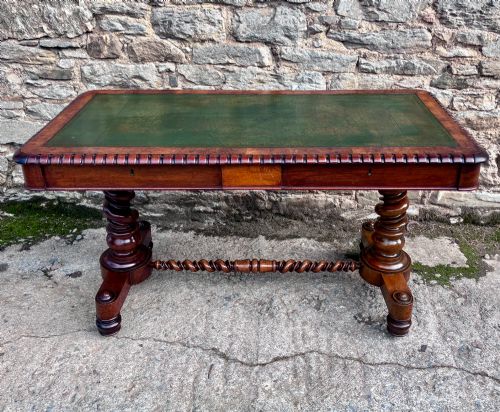
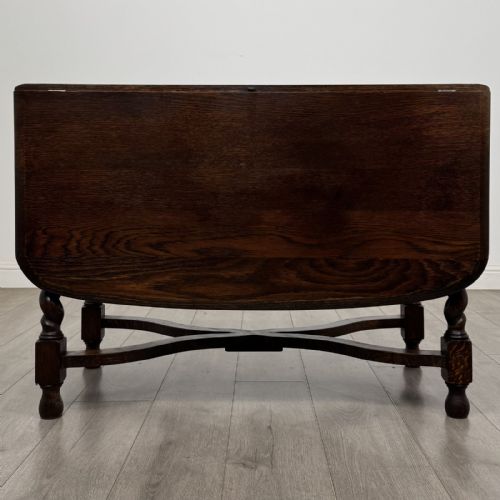
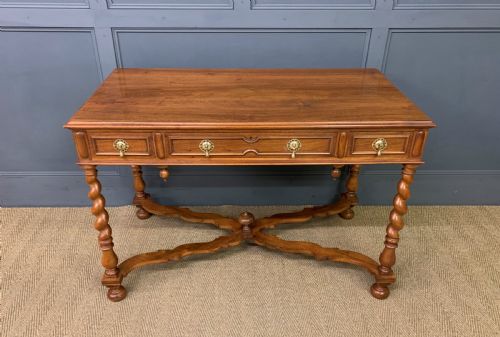
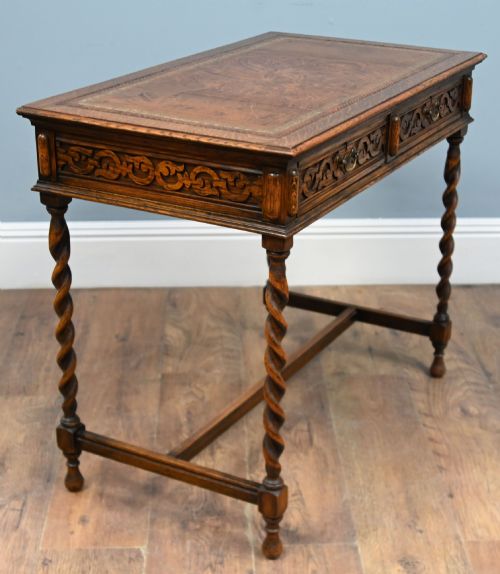
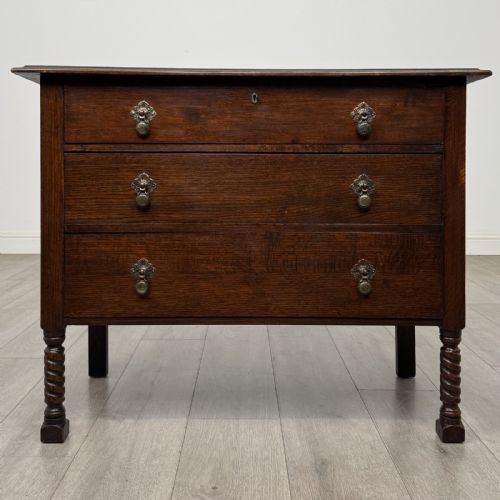
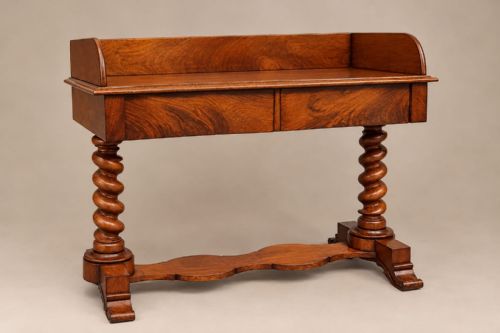
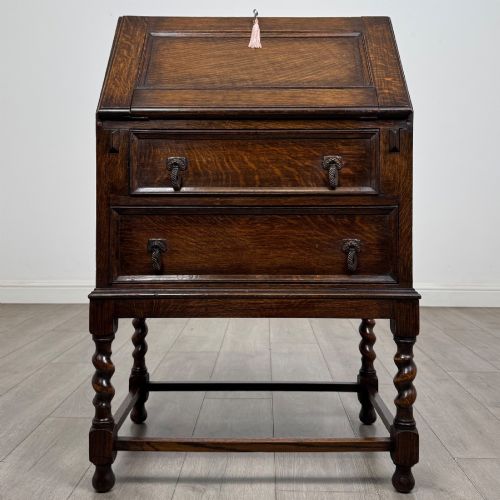
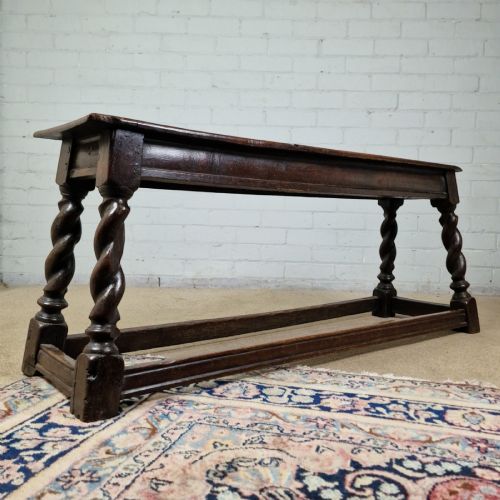
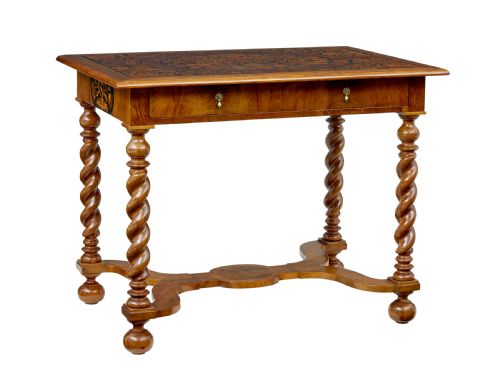
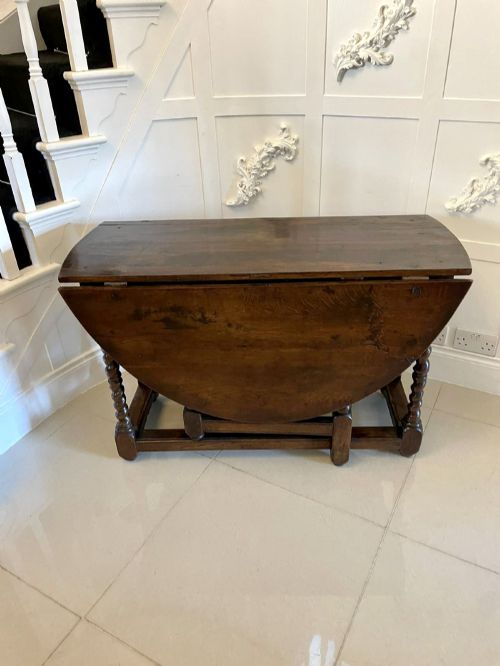
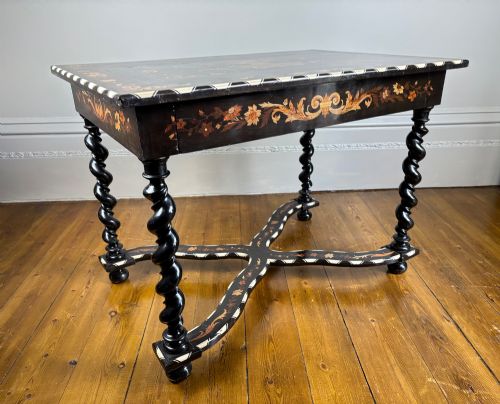
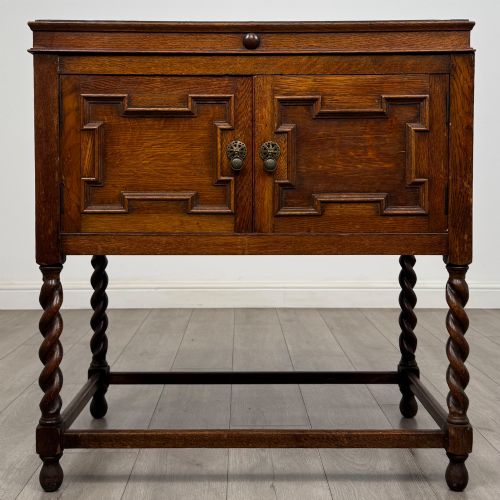
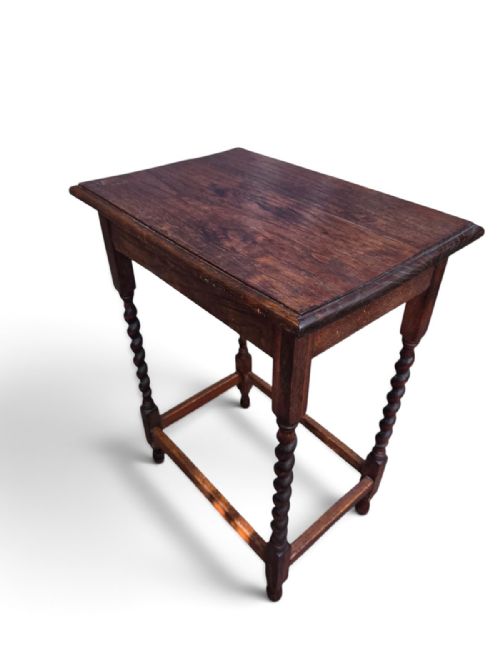
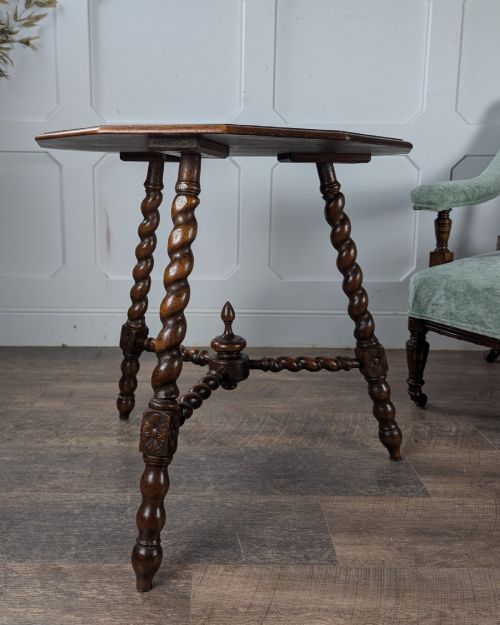
When a buyer searches for barley twist legs, they encounter supports formed by a helical cut that catches light and shadow along its spirals. These elements appear on practical domestic furniture, ranging from small side tables and plant stands to large gateleg dining tables and sideboards.
The versions most commonly met on this page date from the Edwardian era and the early twentieth century, drawing heavily on earlier Jacobean and William and Mary revivals. Oak dominates these later interpretations, providing a sturdy framework for the distinctive spiral turnings.
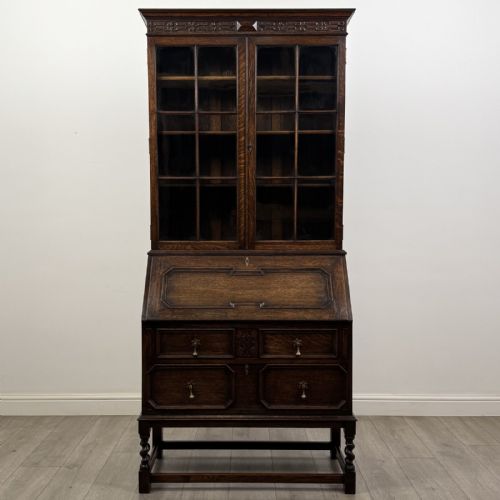
Earlier examples also surface, reaching back to seventeenth-century origins alongside nineteenth-century walnut and mahogany pieces. Alongside tables and chairs, the form supports cabinets on stands, stools, and writing bureaus.
Judging Quality in Turned Furniture
Quality rests on the crispness of the turning and the depth of the carved profile along the twist, where sharper undercuts separate finer work from softer, more mechanised rounding. The proportion between the turned leg and the surrounding framework determines the visual balance of the piece.
The choice of timber grain also dictates distinction, particularly in walnut or oak where figured surfaces enhance the movement of the spiral. Structural integrity at the joints where the twisted leg meets the frieze or stretcher governs the long-term stability of tables and chairs.
Barley Twist Legs Retail Price Guide 2026
Typical asking prices for barley twist legs among the pieces listed under this phrase on Sellingantiques today, from the lower quarter to the upper quarter. They describe what is for sale here now, not the wider market.
Listings feature oak, walnut, mahogany, rosewood, and ebonised wood across side tables, dining tables, chairs, and cabinets on stands.
Liberty & Co
The Barley Twist Legs Glossary
- Barley twist
- A form of furniture leg or column carved in a continuous helical spiral resembling a twisted rope. This turning style gained popularity in seventeenth-century furniture and saw several revivals.
- Gateleg table
- A drop-leaf table where the legs swing outward on hinged gates to support the folded leaves when opened. They frequently incorporate turned supports.
- Oyster veneer
- Circular cross-sections of branch wood arranged in patterns resembling oyster shells. This decorative surface technique appears on seventeenth-century and revival pieces.
- Jacobean Revival
- A nineteenth and twentieth-century style imitating the heavy oak furniture of the early seventeenth century. It frequently utilises dark finishes and spiral turnings.
- Stretcher
- A horizontal wooden rail connecting the legs of a table or chair for added stability. On turned furniture, these rails often feature matching spiral carvings.
Barley Twist Legs: Frequently Asked Questions
What periods do these pieces date from?
The selection spans several centuries, running from seventeenth-century originals through eighteenth-century forms to nineteenth-century interpretations. Edwardian and early twentieth-century revival pieces appear frequently.
Craftsmen recreated the spiral turning style across different eras, meaning a similar profile can belong to an early period or a later revival.
Are these tables sturdy for daily use?
Solid oak and walnut construction provides robust support for everyday dining, writing, or display purposes. The structural strength depends primarily on the joints connecting the legs to the frame.
Gateleg designs require care when opening and closing the folding leaves to protect the swinging wooden supports.
How do I care for polished wood surfaces?
Routine dusting with a dry cloth keeps the spiral carvings free from particle buildup in the grooves. Applying occasional wax feeds the timber and maintains the sheen of the grain.
Keeping the furniture away from direct heat sources prevents the wood from drying out and splitting along the joints.
How can I tell a revival piece from an earlier original?
Early pieces display tool marks and hand-finished irregularities within the twists that reflect seventeenth-century bench work. Revival pieces from the Edwardian era often show uniform machine turning and standardised dimensions.
Timber characteristics and construction methods inside the drawers or underframes offer further clues to the actual date of manufacture.