


Barley Twist Bureau Desk
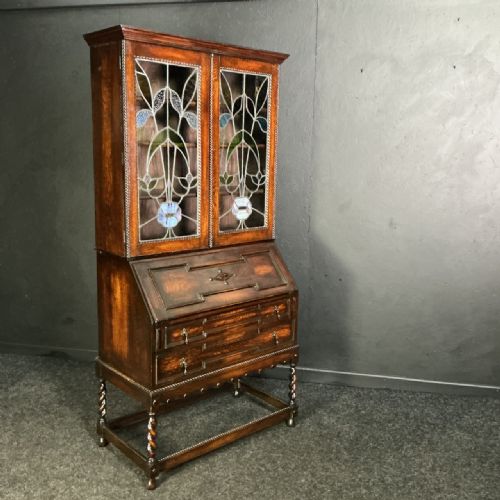
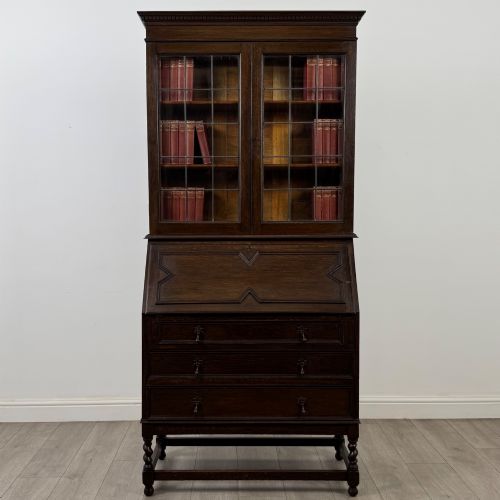
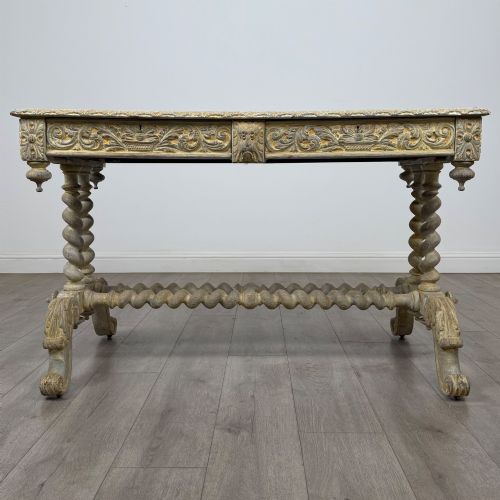
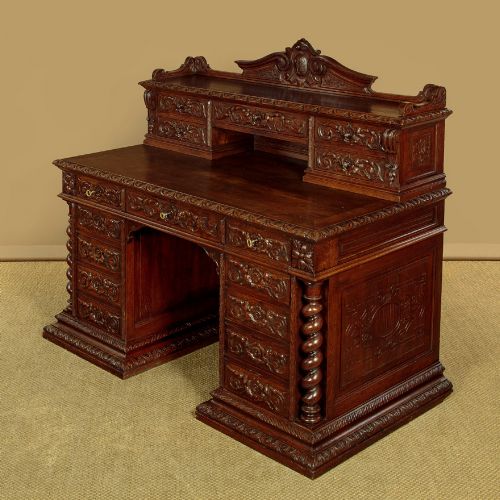
These barley twist bureau desk examples combine solid timber construction with distinctive turned supports, offering a practical workspace wrapped in historical character.
Barley Twist Bureau Desk
A barley twist bureau desk provides a writing surface combined with storage, appearing frequently in oak and walnut across Edwardian, Victorian, and earlier revival periods. These pieces range from compact tabletop escritoires and Davenport desks to larger bureau bookcases fitted with fall-front writing compartments.
Jacobean revival examples dominate the selections here, alongside Queen Anne, William & Mary, and Biedermeier interpretations. Buyers encounter varying configurations including kneehole desks, writing tables, and secretaire cabinets featuring integrated drawers and fitted stationery interiors.
Materials and Construction
Construction relies heavily on timbers such as oak, walnut, and mahogany, sometimes enhanced by wood inlay or marquetry details. Structural elements frequently incorporate turned wooden supports alongside brass handles and leather writing surfaces.
Cabinetmakers utilised traditional joinery methods to assemble fall-front flaps, hinged writing slopes, and internal letter compartments. Drawer construction involves dovetailed joints, while decorative flourishes range from carved panels to glass-fronted upper bookcase sections.
Listings feature oak, walnut, mahogany, and brass across periods spanning the seventeenth century to the Edwardian era.
Craftsmanship and Proportion
Quality separates pieces through the crispness of the turned barley twist supports and the selection of figured timber veneers like oyster walnut or mahogany. Superior examples display harmonious proportions, tight joinery in the fall-front mechanism, and well-executed carving rather than hurried surface decoration.
The sophistication of the internal stationery fittings, the presence of original brass hardware, and the structural integrity of the writing surface determine the overall standard. Finer specimens maintain consistent timber patination and uncompromised internal drawer construction.
The Barley Twist Bureau Desk Glossary
- Barley twist
- A spiral turning technique used on furniture legs and supports, reminiscent of twisted barley sugar. This decorative carpentry style appears prominently on revival writing furniture.
- Bureau
- A desk featuring a sloping hinged lid that drops down to reveal a writing surface and small pigeonholes. The design conceals internal stationery compartments.
- Escritoire
- A writing cabinet or desk containing drawers and pigeonholes for letters. These pieces often feature a fall-front writing flap.
- Davenport desk
- A compact box-like writing desk with a sloping top and drawers opening to one side. This form became popular during the nineteenth century.
- Marquetry
- Decorative veneer work formed by fitted pieces of various woods applied to a carcass. This technique creates intricate surface patterns on desks and cabinets.
Barley Twist Bureau Desk: Frequently Asked Questions
How do I clean the wood surface?
Dust regularly with a soft, dry cloth to prevent dirt accumulation on the timber and carved twist supports.
Apply a quality beeswax periodically to nourish the grain and maintain the natural lustre without using silicone-based polishes.
Where should I place a bureau desk?
Position the desk away from direct sunlight and heat sources to prevent the timber from drying out or warping over time.
Ensure adequate room behind the piece if the fall-front or chair requires clearance for comfortable daily sitting.
How do I identify a Jacobean revival piece?
Jacobean revival pieces typically feature dark oak construction, geometric moulding, and heavily turned structural elements like barley twist legs.
These designs emulate seventeenth-century British furniture styles while utilising nineteenth or twentieth-century construction techniques.