




Banjo Weather Glass
A banjo weather glass combines atmospheric measurement with domestic ornament, spanning Georgian, Regency and Victorian periods.
Banjo Weather Glass
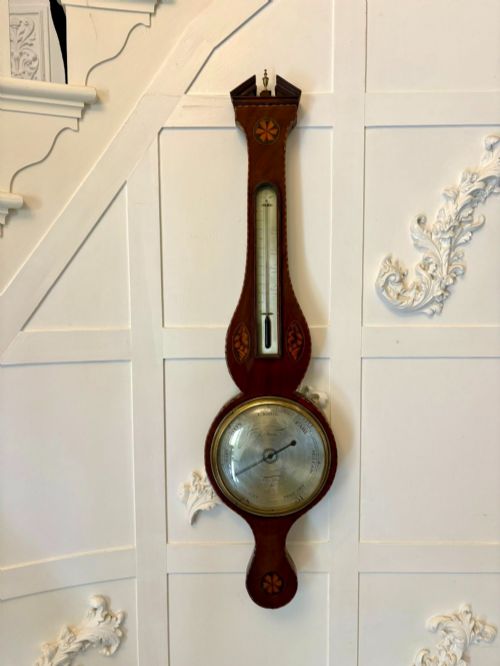
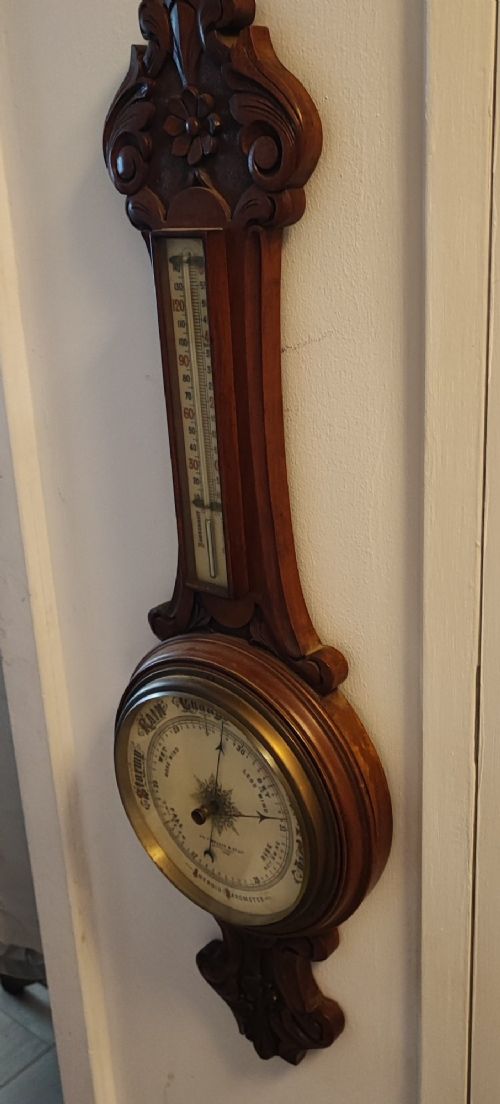
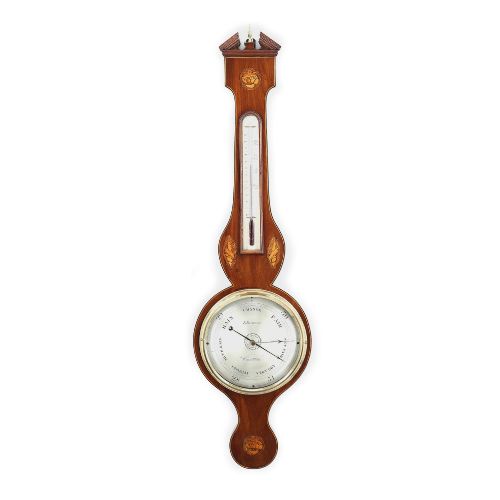
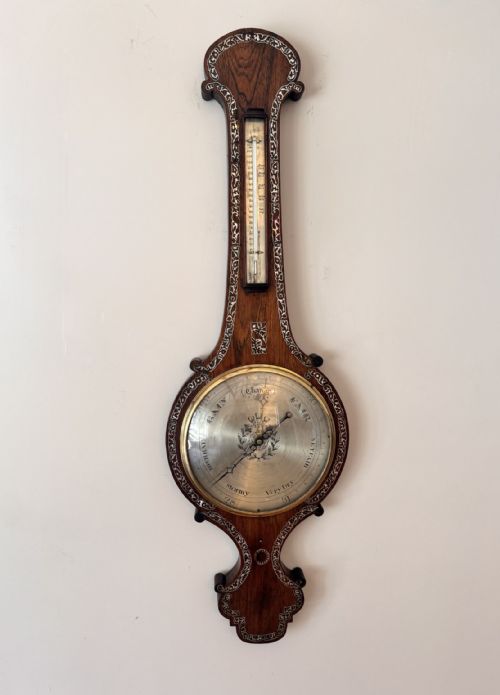
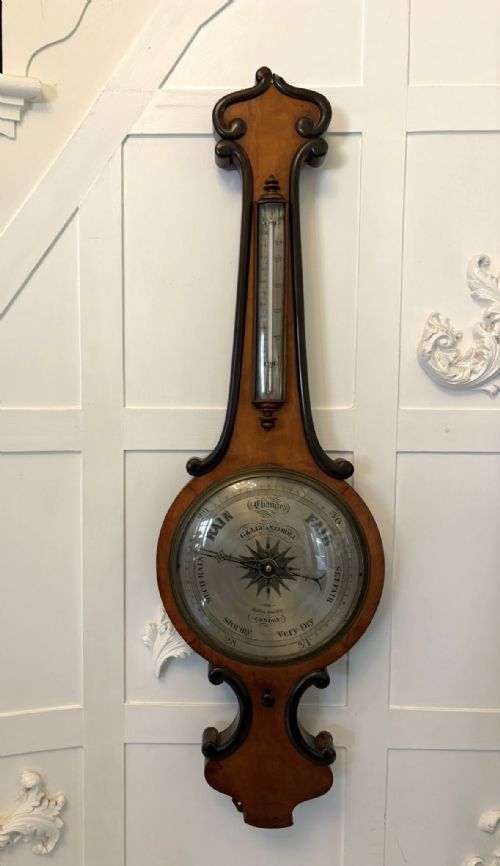
A banjo weather glass, commonly known as a wheel barometer, takes its name from the distinctive shape of its wooden case, which swells at the base and tapers toward the top. When searching for a banjo weather glass, a buyer encounters wall-hanging instruments designed to measure atmospheric pressure through the movement of mercury or aneroid mechanisms. These instruments date primarily from the Georgian, Regency and Victorian eras, functioning as both scientific tools and prominent domestic furnishings.
How they were made
Cabinetmakers constructed the wooden housings of a banjo weather glass using durable timbers like mahogany, rosewood, oak and walnut, frequently applying contrasting veneers and shell inlays to the surfaces. Carpenters shaped the frames to accommodate delicate glass tubes filled with mercury or sensitive aneroid metal capsules that responded to atmospheric shifts. Metal dials made from silvered brass provided clear graduations for reading barometric pressure.
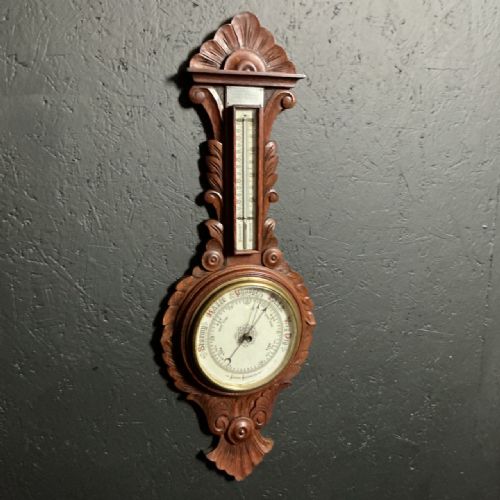
Makers integrated specialised instrumentation into the timber chassis, securing brass bezels, thermometer scales and spirit levels onto the face of the board. The construction required precise alignment between the internal linkages and the exterior pointer to ensure accurate pressure readings. Carved details on oak and walnut models demonstrated advanced joinery and hand-tool proficiency among period craftsmen.
Makers occasionally tucked tiny spirit levels into the base so homeowners could ensure their banjo weather glass hung plumb on the parlour wall.
What varies in quality
The distinction between standard examples and superior specimens of a banjo weather glass rests upon the selection of timber, the sophistication of the case decoration, and the reputation of the maker. Finely figured mahogany, dense rosewood and burr walnut distinguish the finer pieces, complemented by intricate mother-of-pearl inlay or meticulous hand-carved ornamentation along the pediment and edges.
The execution of the dial and the inclusion of subsidiary instruments also determine the standing of a piece. Silvered metal dials featuring crisp, legible engraving and signed by recognised makers elevate an instrument above anonymous workshop production. The retention of original glass, intact mercury columns and well-preserved mechanical components governs the overall integrity of the piece.
B Besozzi of Weymouth·G and L Guanziroli London·Ganthony of London·Prada of High Wycombe·Molton of Norwich·Luisetti of London·Fagioli of Clerkenwell London·W Watson and Sons·Giana Shrewsbury·Jenkins of Old Swindon·WE Pain of Cambridge·Hayward of Ashford·Vecchio and Co of Shaftsbury·Watkins
The Banjo Weather Glass Glossary
- Aneroid barometer
- An instrument that measures atmospheric pressure without liquids, using a flexible-walled metal capsule that expands or contracts as pressure changes.
- Wheel barometer
- A meteorological instrument housed in a banjo-shaped wall case that translates the vertical movement of mercury into the rotational sweep of a pointer on a circular dial.
- Silvered metal
- A brass or copper dial plate treated with a silver solution to create a matte, reflective surface that receives engraved lettering and scale markings.
- Pediment
- The decorative architectural crowning element situated at the very top of the wooden barometer case.
- Mother-of-pearl
- Iridescent inner shell material utilised by makers to create decorative floral or geometric inlays across rosewood and mahogany cases.
Banjo Weather Glass: Frequently Asked Questions
What is a banjo weather glass?
A banjo weather glass is a traditional wall barometer housed in a distinctive wooden case shaped like a banjo, featuring a wide circular base and a slender upper stem.
These instruments display atmospheric pressure on a dial and frequently incorporate thermometers or mirrors into the design.
How do you read a barometer?
The pointer on the circular dial moves clockwise as atmospheric pressure rises, typically indicating fair weather, and anti-clockwise as pressure falls, suggesting rain or storm.
Observing the change relative to the set hand reveals whether conditions are improving or deteriorating.
Where were these barometers placed?
These wall instruments hung in prominent domestic spaces such as hallways, libraries and parlours where family members and guests could consult the weather.
Their decorative wood veneers and inlaid patterns served to complement the interior furnishings of Georgian and Victorian homes.
How do I identify the period?
The period of a banjo weather glass is identified through a combination of timber selection, case style, dial design and the presence of maker signatures.
Georgian and Regency models tend toward restrained mahogany and string inlay, while Victorian examples often feature heavier carving, walnut and mother-of-pearl.