


Bamboo Mirror Stand
A bamboo mirror stand brings lightness and structural strength to an entrance hall, combining natural cane with functional glass.
Bamboo Mirror Stand
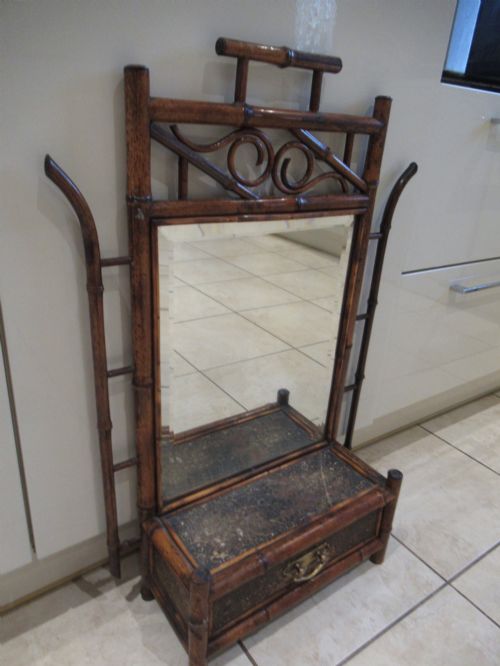
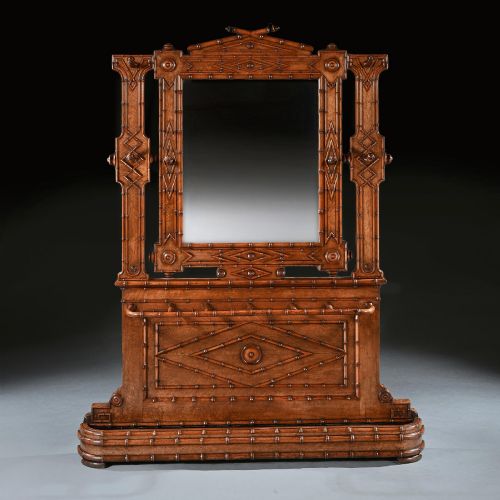
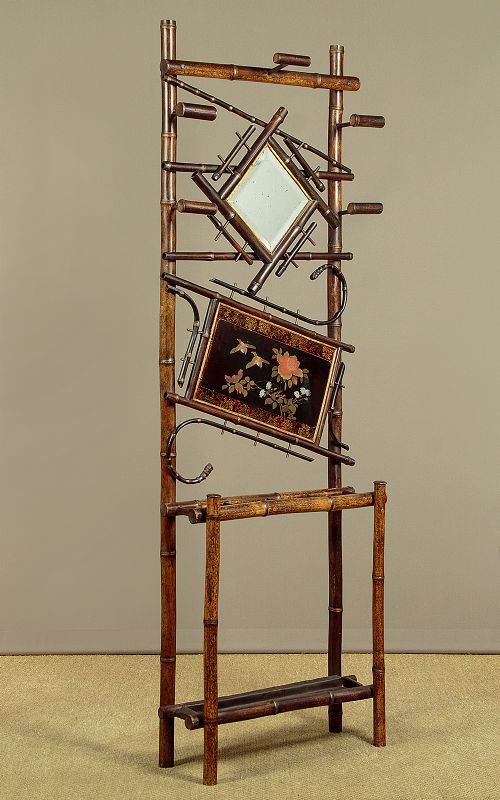
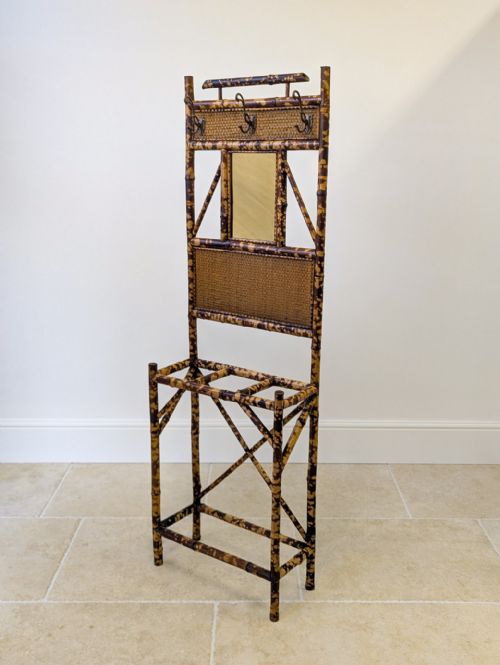
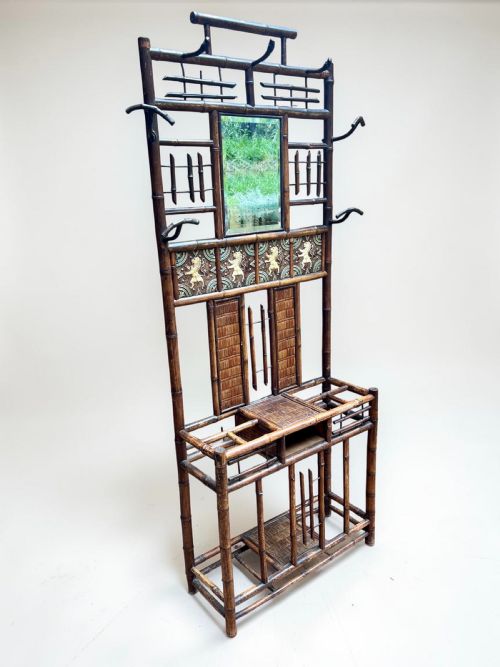
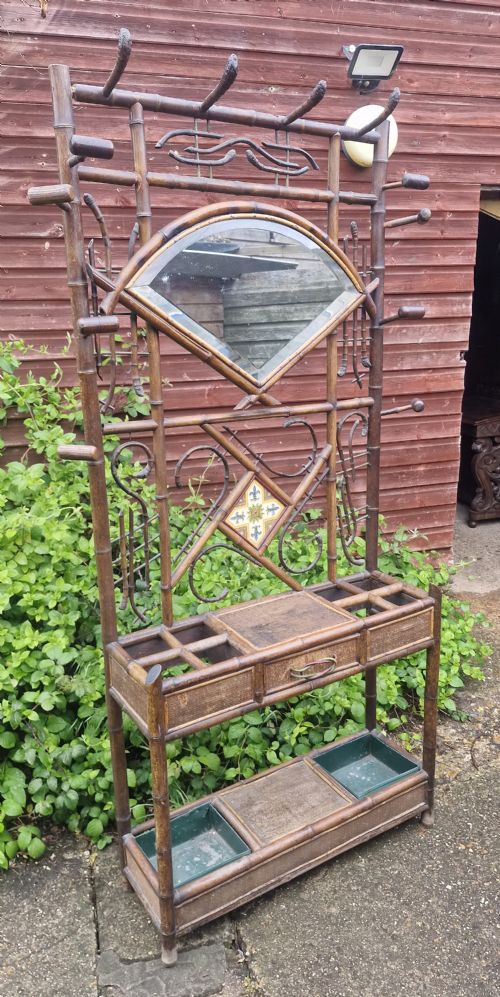
A bamboo mirror stand is typically encountered as a hall stand or hat and coat stand dating from the late Victorian period, the aesthetic movement, or around nineteen hundred. These hall stands frequently incorporate mirror glass, umbrella trays, and hooks alongside the core bamboo framework.
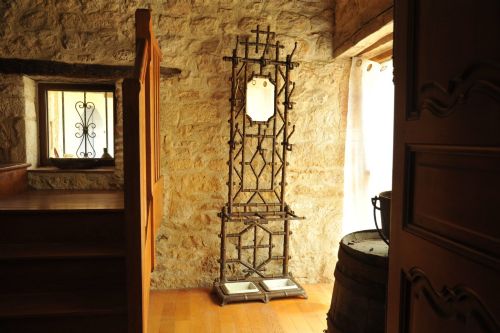
The selection ranges from compact corner cabinets and small wall mirrors to large French faux bamboo cast iron stands and Chinoiserie hall stands. Natural bamboo combines with rattan, ceramic tiles, and lacquer to form utilitarian furniture designed for hallway use.
How they were made
Construction relies heavily on natural bamboo poles secured with pinned joints, complemented by woven rattan panels and occasionally turned hardwood or birdseye maple. French makers also utilised cast iron moulded into faux bamboo stems to support heavy hats, coats, and umbrellas.
Mirrors were set into wooden or bamboo frames using original mirror glass, sometimes accompanied by decorative ceramic tiles or lacquer panels inserted into the structure for visual contrast.
Listings span periods from eighteen ninety through to nineteen twenty, featuring Victorian, Aesthetic Movement, and French Chinoiserie styles.
What varies in quality
The distinction between standard domestic hall furniture and more elaborate French Aesthetic period or Chinoiserie interpretations lies in the refinement of the decorative details and the clever combination of materials like birdseye maple and metal.
The Bamboo Mirror Stand Glossary
- Faux bamboo
- Metal or timber shaped and painted to imitate the segmented growth rings of natural bamboo. This technique provided extra strength for heavy load-bearing items like hat and coat stands.
- Aesthetic movement
- A late nineteenth century design style prioritising visual beauty over narrative or moral purpose. Pieces from this movement often feature Japanese-inspired motifs and organic materials.
- Chinoiserie
- European artistic style reflecting Chinese decorative motifs. It appears on hall stands through painted or lacquered surface details.
- Hall stand
- A piece of hallway furniture combining a mirror, coat hooks, hat storage, and frequently an umbrella stand with a drip tray. These items greeted visitors upon entry.
Bamboo Mirror Stand: Frequently Asked Questions
What is a bamboo mirror stand?
A bamboo mirror stand is a hallway furniture piece that combines a looking glass with structural framework made from bamboo or faux bamboo materials. They were designed to hold coats, hats, and umbrellas.
These stands date primarily from the late Victorian era and the aesthetic movement, bringing a light, organic texture to entrance spaces.
How do I date a bamboo hall stand?
Dating relies on stylistic clues such as aesthetic movement motifs, French faux bamboo cast iron construction, and Victorian cabinet-making methods. Most surviving examples date between eighteen ninety and nineteen twenty.
Examining the mirror glass, hardware, and construction techniques helps place the piece within this broad late nineteenth and early twentieth century window.
Were these stands used in hallways?
These pieces served as functional entrance hall furniture where visitors could deposit hats, coats, and wet umbrellas while checking their appearance in the mirror. The integrated trays caught water from walking sticks and umbrellas.
Their narrow footprints suited the tight spatial requirements of Victorian and Edwardian entrance passages.
What materials are used besides bamboo?
Makers incorporated mirror glass, woven rattan, ceramic tiles, lacquer, and metal components alongside natural bamboo. French pieces occasionally used cast iron shaped to resemble bamboo stems.
Birdseye maple and other turned hardwoods also appear in combination with the cane framework on specific aesthetic period pieces.