




Bamboo Coat Umbrella Rack
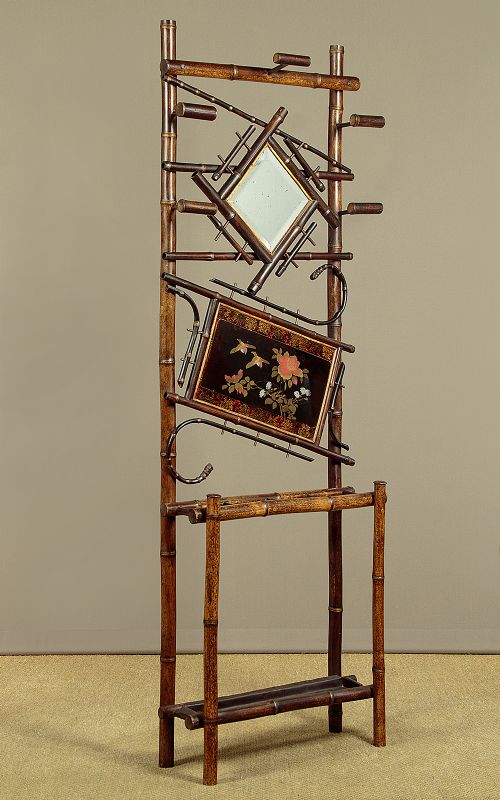
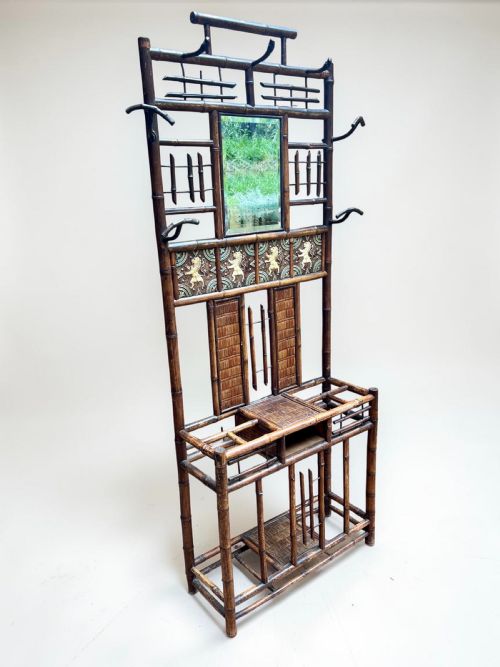
These bamboo coat umbrella rack pieces combine utility and exotic flair, offering a practical hallway centrepiece for hats, coats, and walking sticks.
Bamboo Coat Umbrella Rack
A bamboo coat umbrella rack provides a designated hallway drop-off for outerwear, umbrellas, and walking sticks. When searching for this phrase, collectors encounter Victorian and Edwardian examples spanning the nineteenth and early twentieth centuries, alongside French interpretations.
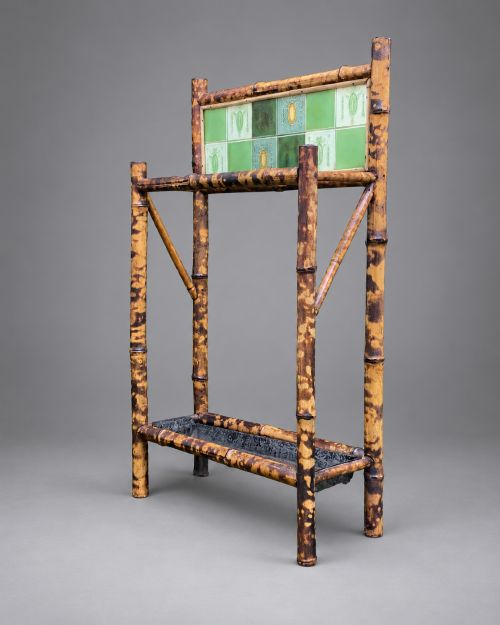
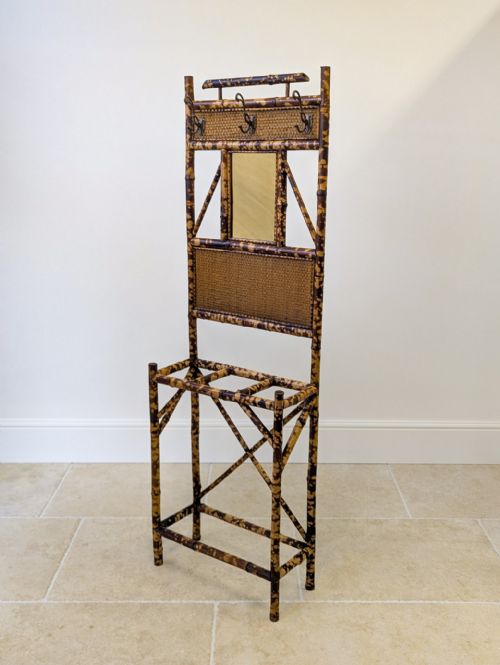
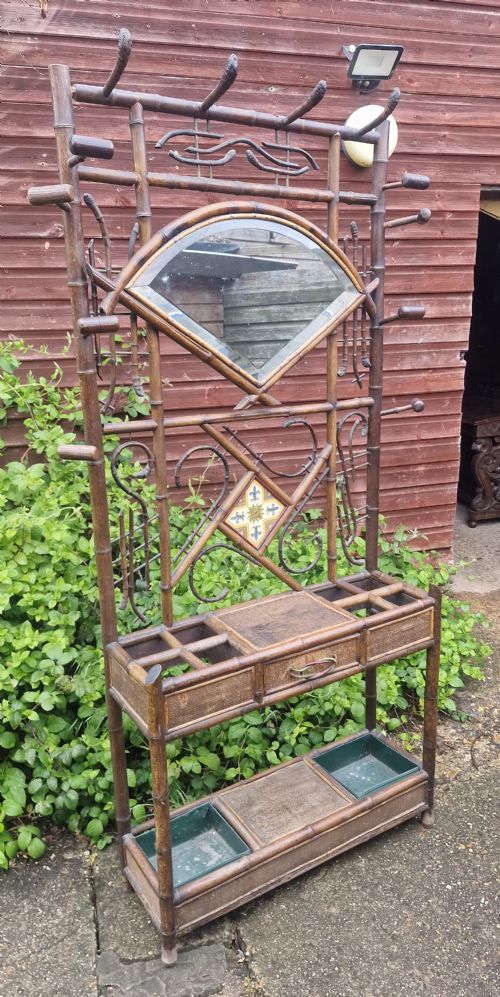
The dominant forms on this page are hall stands and hallstands constructed primarily from natural bamboo or faux bamboo. These pieces frequently incorporate practical elements such as central mirrors, ceramic tiles, and integrated metal or ceramic drip pans.
Stylistically, these items draw heavily from the Aesthetic Movement, Arts and Crafts ideals, and Japonisme sensibilities. Pieces range from modest small stands to elaborate structures featuring lacquered panels and bird's-eye maple frameworks.
Materials and construction methods
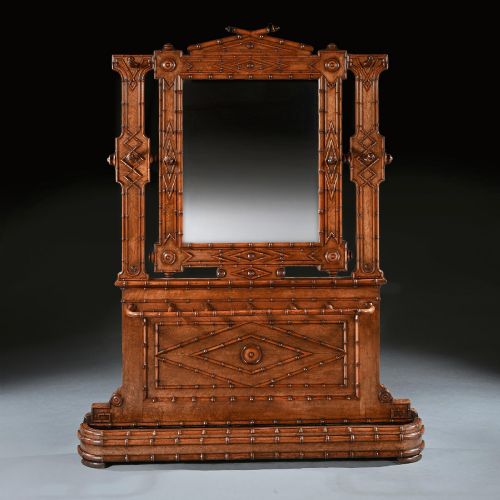
Makers utilised natural bamboo stems and rattan bindings to build lightweight yet resilient frames for daily hallway use. Faux bamboo versions, fashioned from hardwoods like maple, mimic the segmented jointed aesthetic through careful turning and paintwork.
Decorative surfaces often incorporate glass mirrors, ceramic tiles, and lacquered panels to catch the light in narrow entrance halls. Metal components, including hooks and umbrella drip trays, provide the necessary durability for damp coats and wet sticks.
Bamboo Coat Umbrella Rack Retail Price Guide 2026
Typical asking prices for bamboo coat umbrella rack among the pieces listed under this phrase on Sellingantiques today, from the lower quarter to the upper quarter. They describe what is for sale here now, not the wider market.
Hall stands often double as social barometers, hiding morning calling cards behind mirror frames while secretly judging your damp umbrella.
Distinguishing quality in construction and detail
Superior examples distinguish themselves through integrated decorative elements like hand-painted ceramic tiles, reverse-painted glass, or detailed lacquered panels rather than plain backing boards. The complexity of the frame design, particularly the inclusion of multiple coat hooks and secure mirror mountings, separates standard hall furniture from finer artistic pieces.
The integrity of the natural bamboo or turned faux bamboo framework dictates overall endurance, with tight rattan bindings and stable joints preserving the structural form. Finer pieces demonstrate careful attention to surface finish, whether maintaining the natural lacquered sheen of the cane or executing convincing faux bamboo graining.
The Bamboo Coat Umbrella Rack Glossary
- Aesthetic Movement
- A late nineteenth-century design ethos prioritising visual beauty over narrative or moral function. It heavily influenced these stands through Japanese artistic motifs.
- Faux bamboo
- A technique where hardwoods such as maple are carved and painted to imitate natural bamboo stems. This method offered greater structural rigidity while retaining the fashionable Orientalist look.
- Japonisme
- The European fascination with Japanese art and aesthetics during the late nineteenth century. This influence appears in the asymmetry and decorative motifs of many hall stands.
- Hall stand
- A piece of entrance furniture combining coat hooks, a mirror, and umbrella storage. It served as a functional greeting point in Victorian and Edwardian homes.
- Drip pan
- A metal or ceramic tray placed at the base of an umbrella stand to catch moisture from wet brollies. It protected wooden and woven floor surfaces from water damage.
Bamboo Coat Umbrella Rack: Frequently Asked Questions
Where should I place a hall stand?
These pieces suit entrance halls and narrow corridors where guests arrive. They require sufficient wall space and clearance to hang coats and store umbrellas without blocking doorways.
Positioning the stand near the primary entryway ensures practicality for daily outdoor wear. The integrated mirror also bounces light into darker Victorian hallways.
How do I care for bamboo furniture?
Regular dusting with a dry cloth keeps the natural cane and rattan bindings free from grime. Avoid placing the stand in damp areas or direct sunlight to prevent the bamboo from splitting.
Treating the frame occasionally with a suitable furniture wax maintains the lustre of the finish. Metal drip pans should be emptied and dried regularly to avoid corrosion.
Are these stands sturdy enough for daily use?
Victorian and Edwardian hall stands were built for practical everyday household duties. The combination of bent bamboo or turned hardwood creates a resilient structure capable of supporting winter coats.
Overloading individual hooks with heavy wet garments should still be avoided to protect the rattan bindings. Ensuring the base sits level on the floor prevents unnecessary stress on the joints.
What styles accompany bamboo hall furniture?
These items frequently align with Aesthetic Movement and Arts and Crafts principles. Japonisme and Chinoiserie influences also appear through lacquered panels and decorative tilework.
Such stylistic crossover reflects late nineteenth-century interior design tastes. Makers combined exotic motifs with practical British hallway requirements.