


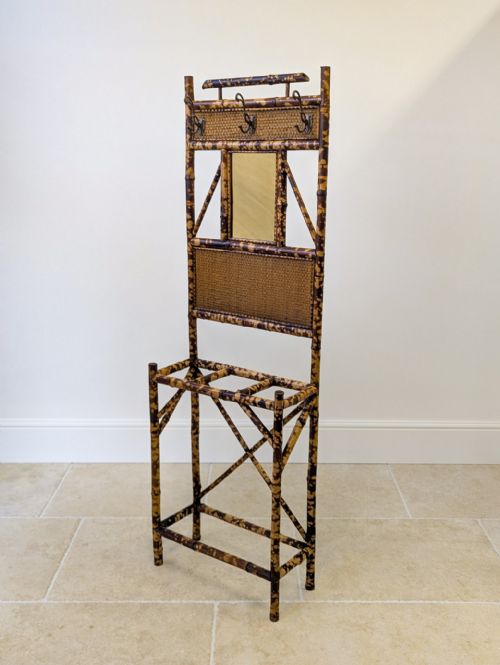
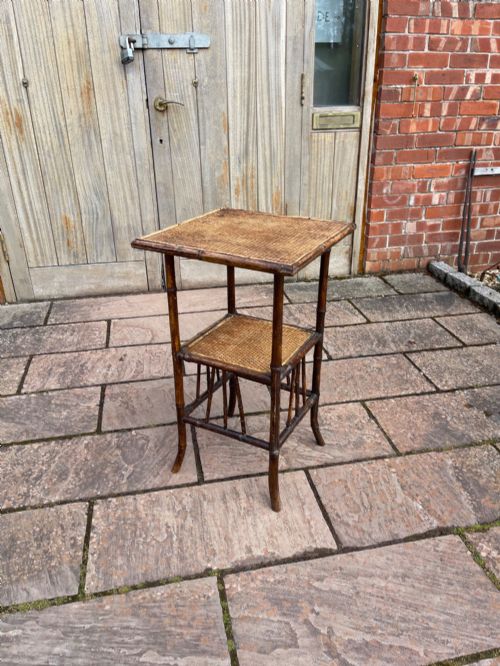


Antique Bamboo Cane Stand
An antique bamboo cane stand brings natural texture and functional charm to an entrance hallway.
Antique Bamboo Cane Stand
When you search for an antique bamboo cane stand, you encounter practical hallway furniture designed to hold walking sticks, umbrellas and parasols. These pieces originate predominantly from the nineteenth century and the Victorian era, reflecting a period fascinated by exotic materials and functional home organisation.
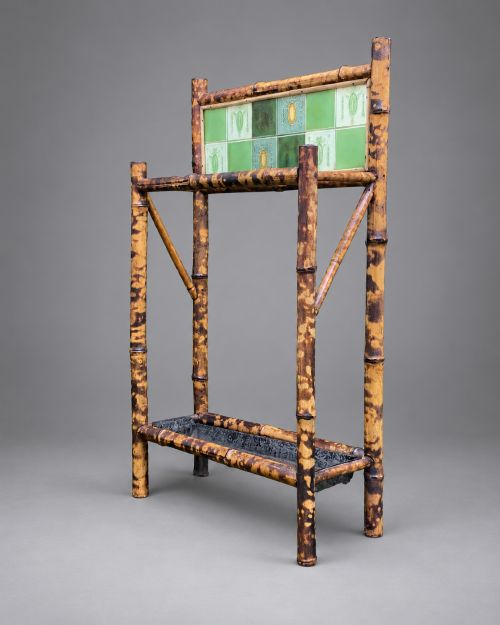
The versions most likely to meet you on this page include hall stands fitted with tile backs, mirrors, or drip pans, alongside simpler dedicated umbrella stands and occasional items featuring faux bamboo designs cast in metal.
Makers and designers of these items drew upon international influences, incorporating styles from the Aesthetic Movement, the Arts and Crafts movement, and the Meiji period into British and European domestic interiors.
Materials and construction
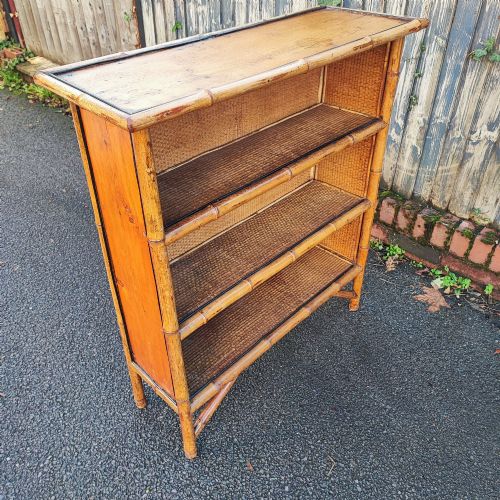
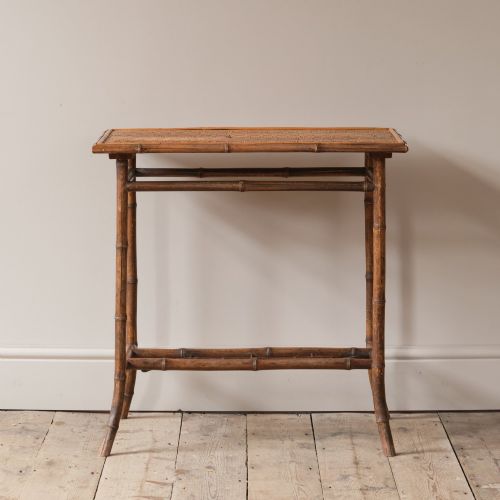
Construction relies heavily on natural bamboo and rattan poles, joined and secured to form rigid frames for daily domestic use. Secondary materials such as pine, leather, and woven reed frequently appear in panels, shelves, and structural supports.
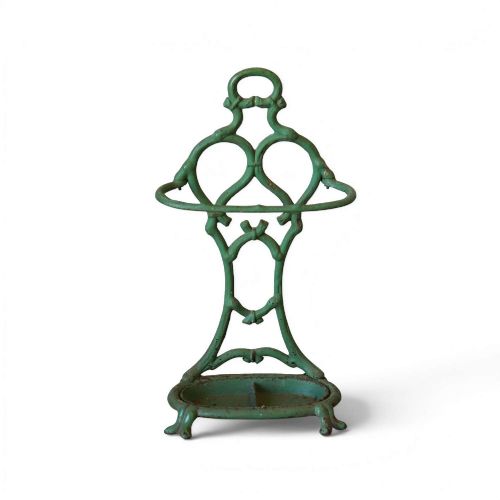
Some examples employ cast iron shaped in a faux bois bamboo design, offering robust weight and durability for heavy hallway use. Additional decorative elements include ceramic tiles and enamel liners designed to catch moisture from wet umbrellas and walking sticks.
Antique Bamboo Cane Stand Retail Price Guide 2026
Typical asking prices for bamboo cane stand among the pieces listed under this phrase on Sellingantiques today, from the lower quarter to the upper quarter. They describe what is for sale here now, not the wider market.
Listings feature items spanning the nineteenth century through the nineteen twenties, incorporating both natural bamboo and cast iron faux bamboo designs.
Assessing quality and craftsmanship
Quality in these pieces rests upon the integrity of the structural joints and the tightness of the bound bindings holding the bamboo poles together. Superior examples maintain stability without excessive wobble, preserving the natural strength of the material.
The inclusion of original fitted elements, such as ceramic tile backs, metal drip trays, or integrated mirrors, elevates a piece above standard utility items. Finer examples display careful attention to surface finish, whether left natural, ebonised, or moulded with precise botanical detail.
Liberty & Co.·Fukagawa
The Antique Bamboo Cane Stand Glossary
- Aesthetic Movement
- A late nineteenth-century design style focusing on visual beauty rather than narrative or moral function. It heavily influenced the dark finishes and decorative lines seen on bamboo furniture.
- Faux bamboo
- Metal, wood, or ceramic moulded and painted to imitate the segmented growth rings of natural bamboo. French workshops frequently utilised this technique in cast iron hall stands.
- Hall stand
- A multi-functional piece of furniture placed near an entrance door. It typically combines umbrella storage with hooks for hats and coats, and occasionally a mirror or tile backing.
- Meiji Period
- The era in Japanese history spanning from eighteen sixty-eight to nineteen twelve that exported decorative arts to Europe. This influence shaped British taste for lightweight, organic materials in the home.
Antique Bamboo Cane Stand: Frequently Asked Questions
What is an antique bamboo cane stand used for?
These items serve primarily to organise and store walking sticks, canes, and umbrellas near an entrance doorway. They keep wet items contained and provide a decorative focal point in a hallway.
In period homes, they also accommodated riding crops and parasols, functioning as a central drop point for outdoor accessories before entering the main living spaces.
How do I care for bamboo furniture?
Bamboo requires a stable indoor environment away from excessive moisture and direct heat sources to prevent the natural material from splitting. Dusting gently with a dry cloth keeps the surface clean without damaging the finish.
Avoid using harsh chemical polishes, as these can degrade the original varnishes or loosen the traditional bindings holding the frame together.
How do I identify Victorian bamboo stands?
Victorian examples frequently display the characteristic golden-yellow or ebonised finish popular during the late nineteenth century. They often incorporate stylistic markers from the Aesthetic Movement, such as Japanese-inspired motifs or contrasting tile inserts.
Construction methods from this era typically involve pinned joints and natural cane wrappings rather than modern industrial adhesives or metal screws.
Are cast iron versions genuine bamboo?
Cast iron versions are not made of plant material, but rather metal cast and painted in a faux bois style to imitate bamboo. These pieces emerged from European foundries around nineteen hundred to provide heavy, durable umbrella storage.
They offer the exotic visual appeal of bamboo combined with the weight and weather resistance of metal.