




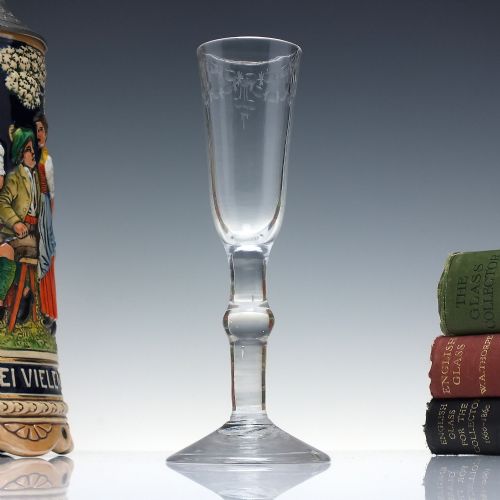


Balustroid Wine Glass
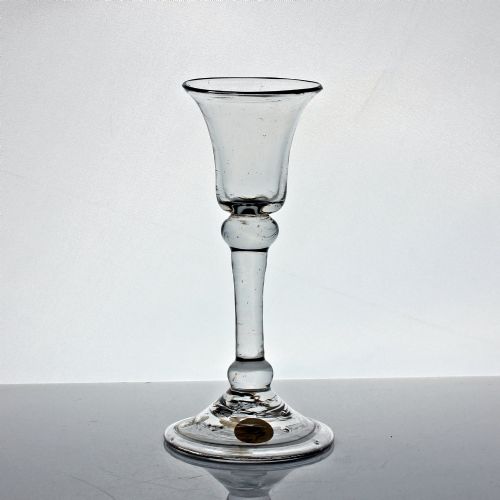
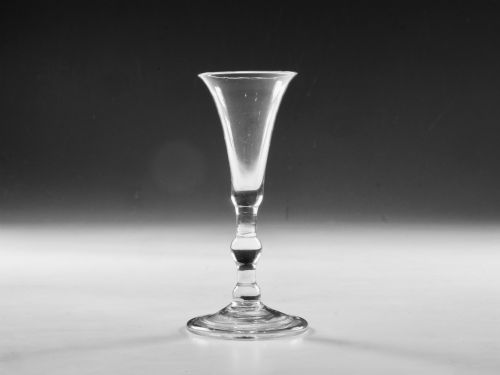
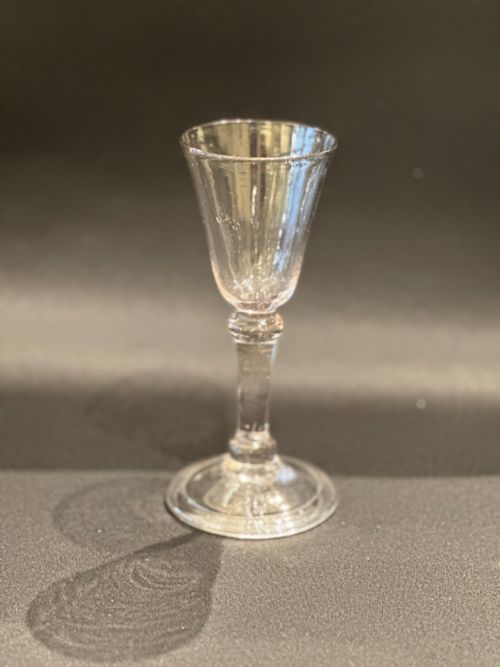
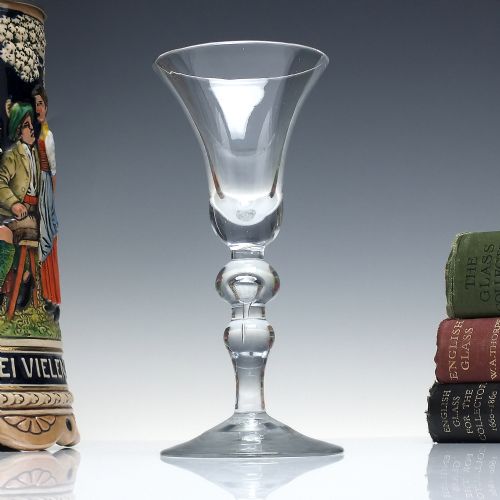
These eighteenth-century balustroid wine glass examples bring substantial lead crystal weight and distinct baluster stems to the table for collectors of early drinking vessels.
Balustroid Wine Glass
A balustroid wine glass represents a specific form of English drinking vessel originating in the eighteenth century during the Georgian period. These pieces sit between traditional heavy baluster stems and later lighter knop stems, forming a distinct category of stemware.
The specimens on this page include standard wine glasses alongside specialised forms like gin glasses, ale glasses with hop and barley engraving, and slender Kit Kat variants. Collectors find these items dated from around seventeen-thirty to seventeen-fifty.
Most items present clear glass formations with specific foot treatments such as folded feet or domed feet. Bell bowls and engraved motifs like swag and tail patterns appear frequently across the listed selection.
How they were made
Makers utilised lead glass, lead crystal, and flint glass to produce these hand-blown lead glass vessels. The material provided the requisite clarity and weight for eighteenth-century drinking vessels.
Glassmakers formed the stem and bowl separately before joining them, incorporating balustroid stem formations and knops during the hot-working process. Finishing techniques included hand-engraving decorative motifs onto the bowls and creating folded or domed feet.
Balustroid Wine Glass Retail Price Guide 2026
Typical asking prices for balustroid wine glass among the pieces listed under this phrase on Sellingantiques today, from the lower quarter to the upper quarter. They describe what is for sale here now, not the wider market.
Object forms span wine glasses, gin glasses, ale glasses, and ratafia glasses with folded or domed feet.
What varies in quality
The refinement of the stem silhouette and the balance of the balustroid form dictate the visual success of each piece. Proportion between the bowl, stem, and foot distinguishes standard production from finer examples.
The Balustroid Wine Glass Glossary
- Balustroid
- A stem form intermediate between a full baluster and a plain stem, often featuring an upper knop above a tapering lower portion. This profile defines the primary structural characteristic of the group.
- Folded foot
- A base formed by doubling the glass edge back underneath to create a thickened rim for strength and stability. This technique appears regularly on eighteenth-century drinking vessels.
- Domed foot
- A base raised into a central dome shape before dropping to the flat rim on the table. This profile adds height and visual weight beneath the stem.
- Bell bowl
- A drinking vessel bowl shaped like an inverted bell with slightly flaring sides. This specific profile is typical of mid-eighteenth-century English glassware.
- Ratafia glass
- A tall, slender glass designed for serving sweet aromatized cordials or liqueurs. These vessels feature narrow bowls suited to small quantities of strong drink.
Balustroid Wine Glass: Frequently Asked Questions
What is a balustroid wine glass?
A balustroid wine glass is an eighteenth-century English drinking vessel characterised by a stem that narrows from the bowl toward the foot, often featuring decorative knops.
These pieces bridge the stylistic gap between heavy seventeenth-century baluster stems and lighter Georgian forms.
What were ale glasses used for?
Ale glasses served alcoholic brews during social gatherings and dining occasions in the Georgian era. Their specific bowl capacity matched the drinking habits of the period.
Engravings of hops and barley often decorated these vessels to indicate their intended beverage.
Are these glasses made of lead crystal?
Many eighteenth-century English drinking vessels utilised lead glass or lead crystal compositions. This material choice gave the glass greater brilliance and weight.
Makers worked the molten material by hand to achieve the distinct clarity seen in these items.