




Baluch Tree Rug
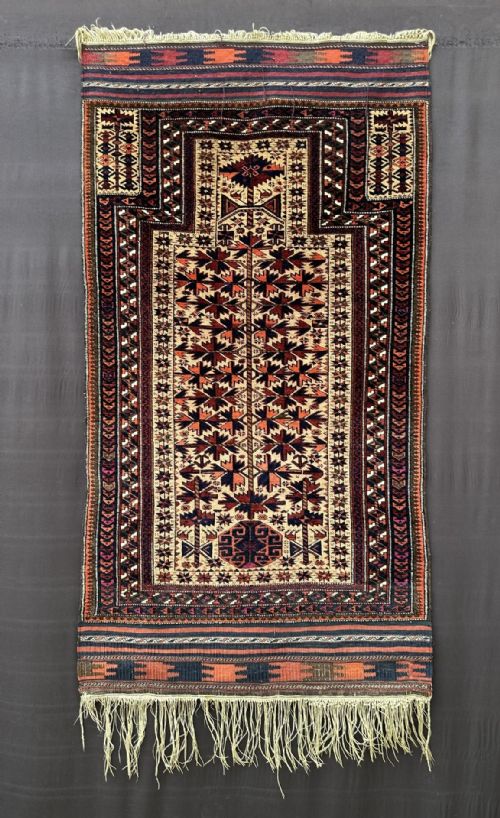
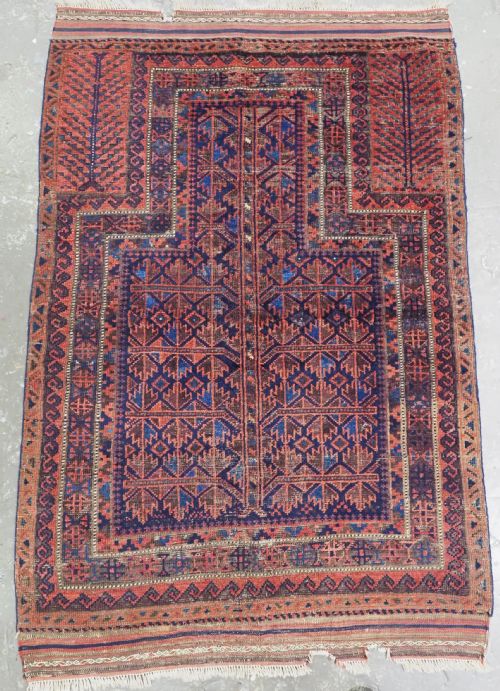
These baluch tree rug examples are woven tribal textiles featuring tree of life motifs, prized by collectors for their rich wool and natural dyes.
Baluch Tree Rug
A baluch tree rug is a tribal textile typically originating from the borderlands of Persia and Afghanistan during the nineteenth and early twentieth centuries. These pieces frequently manifest as prayer rugs or smaller formats displaying distinctive arboreal motifs.
The version most commonly encountered on this page carries a camel ground or blue ground paired with a central tree of life design. They reflect the weaving traditions of nomadic and semi-nomadic groups including the Timuri and Yaqoub Khani tribes.
Makers utilised wool and camel hair to construct these portable floor coverings and prayer mats for daily nomadic life. Their patterns combine regional tribal geometry with organic botanical forms.
How They Were Made
Weavers constructed these textiles using hand-spun wool and camel hair for the pile and foundation yarns. This combination provided structural durability while offering a soft tactile quality underfoot or during prayer.
Natural dyes supplied the distinctive palette seen across the pieces, yielding deep blues and warm camel tones that developed distinct patinas over time. Artisans tied individual knots by hand to build the dense pile necessary for daily use.
The documented geographic origins concentrate entirely on north-east Persia, north-west Afghanistan, and the Khorassan and Ferdows regions.
What Varies in Quality
Quality in a baluch tree rug rests primarily on the fineness of the knotting and the clarity of the tree of life motif. Tighter foundations and more deliberate drawing distinguish the finer examples from simpler utilitarian pieces.
The depth and preservation of the natural dyes also determine the standing of an individual textile. Richly saturated camel grounds and well-balanced blue fields elevate the visual impact of the composition.
The Baluch Tree Rug Glossary
- Camel ground
- A background field composed of undyed camel hair yarn, providing a natural golden-brown hue. This material is characteristic of many regional nomad textiles.
- Prayer rug
- A small format textile featuring an architectural mihrab or arch design used to direct the positioning of the head during daily prayers. These rugs often incorporate central tree motifs.
- Tree of life
- A vertical botanical motif symbolising growth and eternity, rendered centrally within the field. It serves as the primary focal point for numerous tribal prayer rugs.
- Natural dye
- Colourants derived from plant, root, and insect sources rather than synthetic chemical laboratories. They produce complex hues that age with subtle tonal variations.
- Timuri
- A tribal grouping associated with nomadic weaving traditions in the border regions of Persia and Afghanistan. Their output shares close technical and stylistic ties with broader baluch traditions.
Baluch Tree Rug: Frequently Asked Questions
Where were these rugs made?
These textiles originate from the borderlands of north-east Persia and north-west Afghanistan, fashioned by nomadic and semi-nomadic tribes such as the Timuri and Yaqoub Khani.
Weavers worked within regional pockets including the Khorassan province and the Ferdows region, utilising local materials to produce portable floor coverings.
What is a tree of life design?
The tree of life is a symbolic botanical motif rendered vertically up the centre of the rug field, representing growth and connection to the divine.
In these specific textiles, the tree often emerges beneath an architectural arch on prayer rugs, framed by geometric borders and star motifs.
How do I care for an old rug?
Protect these antique wool and camel hair textiles by placing them in low-traffic areas away from direct, harsh sunlight to preserve the natural dyes.
Vacuum gently with a suction-only attachment without using rotating brush bars, and consult a specialist rug cleaner for periodic maintenance.
How are periods told apart?
Dating relies on assessing the structural handle, the saturation of the natural dyes, and stylistic indicators such as drawing precision and hand panel details.
Nineteenth-century examples typically display softer foundational handles and deeply absorbed natural colourways, while later pieces from the early twentieth century shift slightly in palette and knot density.