





Baluch Textile
These pieces of baluch textile are nomadic weavings of practical design and rich wool, carrying the stories of tribes across Persia and Afghanistan.
Baluch Textile
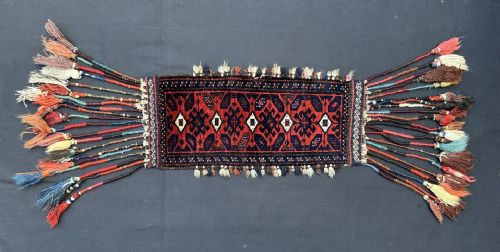
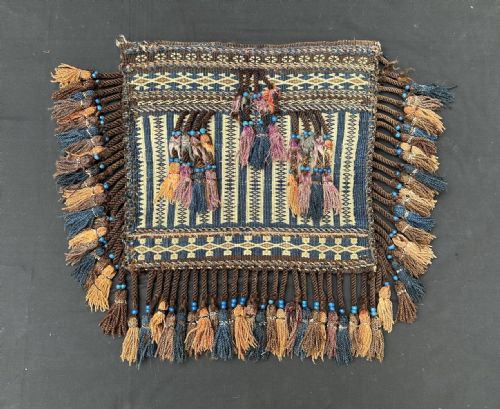
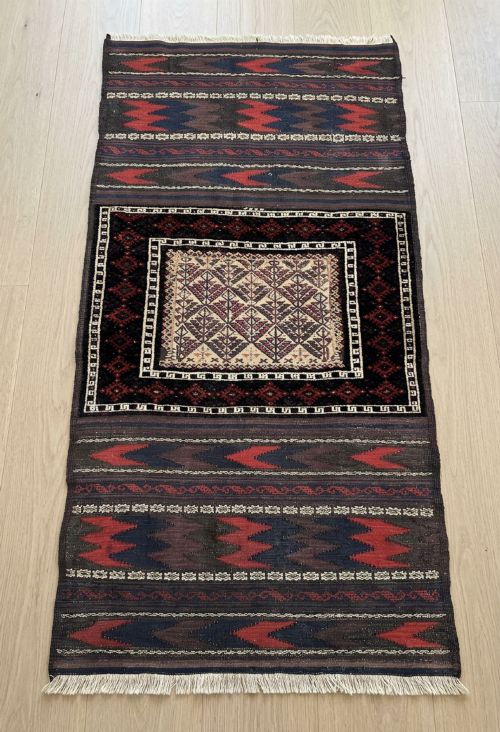
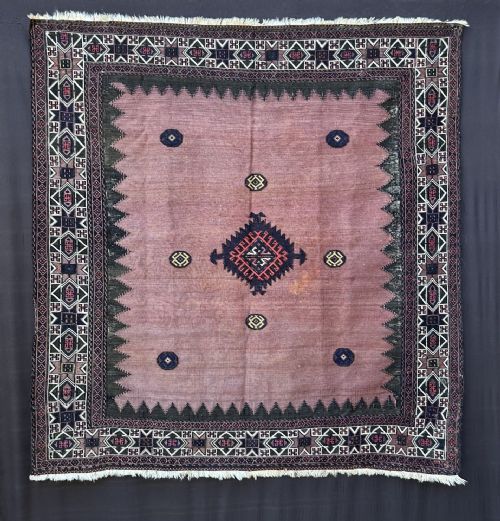
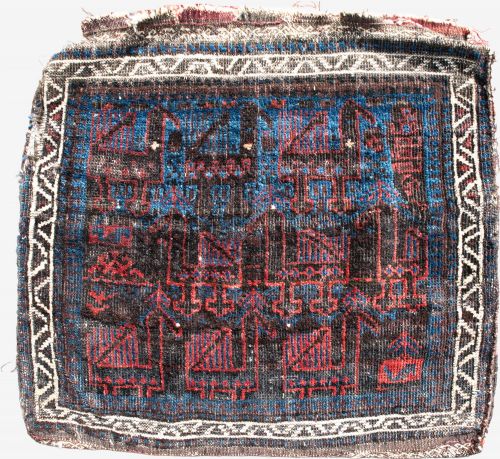
When you search for baluch textile, you encounter the utilitarian creations of nomadic groups weaving for daily life rather than court display. The items take distinct functional forms, including storage bags, grain bags, vanity bags, eating cloths known as sofreh, and hearth covers called ru korssi.
You are most likely to meet pieces originating from the borderlands of north-east Persia and north-west Afghanistan, often attributed to specific groups such as the Bahluli, Salar Khani, Timuri, and Zaggar Mengal. These range from dense pile rugs and prayer formats to flatweave textiles embellished with distinctive geometric motifs.
The objects span a production period largely centred around the late nineteenth century and the early decades of the twentieth century. Their enduring appeal lies in the unhurried hand-knotting and flatweaving traditions maintained by mobile communities far from urban centres.
How they were made
Makers utilised resilient wool alongside structural cotton and goat hair to produce robust surfaces intended for heavy nomadic use. Natural dyes provide the underlying palette, yielding deep tones that mature gracefully with age and wear.
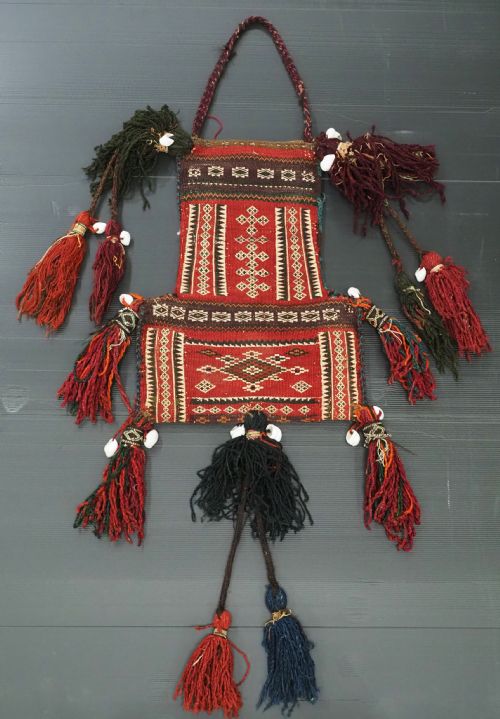
Specialised techniques include pile knotting for floor coverings and storage faces, paired with flatweave plain weave backs and intricate banded weft work designs. Artisans occasionally incorporated glass beads and cowrie shells into specific bags for tactile and visual emphasis.
Baluch Textile Retail Price Guide 2026
Typical asking prices for baluch textile among the pieces listed under this phrase on Sellingantiques today, from the lower quarter to the upper quarter. They describe what is for sale here now, not the wider market.
Listings feature items produced across several decades spanning from eighteen eighty to nineteen twenty, utilising wool, cotton, and natural dyes.
What varies in quality
Quality rests upon the fineness of the weave, the clarity of natural dye colours, and the integrity of the original structure including backs and borders. Examples retaining their complete utilitarian format, such as storage bags with intact backs or functional salt bags, demonstrate superior integrity.
The sophistication of the tribal design work, from bird motifs to calyx lattice patterns and tile arrangements, marks out the more accomplished weaving. Subtle nuances in wool preparation and knot density separate standard utility items from exceptional tribal pieces.
The Baluch Textile Glossary
- Sofreh
- A textile used for dining or food preparation among nomadic households. These cloths are often flatwoven and laid upon the ground during meals.
- Ru Korssi
- A decorative or functional cover placed over a traditional Persian heating table. They display specific regional patterns associated with borderland tribes.
- Balisht
- A traditional nomadic pillow or small storage bag used inside tents. They frequently feature detailed pile faces with plain weave backs.
- Calyx lattice
- A repeating floral or geometric lattice motif seen in regional carpet designs. It structures the field of the textile with balanced botanical forms.
Baluch Textile: Frequently Asked Questions
What is a baluch textile?
A baluch textile is a handmade rug, bag, or utility cloth produced by nomadic and tribal weavers originating in the border regions of Persia and Afghanistan.
These pieces were constructed for daily nomadic existence, serving as storage receptacles, floor coverings, and dining cloths rather than decorative items for stationary houses.
How were salt bags used?
Salt bags, known as namakdan, held rock salt for livestock or domestic cooking within the nomadic tent. Their narrow necks prevented the contents from spilling during transit.
Weavers decorated the faces of these bags carefully because they held a valued commodity necessary for daily survival.
How do I care for wool textiles?
Keep these items out of direct sunlight to protect the natural dyes from fading over time. Gentle vacuuming without a rotating brush helps remove dust from the wool fibres.
Allow air circulation beneath floor rugs and avoid placing heavy furniture directly over fragile flatweave sections.
How do I identify a sofreh?
A sofreh is distinguished by its flatweave construction and broad format intended for spreading food or dough. They lack the thick pile found on floor rugs.
The absence of a high pile allowed these cloths to be folded easily and packed onto animals during seasonal migrations.