






Ball Framed Convex Mirror
A ball framed convex mirror concentrates the light of a room into a single curved glass, bringing depth and drama to a wall.
Ball Framed Convex Mirror
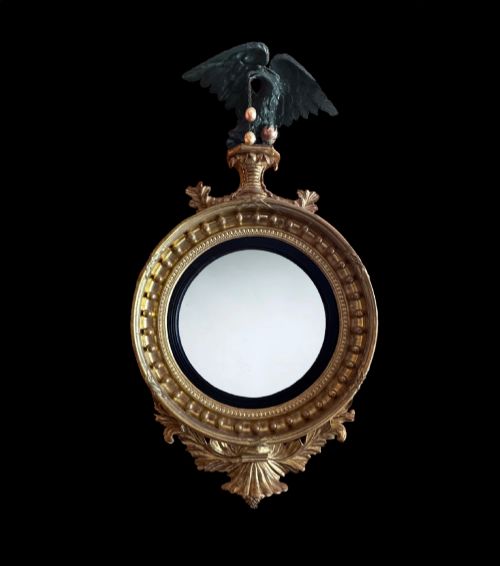
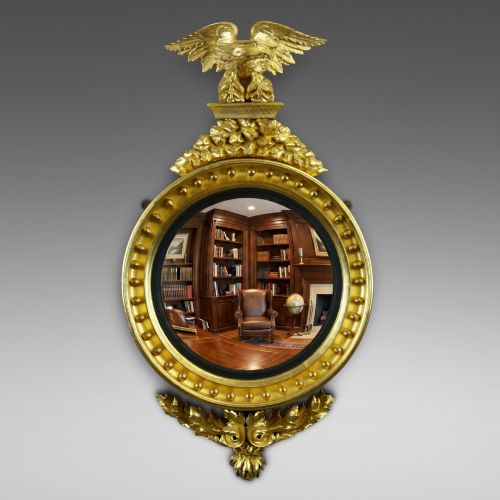
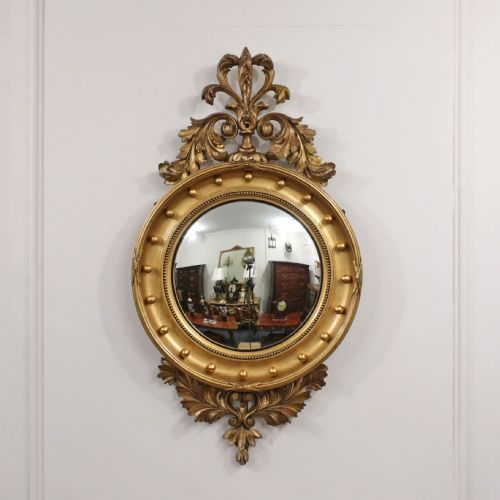
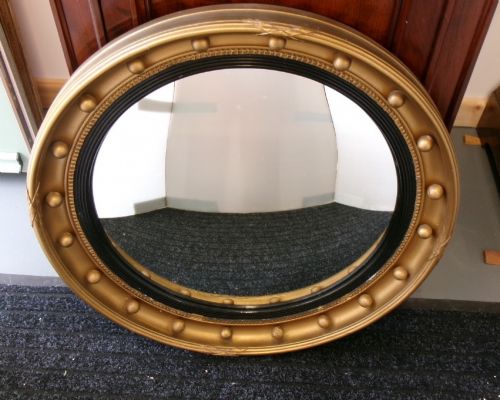
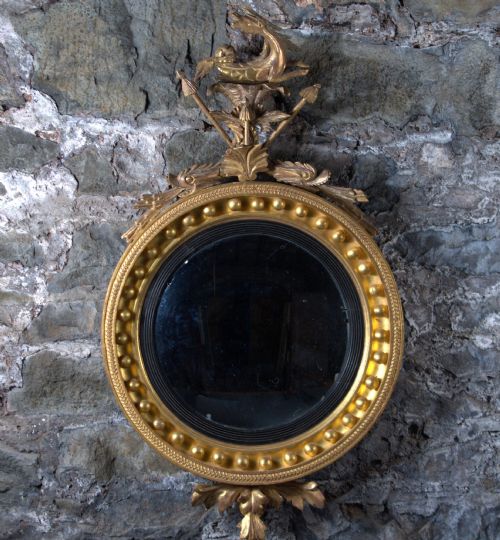
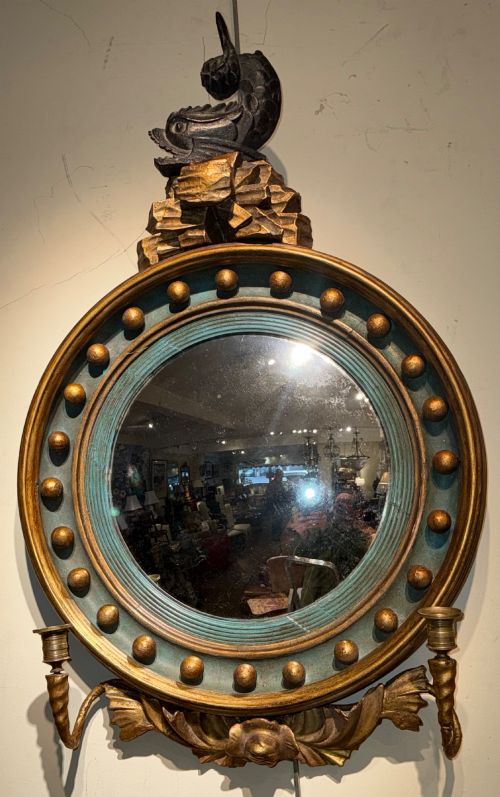
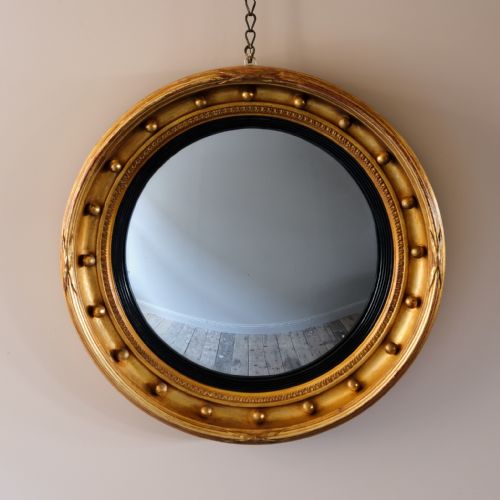
A ball framed convex mirror draws the eye with its curved glass plate, projecting a wide, fish-eye perspective of the interior. These wall mirrors appear primarily in Regency, Victorian, and later revival styles, each offering a distinct proportion and weight to a space.
The dominant examples on this page date from the nineteenth century, including the Regency and Victorian periods, alongside later twentieth-century iterations. They span circular and oval formats, often described simply as convex wall mirrors or porthole mirrors.
The defining characteristic across the selection is the circular frame studded with decorative spheres or balls, complemented by giltwood, ebonised wood, or painted finishes. Buyers select these pieces to anchor a room, reflecting light from every corner.
Materials and construction
The construction relies on carved wood, gesso, and glass, utilising gold leaf or paint to achieve a brilliant metallic lustre. Giltwood surfaces require meticulous application of leaf over prepared gesso grounds on carved timber frames.
The spherical balls that line the perimeter are typically turned from wood or moulded in composition, secured individually around the central bezel. Mirrored glass provides the signature curved reflection, shaped deliberately to distort the room into a miniature panorama.
Housemaids once used these bulging mirrors to keep an eye on the entire parlour staff without turning their heads.
Distinctions in craftsmanship
The refinement of the carved details on the frame separates standard production from exceptional work, particularly in the precision of the turned balls and any cresting or eagle mounts. Deeper, crisper carving in the gesso and wood demonstrates superior workshop skill.
The preservation of the original gilt surface and the clarity of the curved glass plate determine the integrity of the piece. Older mirrors exhibit subtle foxing or hand-blown glass variations that add character without obscuring the reflection.
The Ball Framed Convex Mirror Glossary
- Convex glass
- A curved glass plate that bends outwards, creating a wide-angle reflection of the interior space.
- Giltwood
- Wood that has been coated with a thin layer of gold leaf, often applied over a prepared gesso base.
- Gesso
- A plaster-like mixture applied to wood frames to provide a smooth surface for carving and gilding.
- Ebonised wood
- Timber treated to imitate the dark, dense appearance of ebony.
- Porthole mirror
- A circular wall mirror reminiscent of a ship's window, defined by a heavy, rounded frame.
Ball Framed Convex Mirror: Frequently Asked Questions
Where should I hang a convex mirror?
These mirrors suit focal points such as above a fireplace mantel or in a narrow hallway where they can bounce available light across the space. Their wide-angle reflection makes them effective on walls opposite windows.
Because they project outward and gather the room into their glass, they function best at eye level. This placement allows viewers to appreciate both the curved reflection and the detail of the ball-studded frame.
How do I clean a giltwood frame?
Dust the surface gently with a soft, dry brush to remove particles without disturbing the delicate gold leaf. Avoid liquid cleaners or chemical agents, which strip the historic finish.
For the glass plate, apply a small amount of non-ammonia glass cleaner to a cloth rather than spraying directly onto the mirror. This prevents moisture from seeping behind the glass and damaging the backing.
Are these mirrors heavy?
Many nineteenth-century examples carry substantial weight due to their solid wooden frames, thick gesso layers, and heavy glass plates. Proper wall anchors and screws suited to the specific wall type are essential for secure hanging.
It is advisable to check the integrity of the hanging loops on the reverse before installation. Professional hanging ensures the weight distributes evenly across the structure.
How do I identify a Regency period mirror?
Regency pieces often display crisp carved woodwork, sophisticated gilt surfaces, and specific proportions characteristic of the early nineteenth century. Details such as reeded bezels and hand-turned balls indicate the period's manufacturing standards.
Later revival pieces replicate these forms but generally exhibit different material crispness and construction methods under close inspection. Comparing the backboards and joinery helps distinguish nineteenth-century originals from twentieth-century interpretations.