


Bag Basket Light
A bag basket light is a brilliant assembly of cut glass and brass meant to catch every flicker of a room, and people buy them to bring instant theatre to a ceiling.
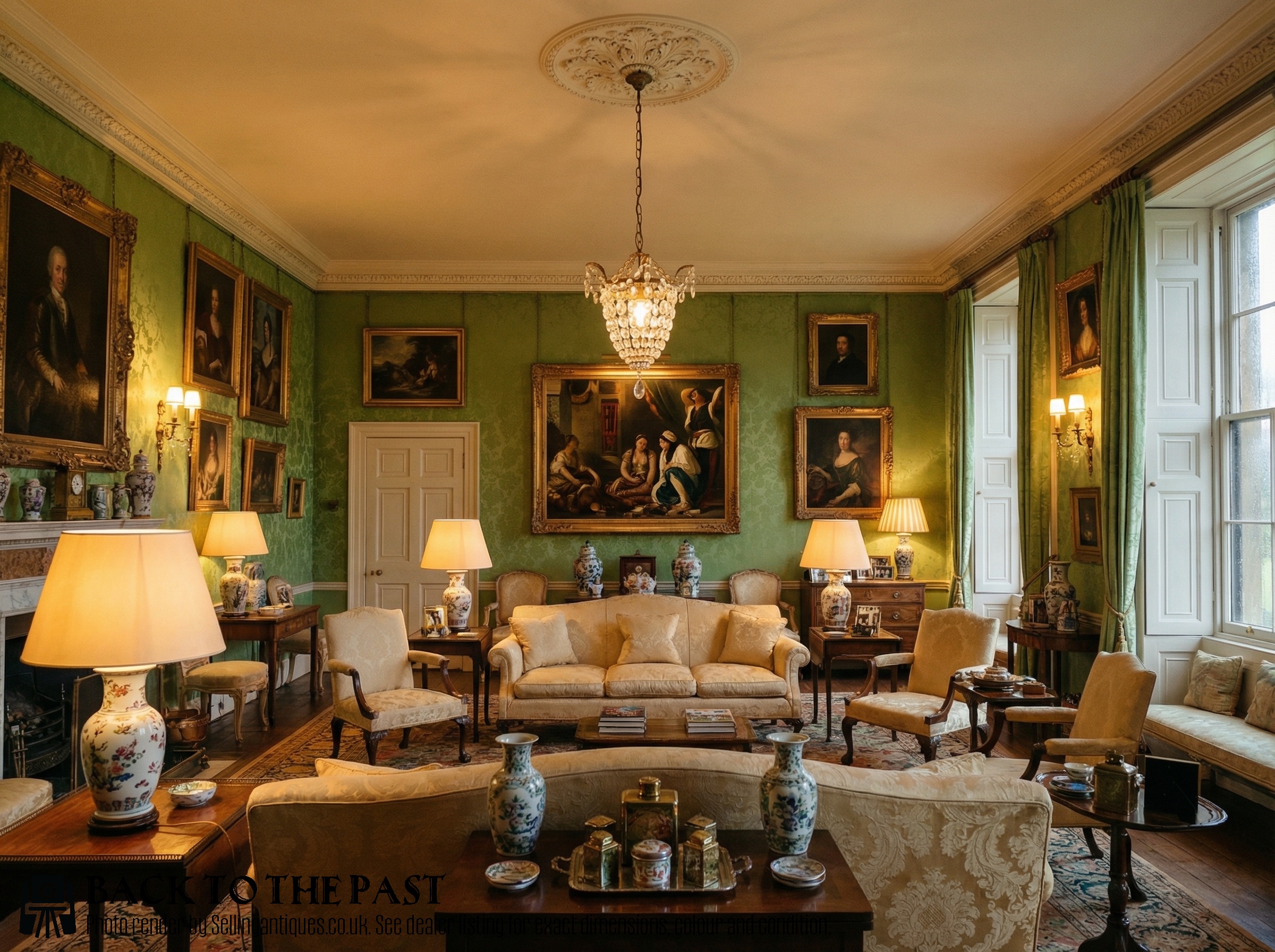
Bag Basket Light
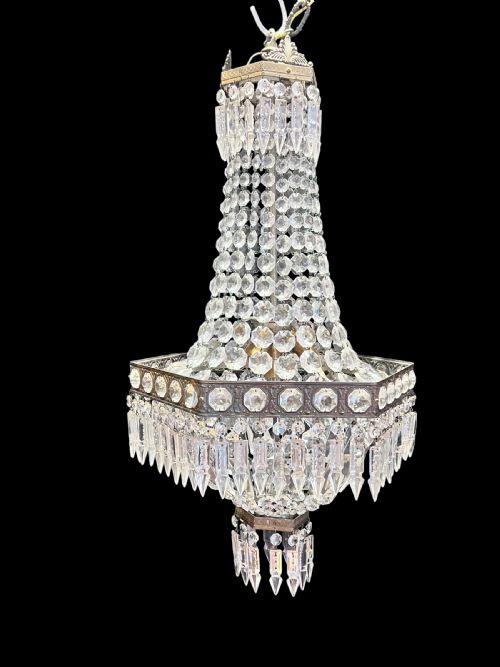
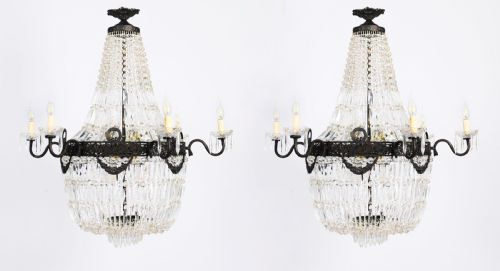
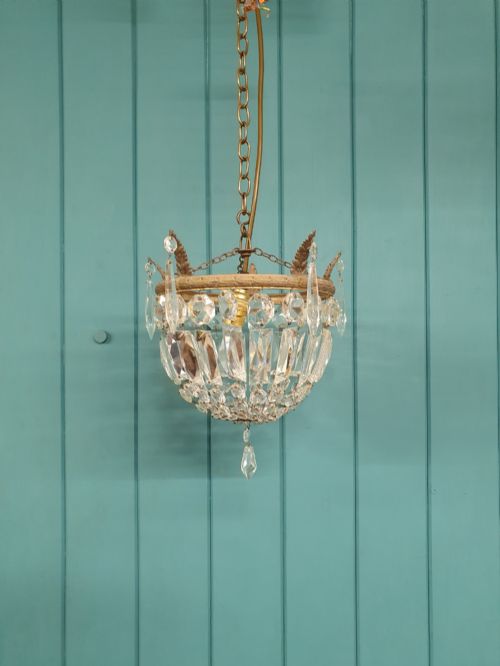
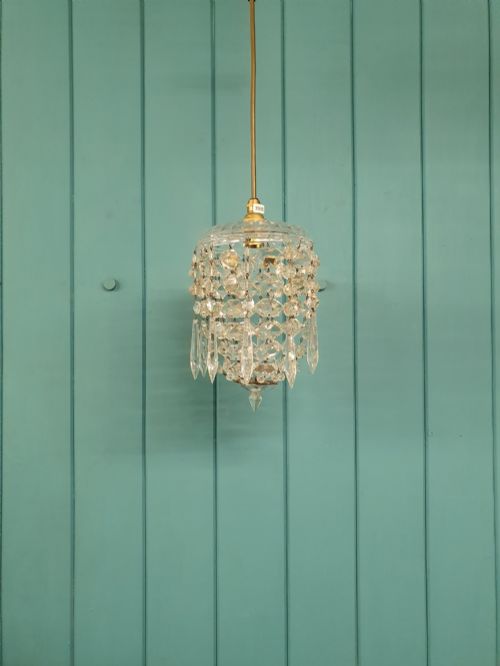
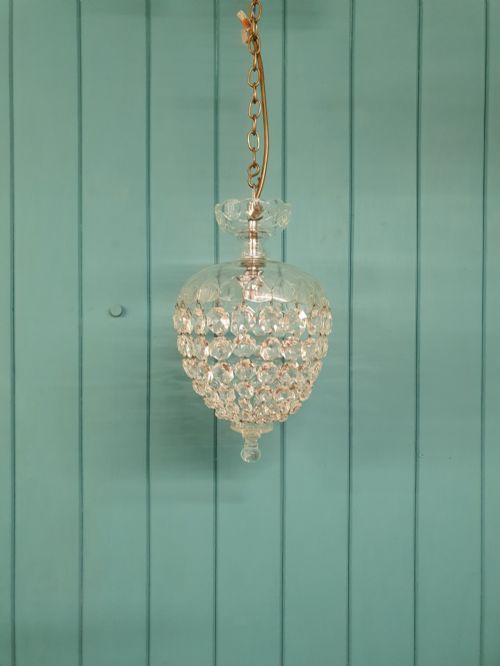
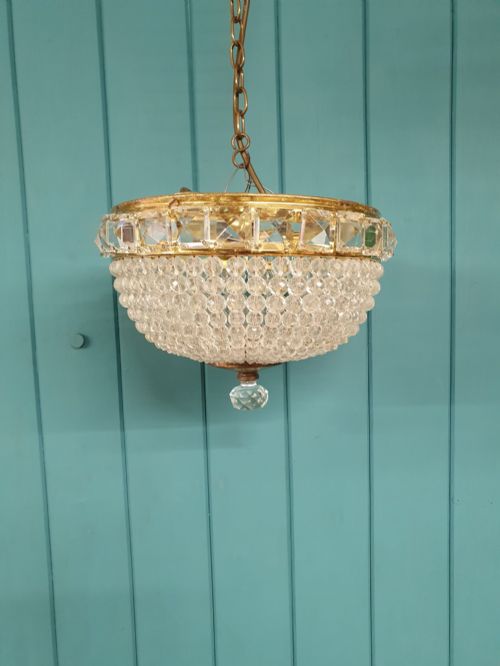
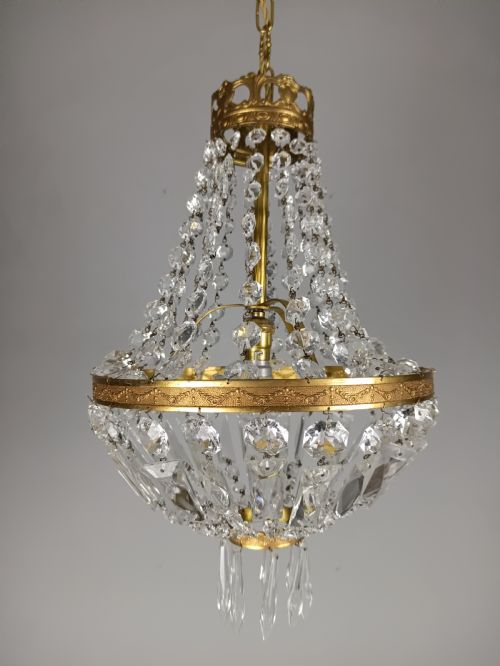
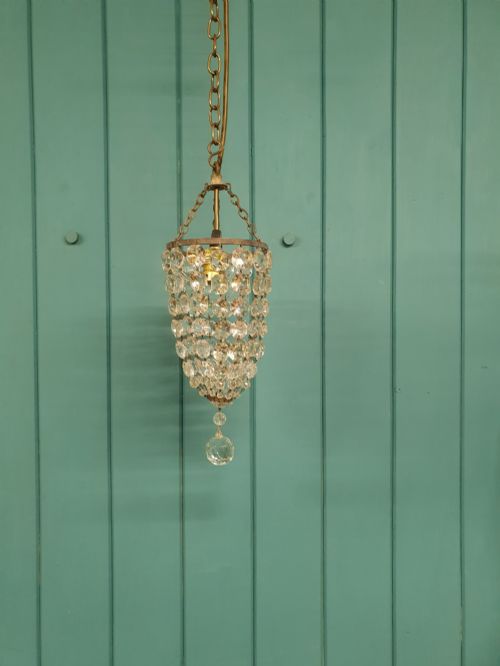
When you search for a bag basket light, you are looking at early twentieth-century illumination, with Edwardian and 1930s examples dominating the selection. These fixtures take the form of bag chandeliers, basket chandeliers, and dome top lights, frequently incorporating tent sections alongside the gathered drops.
The pieces emerge in various styles, notably French Empire, Louis Revival, and French Regency, alongside English interpretations. Sizes range from compact wall lights and small six-inch fittings up to substantial eighteen-inch chandeliers and fourteen-light ballroom fixtures.
How they were made
Constructed primarily from brass and bronze frames, these fittings rely on metal to support intricate glass arrays. The structural mounts hold together dense quantities of crystal, cut glass, and cut crystal components.
The decorative effect depends on specialised glass elements, including coffin prisms, beads, and moulded droplets. Individual prisms and beads are wired onto the metal framework to form the characteristic tapered bag or dome silhouette.
Listings feature periods from 1900 through the Edwardian era to 1930, utilising brass, bronze, crystal, and cut glass.
What varies in quality
The calibre of a bag basket light rests on the depth and clarity of the glass cutting. Superior examples feature sharp facets that refract light cleanly, whereas lesser pieces use simpler pressed glass.
Substantial brass or bronze mounts provide structural integrity that lighter metalwork lacks. The density and completeness of the bead strands and prisms also dictate the richness of the final silhouette.
Wedgwood
The Bag Basket Light Glossary
- Bag chandelier
- A lighting fixture shaped like a tapered bag or basket, formed from numerous glass beads suspended from a metal ring down to a lower gathering point.
- Tent and bag
- A design combining an upper conical canopy of glass strands with a lower bag-shaped section.
- Coffin prism
- A long, flat-backed glass pendant with a pointed tip, commonly hung around the perimeter of early twentieth-century chandeliers.
- Louis Revival
- A decorative style looking back to French royal aesthetics, frequently translated into brass and crystal light fittings of the early twentieth century.
Bag Basket Light: Frequently Asked Questions
What is a bag basket light?
A bag basket light is an early twentieth-century ceiling fitting featuring a metal frame draped in glass beads and prisms. The construction gathers hanging crystals into a distinctive tapered bag or basket shape.
These pieces draw on Edwardian and 1930s production, often reflecting French Empire or Louis Revival styles. They serve as compact or large focal points in domestic rooms.
How do I hang a bag basket light?
Hanging these fixtures requires securing them to ceiling joists using appropriate hooks, as the combination of brass and cut glass creates significant weight. Professional wiring is essential to handle the metal frames safely.
Position the light at a height that suits the room proportions and ceiling clearance. Smaller six-inch versions work well in hallways, while eighteen-inch examples demand higher spaces.
How do I clean a bag basket light?
Cleaning involves careful dusting of the glass prisms and brass mounts while the fitting remains suspended or after lowering it. Many collectors remove individual strands of beads to wash them in warm soapy water.
Avoid harsh chemical cleaners on the metal mounts to preserve the original brass or bronze surface. Gentle handling prevents damage to the delicate wire connections holding the crystals.
Are bag basket lights Edwardian or later?
The available examples span from 1900 through the Edwardian era and into the 1930s. Construction methods and glass types shifted slightly across these decades, though traditional styles persisted.
Edwardian pieces often feature simple dome top forms and coffin prisms, while 1930s versions embrace various French-inspired tent and bag configurations.