
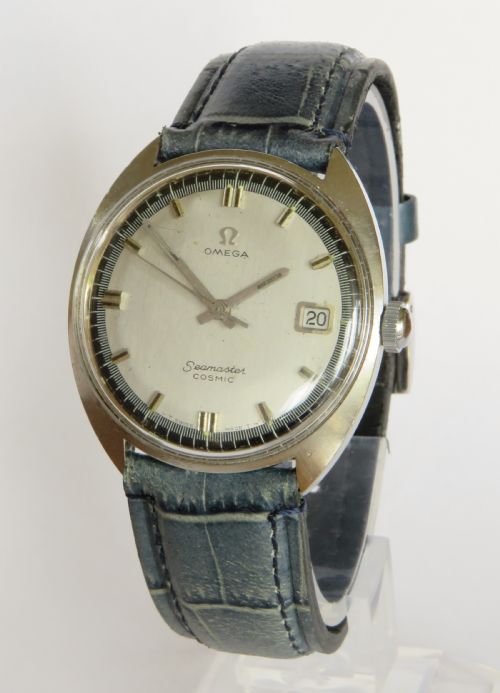
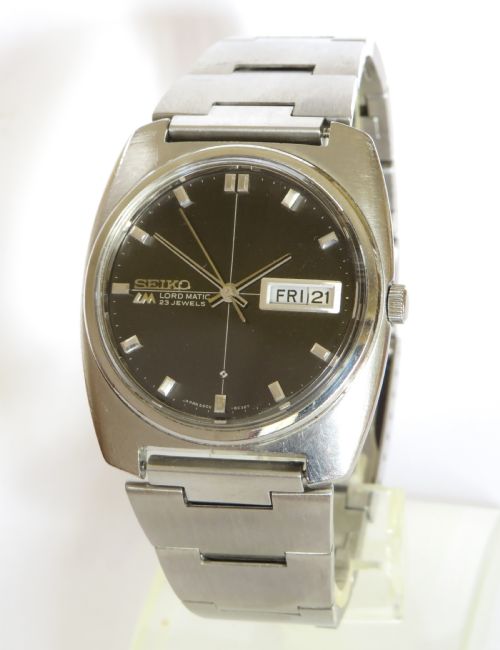
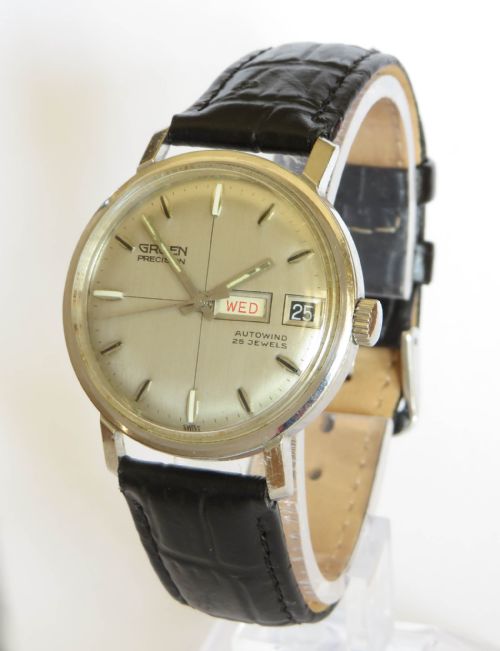
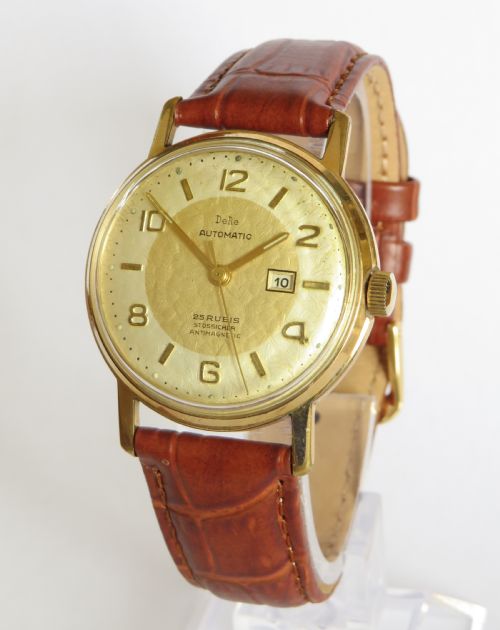
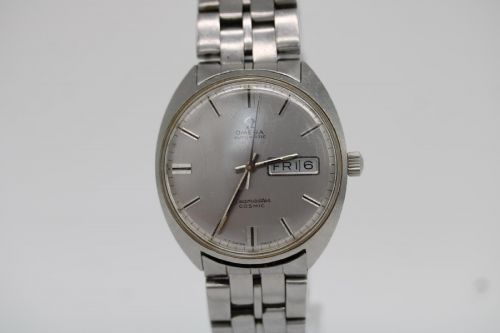
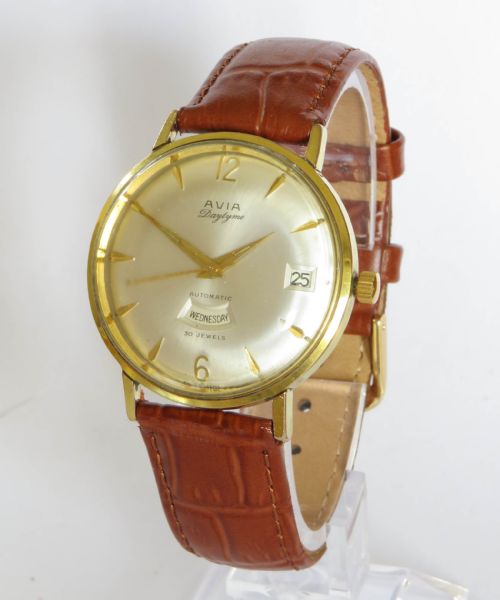
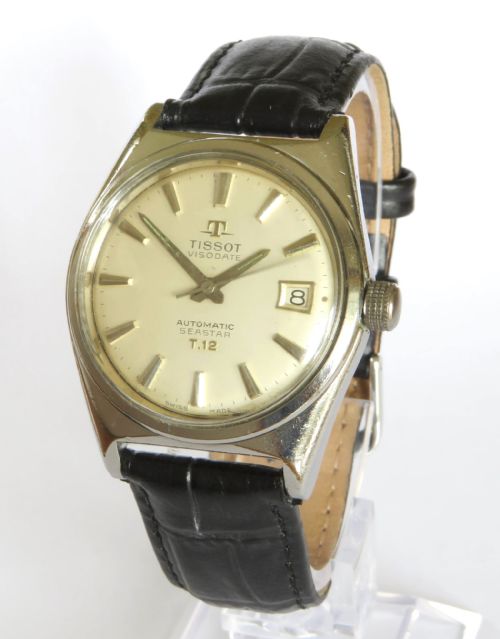
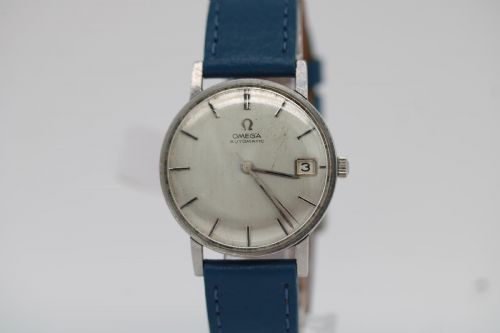


Automatic Date Watch
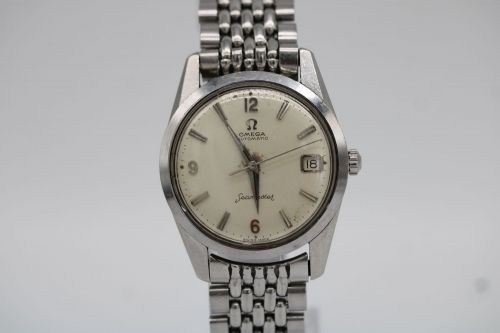
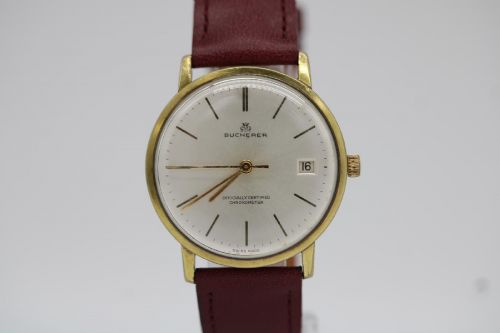
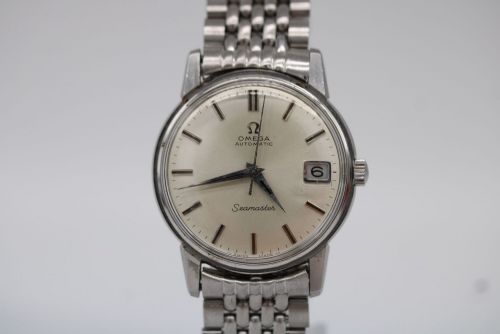
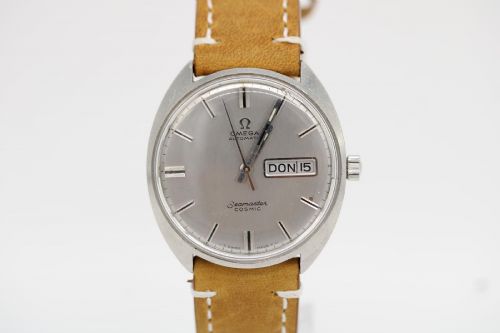
When searching for an automatic date watch, you encounter mid-century mechanical timepieces powered by wrist movement that display the calendar alongside the time.
Automatic Date Watch
An automatic date watch bridges mid-century mechanical engineering with everyday utility, harnessing the motion of the wearer's wrist to wind the mainspring while displaying the calendar.
The pieces appearing under this search phrase belong predominantly to the mid-century modern period, spanning the nineteen-fifties and sixties with a distinct emphasis on wristwatches.
Most examples take the form of gents wristwatches produced by Swiss makers, featuring circular cases, baton markers, and simple apertures for the day or date.
Materials and construction
Cases are formed from stainless steel, gold plate, or solid nine-carat and eighteen-carat gold, paired with leather straps and protected by glass or acrylic crystals.
Movements rely on internal rotors or bumper weights that swing with kinetic motion, transferring energy to the gear train and powering the calendar complication.
Some mid-century dials feature unusual sector tracks affectionately called harlequin patterns by collectors.
Factors of quality
Quality rests on the sophistication of the internal calibre, with chronometer-grade movements and quick-set date mechanisms representing superior manufacturing standards.
Case metal choice elevates a piece, moving from plated brass and stainless steel up to solid gold variants carrying distinct hallmarks.
Omega·Seiko·Gruen·Bucherer·Avia·Tissot·Eterna·Tudor·Longines·Heuer·Zenith·Garrard
The Automatic Date Watch Glossary
- Calibre
- The specific internal mechanical movement manufactured for a watch. Collectors reference calibre numbers to identify the exact generation and capability of the mechanism.
- Bumper
- An early form of automatic movement where the rotor swings back and forth against springs rather than rotating fully. This design marks pieces to the nineteen-fifties.
- Chronometer
- A high-precision watch movement that has been tested and certified for accuracy over various temperatures and positions. These pieces represent top-tier technical output.
- Quick-set
- A mechanism allowing the calendar date to be advanced independently through the crown without rotating the hands through twenty-four hours. This function aids everyday wearability.
- Acrylic glass
- A lightweight, shatter-resistant synthetic material used for watch crystals during the mid-century period. It can be polished to remove surface scratches.
Automatic Date Watch: Frequently Asked Questions
What is an automatic watch?
An automatic watch is a mechanical timekeeper that winds itself using the natural movement of the wearer's wrist throughout the day. An internal weighted rotor spins with kinetic motion to tension the mainspring.
This system removes the need for daily manual winding while retaining the traditional gear trains and escapements of mechanical horology.
How do I set the date safely?
Setting the date requires pulling the winding crown to its designated position and turning it until the correct calendar day appears. Care must be taken around midnight when the automatic change gears engage.
For movements without quick-set capabilities, advancing the time past midnight repeatedly is necessary to change the calendar display.
Are these watches waterproof?
Mid-century automatic date watches were often water-resistant when new, utilising rubber gaskets and screw-down case backs. Decades of age mean original seals degrade and lose integrity.
Modern buyers should treat vintage timepieces as non-waterproof unless professional pressure testing and new gaskets have been installed.
How do I date a mid-century watch?
Dating a watch involves examining movement serial numbers against manufacturer production ledgers or inspecting case back hallmarks and reference numbers. Stylistic cues like dial fonts and hand shapes also provide clues.
Paperwork and original boxes included with certain pieces offer definitive confirmation of their production year.