
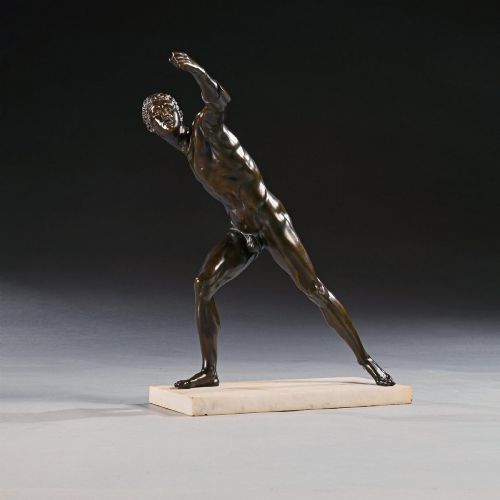
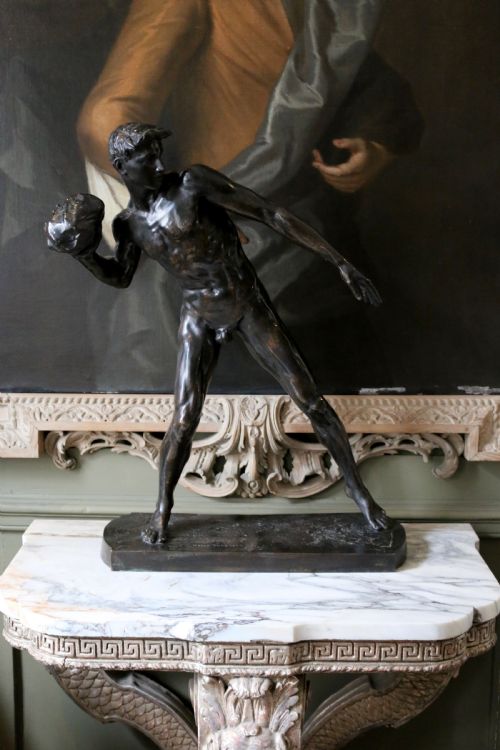
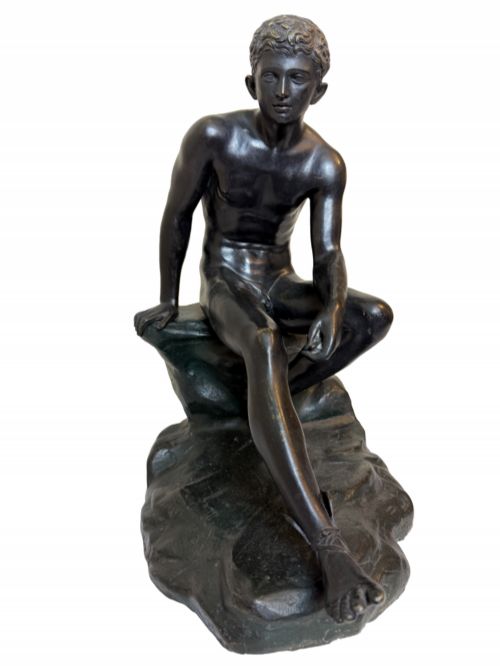


Athletic Figure Bronze Sculpture
An athletic figure bronze sculpture captures human movement and muscle through enduring metal, offering timeless vigour for your collection.
Athletic Figure Bronze Sculpture
An athletic figure bronze sculpture depicts male athletes, tennis players, wrestlers, and classical gladiators cast in metal and mounted on stone bases. These works draw heavily from Neoclassical, Classical Revival, and Victorian New Sculpture traditions, alongside striking Art Deco athletic interpretations.
The pieces on this page span the nineteenth century, the Victorian era, and the early twentieth century up to nineteen thirty. You will encounter grand scale Grand Tour castings of ancient Greek discoboli alongside dynamic French representations of modern sportsmen.
Subjects range from resting male nudes to powerful weightlifters, fencers, rugby players, and ice skaters. Each sculpture freezes a moment of physical prowess, whether in repose or intense competition.
Materials and casting methods
Foundries produced these works primarily in bronze, patinated bronze, and gilt bronze, occasionally utilising silvered bronze or alternative metals like spelter. Many figures incorporate heavy marble bases, including Rosso Levanto marble, to anchor the composition.
Casting techniques allowed artisans to render complex anatomical details and flowing drapery with precision. Finishing work involved hand-chasing the metal surface and applying chemical patinas to achieve varied tonal depths across skin and muscle.
Tennis racquets and rugby balls proved surprisingly popular subjects for turn-of-the-century sculptors determined to immortalise weekend sport in heavy metal.
Distinctions in craftsmanship
The integration between the metal figure and its stone base marks another division in standard. Finer examples feature substantial marble mounts proportioned correctly to the weight and stance of the bronze above.
Hamo Thornycroft·L. Gerfaux·H Risch·Desire Grisard·Rudolf Küchler·Claire Colinet·Bruno Zach·Eden Antony Paul Noel
The Athletic Figure Bronze Sculpture Glossary
- Patinated bronze
- Bronze treated with chemical solutions to produce a specific surface colour and finish. This layer protects the metal while enhancing visual depth.
- Grand Tour
- Nineteenth-century souvenirs acquired by travellers touring cultural sites in Europe. These often included reduced-scale bronze copies of classical sculpture.
- Spelter
- A zinc alloy frequently used as a less expensive alternative to bronze. It accepts metallic paints and patinas to simulate true bronze appearance.
- Rosso Levanto marble
- A deep red marble featuring prominent white veining originating from Italy. It frequently forms the heavy base for classical and decorative bronzes.
- Lost-wax casting
- A traditional method where a wax model is melted out of a mould and replaced with molten metal. This technique permits intricate detail in sculptural work.
Athletic Figure Bronze Sculpture: Frequently Asked Questions
How do I clean an old bronze?
Dust the surface gently with a soft, dry brush to remove settled particles without disturbing the patina.
Avoid using water, soap, or abrasive metal polishes which strip the historic surface finish.
What is a Grand Tour bronze?
These were portable reductions of classical antiquities collected by travellers during European journeys in the nineteenth century.
They served as academic studies and decorative reminders of classical heritage for domestic display.
How do I spot spelter?
Spelter feels lighter than bronze and often shows a grey or white metal beneath chips in the surface coating.
It lacks the dense resonance and deep warmth characteristic of genuine bronze alloy castings.
Where should I display these sculptures?
Place them on sturdy, level furniture away from direct sunlight and damp environments to protect the metal and marble.
Ensure the display height allows proper viewing of the anatomical details from multiple angles.