
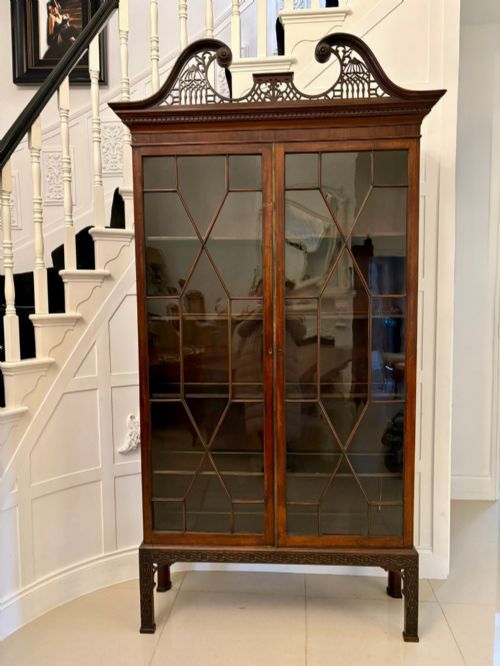
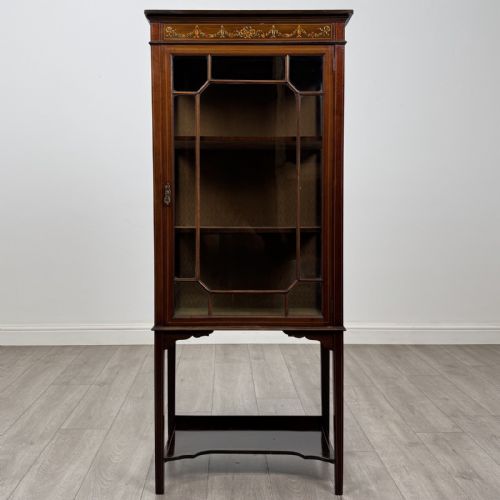
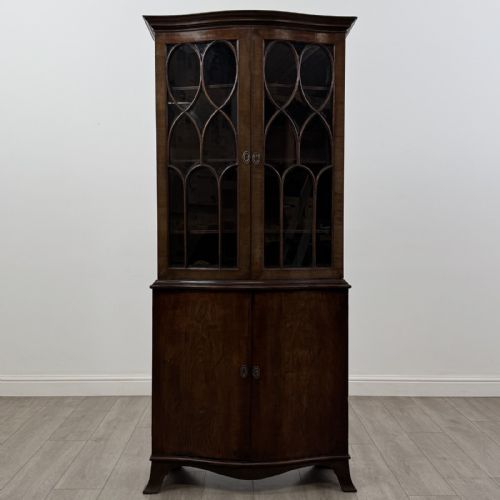
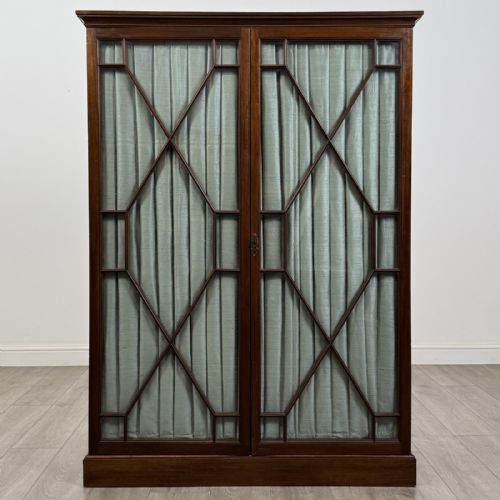
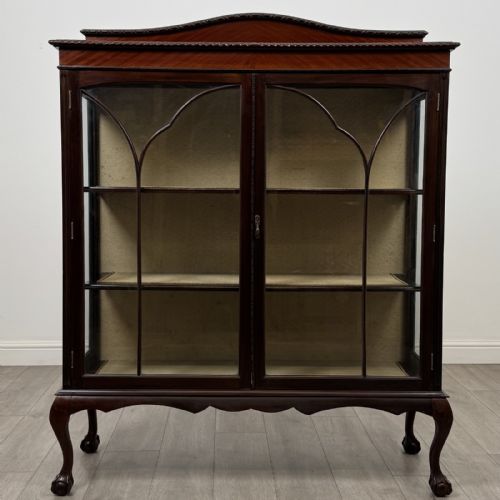
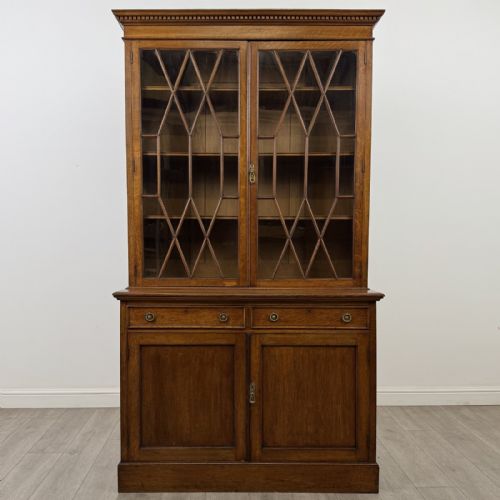
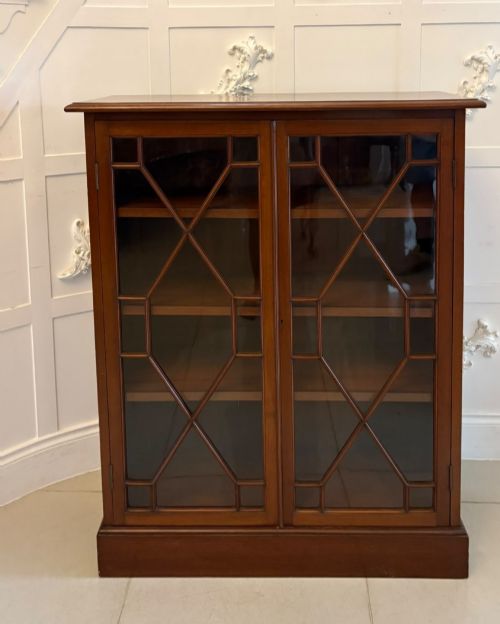
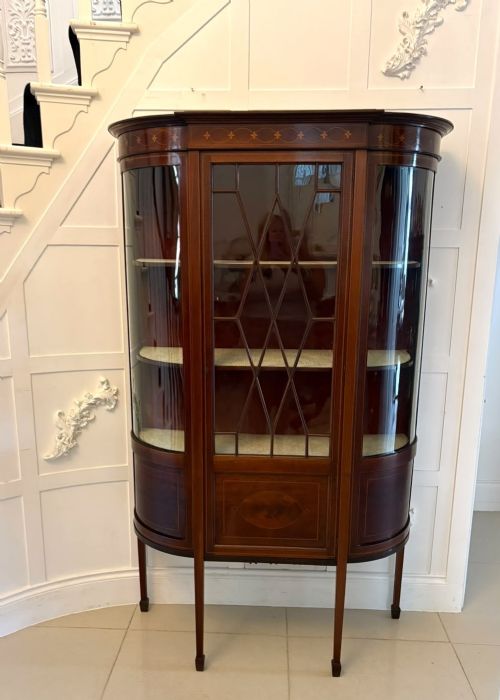
Astragal Glazed Display
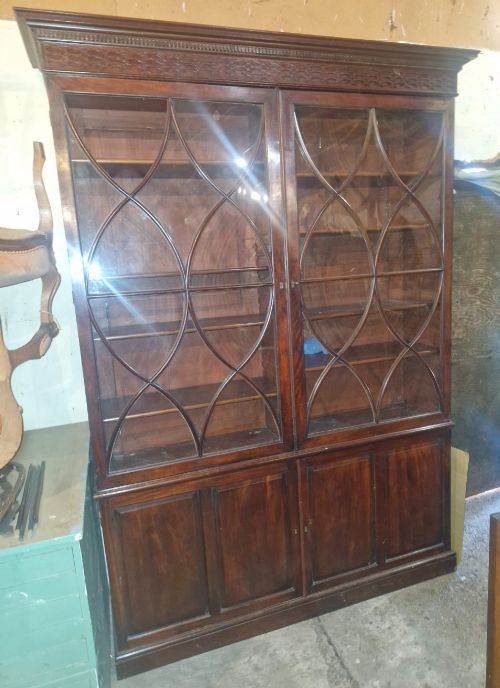
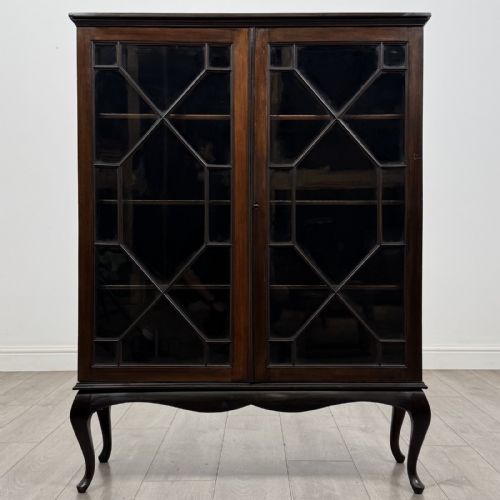
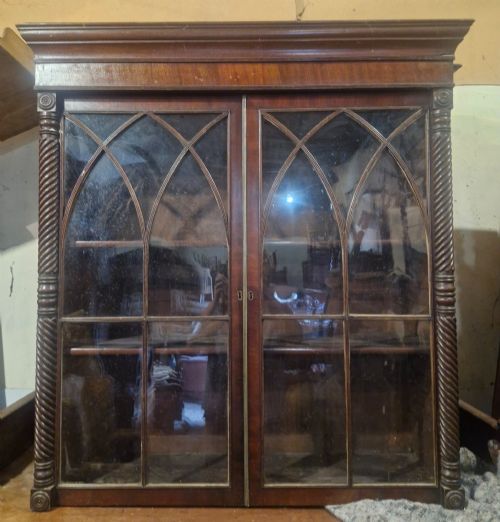
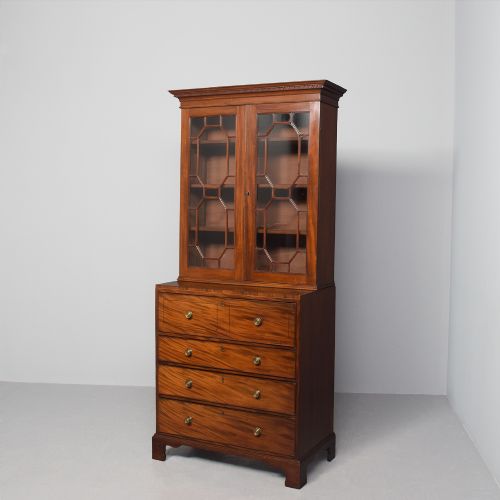
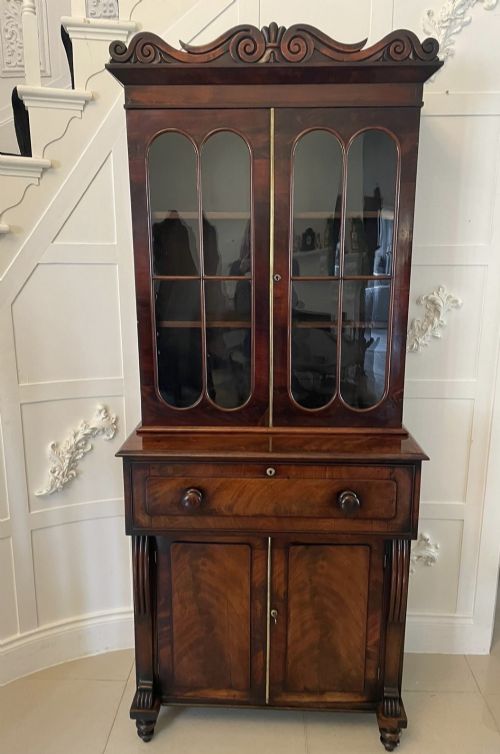
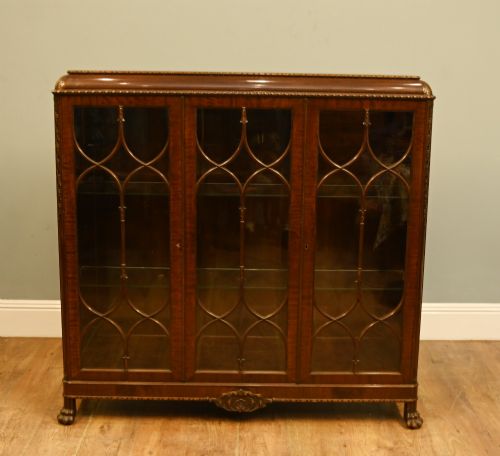
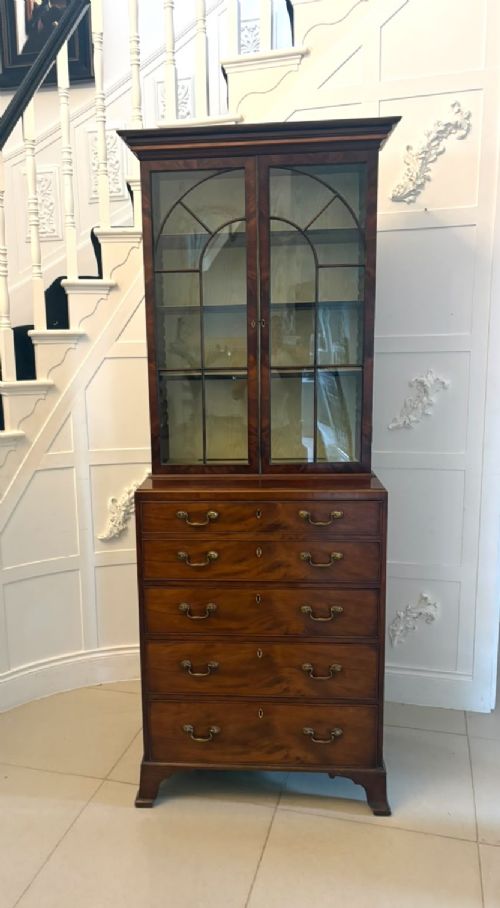
An astragal glazed display cabinet uses timber lattices to divide glass doors into smaller panes, framing fine books and porcelain with architectural grace.
Astragal Glazed Display
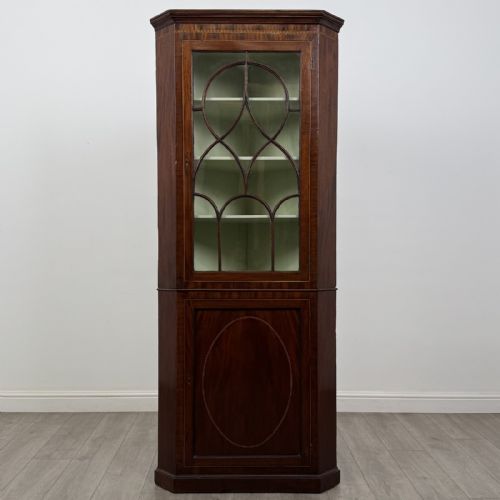
When you search for astragal glazed display pieces, you encounter large breakfront bookcases, corner cabinets, and upright display units spanning the eighteenth to the early twentieth centuries. Georgian, Victorian, and Edwardian cabinetmakers built these pieces to house libraries and display collections behind protective glass.
Mahogany dominates the selection, accompanied by walnut, satinwood, and oak, with revival styles such as Chippendale and Sheraton appearing alongside period originals. Floor-standing bookcases and corner cupboards remain the most common formats on this page.
Materials and Construction
Cabinetmakers constructed carcasses using solid mahogany, oak, or walnut, often applying finely figured veneer and satinwood inlay to prominent surfaces. The characteristic astragal bars were shaped from timber to hold individual glass panes securely within the door frames.
Brass hardware, original painted decoration, and fitted interiors with adjustable shelving complete the construction methods recorded in these pieces.
Listings feature eighteenth-century Georgian origins through to Edwardian interpretations, constructed in mahogany, walnut, oak, and satinwood.
Craftsmanship and Proportion
Quality rests in the precision of the timber selection, such as flame mahogany or figured satinwood, and the subtlety of inlaid decoration. Finer pieces demonstrate meticulous joinery in the slender astragal bars and balanced proportions across breakfront cornices.
Desirable examples exhibit original glass, well-figured grain, and integrated fitted desks or secretaire drawers rather than later alterations.
Jas Shoolbred·Gillows·Wylie & Lochhead
The Astragal Glazed Display Glossary
- Astragal
- A moulding profile, often shaped like a bead or half-round, used here as glazing bars to hold glass panes in a grid. These wooden or brass strips define the geometric pattern across the cabinet doors.
- Breakfront
- A cabinet front where the central section projects forward from the flanking wings. This architectural arrangement adds depth and visual weight to large bookcases.
- Secretaire
- A desk disguised as a drawer, featuring a drop-front writing surface that reveals pigeonholes and small drawers inside. It combines the storage of a bookcase with the function of a writing desk.
- Vitrine
- A glass-sided display cabinet designed primarily for the exhibition of porcelain and ornaments. They frequently feature delicate legs and glazed sides to admit maximum light.
- Satinwood
- A lustrous, yellow-toned timber utilised for veneers and decorative inlay. Cabinetmakers favoured it for contrasting borders and neoclassical motifs.
Astragal Glazed Display: Frequently Asked Questions
What is an astragal glazed display cabinet?
These pieces are timber cabinets featuring glass doors divided into smaller panes by wooden glazing bars known as astragals. They were designed to protect books and display valuable items while keeping dust away.
Cabinets range from tall corner cupboards and breakfront bookcases to smaller vitrines, spanning Georgian, Victorian, and Edwardian periods.
How do I date an astragal glazed bookcase?
Dating relies on timber choice, architectural style, and construction details such as drawer linings and backboards. Georgian pieces often show simpler carcass framing and flame mahogany veneers, while Edwardian examples frequently incorporate satinwood inlay and revival styles.
Comparing the glass consistency and interior fittings helps confirm whether a cabinet belongs to the eighteenth, nineteenth, or early twentieth century.
Where should I place a corner display cabinet?
Corner cabinets utilise unused angles in a room, making them practical for dining spaces, libraries, or drawing rooms. Tall floor-standing versions anchor empty corners while providing vertical storage.
Positioning them away from direct sunlight protects antique timber and prevents fading on figured mahogany and satinwood surfaces.