

Asian Furniture Cabinet
These pieces of asian furniture cabinet bring striking lacquerwork and hardwood construction into a room, offering both bold visual presence and practical storage.
Asian Furniture Cabinet
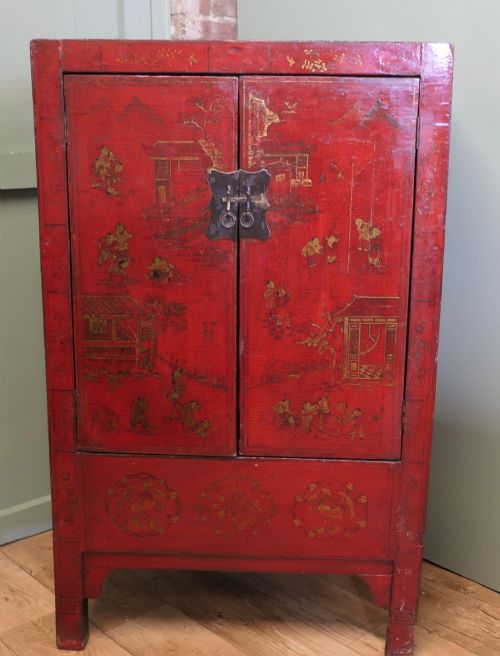
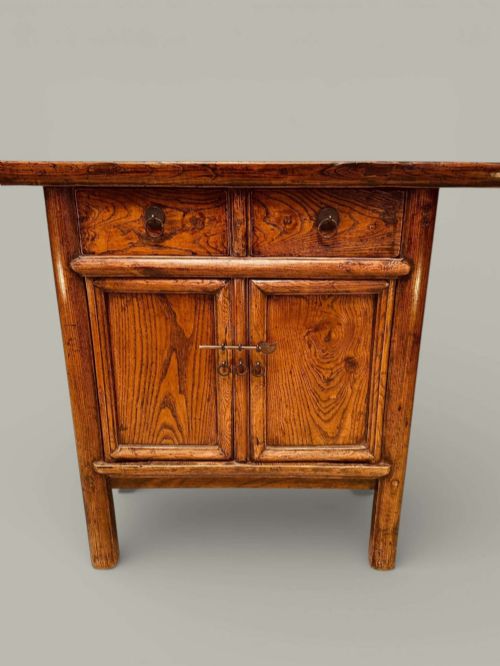
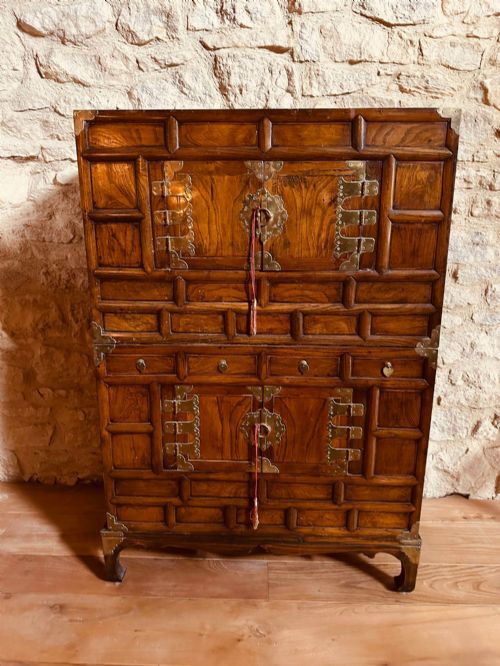
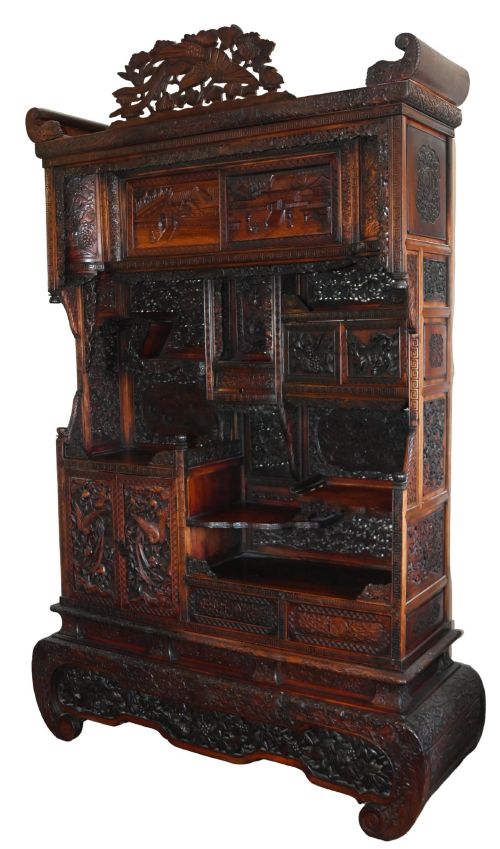
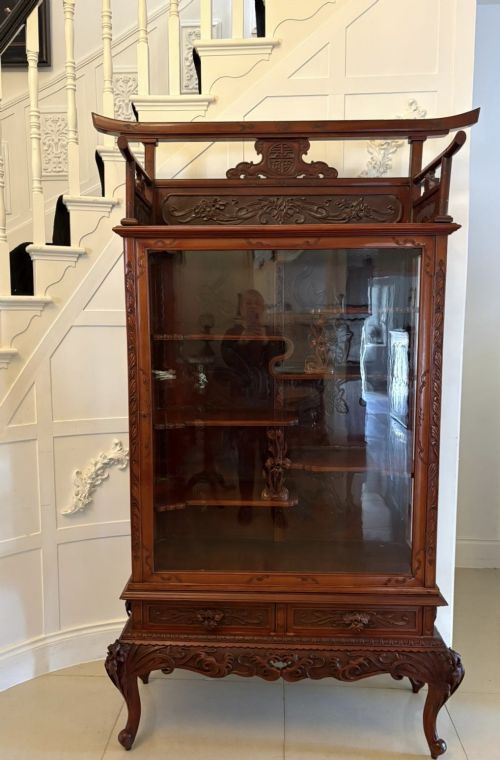
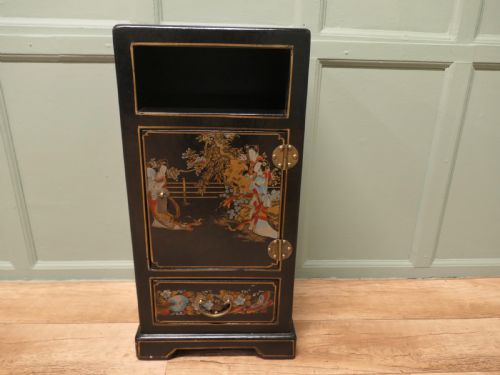
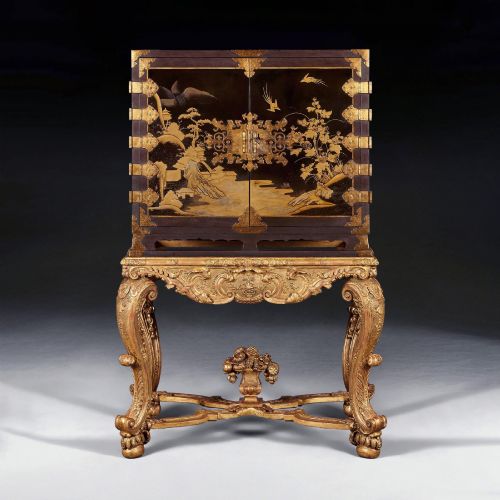
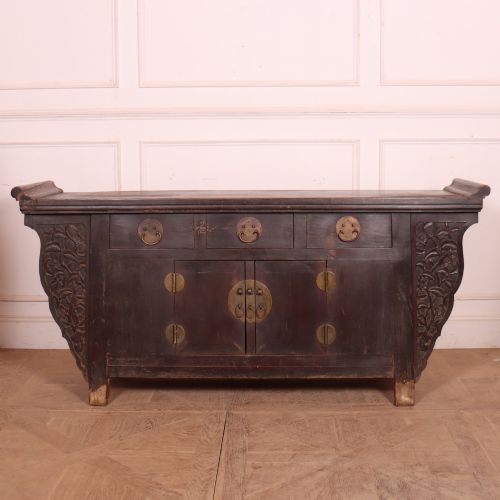
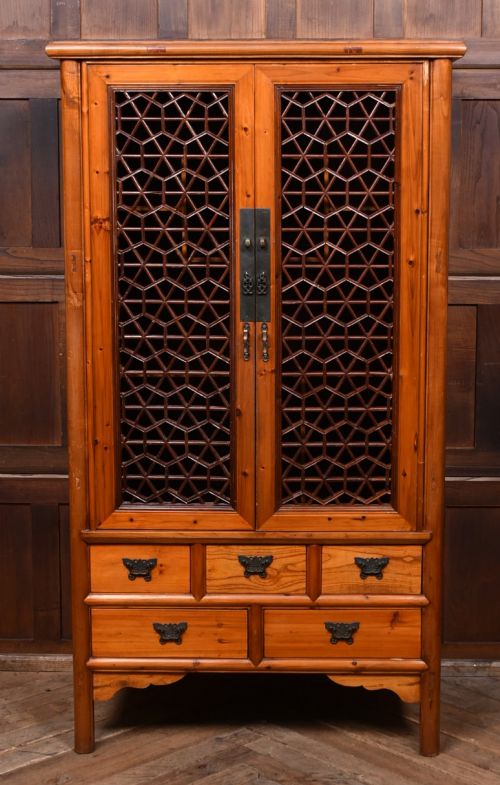
An asian furniture cabinet encompasses a diverse range of storage forms originating from China, Japan and Korea, spanning periods from the seventeenth century through to the early twentieth century. Buyers seeking these items will frequently encounter traditional wedding cabinets, tiered shodana display pieces, merchant tansu chests and painted side cupboards.
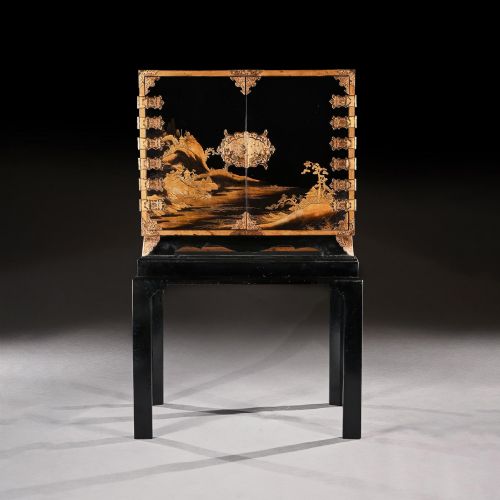
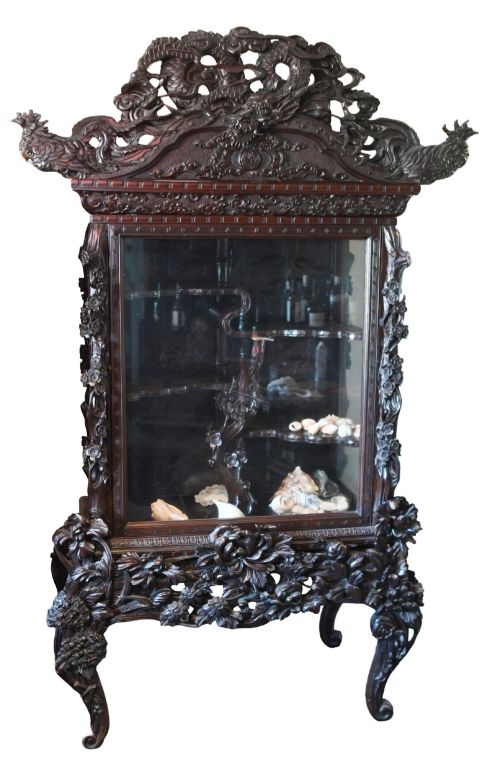
The selection reflects distinct regional aesthetics, from the deep red and black lacquered finishes of Chinese workshops to the intricate carved hardwoods and keyaki or elm timbers characteristic of Japanese Meiji and Taisho period cabinetmaking.
How they were made
Maker workshops utilised dense regional timbers including elm, hardwood, and keyaki, often pairing structural frames with durable lacquer coatings applied in multiple layers. Metal components such as brass hardware and iron fixtures provided functional reinforcement while adding distinct decorative contrast to the wood and lacquered surfaces.
Surface ornamentation involved hand-painted floral motifs, inlaid details, and intricate carvings that required specialist joinery techniques to accommodate the expansion and contraction of solid timber panels over time.
Asian Furniture Cabinet Retail Price Guide 2026
Typical asking prices for asian furniture cabinet among the pieces listed under this phrase on Sellingantiques today, from the lower quarter to the upper quarter. They describe what is for sale here now, not the wider market.
Listings feature items from the 17th century through the 1930s, highlighting elm, hardwood, brass, and lacquer materials.
What varies in quality
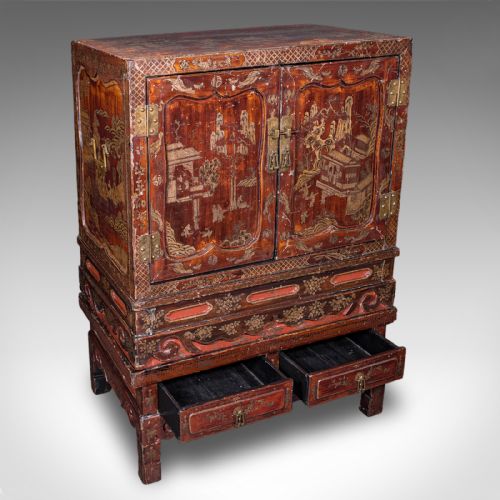
The standard of an asian furniture cabinet depends heavily on the integrity of the original surface finish, whether deep red lacquer, black chinoiserie decoration, or exposed burr elm grain. Pieces retaining their original brass hardware, stands, and hand-painted detailing command greater appreciation than those with replaced elements or heavily restored panels.
Construction methods also separate standard utility items from finer examples, with tight joinery, balanced proportions, and refined carving setting superior cabinets apart from simpler provincial storage pieces.
The Asian Furniture Cabinet Glossary
- Shodana
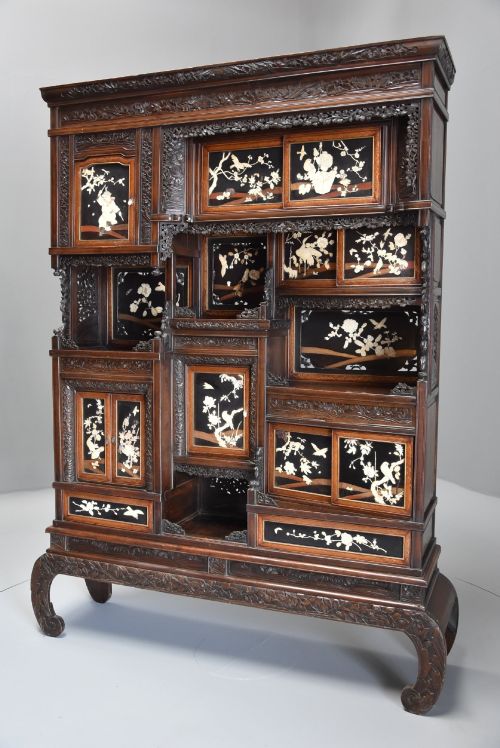
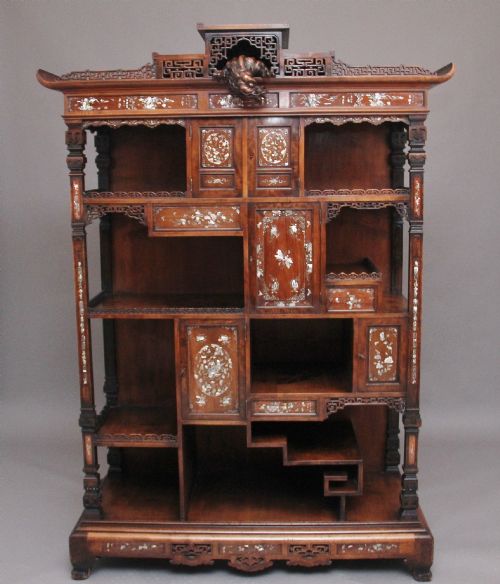
- A Japanese tiered display cabinet featuring asymmetrical shelving and small cupboards, traditionally used for holding decorative objects. These pieces often showcase fine woodwork and intricate joinery.
- Tansu
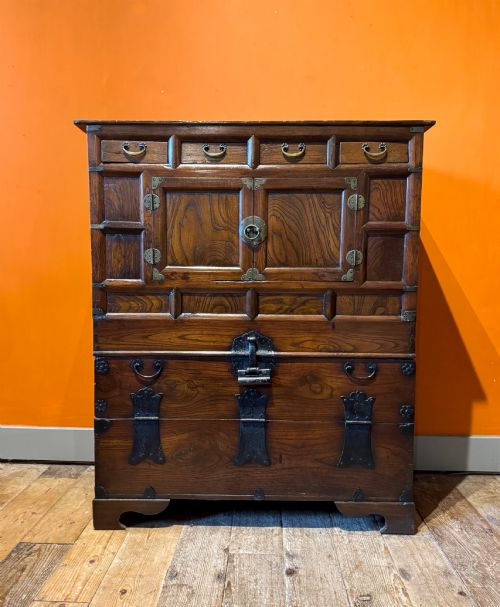
- A traditional Japanese mobile chest of drawers or storage cabinet built with integrated iron or brass handles. They were originally designed for utility and transport in merchant or domestic settings.
- Chinoiserie
- European artistic interpretation of Chinese and East Asian decorative styles, popular on lacquered cabinets and cupboards from the Victorian era onwards. This style frequently employs motifs of birds, flowers, and figures against black or coloured backgrounds.
- Wedding cabinet
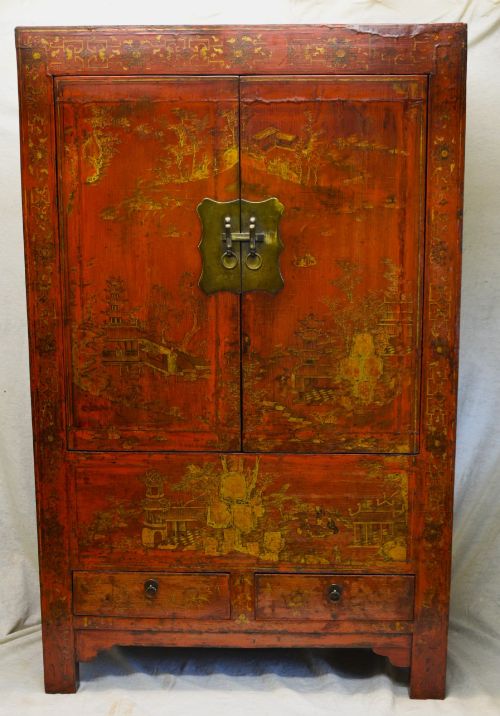
- A large Chinese storage cupboard traditionally given as a dowry, often finished in vibrant red lacquer with brass mounting plates. These large pieces served as primary storage for textiles and valuables.
- Keyaki
- A species of Japanese elm highly prized by traditional cabinetmakers for its strong grain pattern and durability. It forms the primary structure of many merchant chests.
Asian Furniture Cabinet: Frequently Asked Questions
How do I identify a Meiji period Japanese cabinet?
Meiji period pieces often display complex carved woodwork, asymmetrical shodana shelving arrangements, or keyaki timber construction. They reflect the opening of Japan to Western trade while retaining traditional craftsmanship methods.
Look closely at the joinery and hardware details, as these cabinets combine utility with high decorative ambition through intricate carvings and balanced proportions.
Where were red lacquered wedding cabinets used?
Red lacquered wedding cabinets originated in China as prominent household items associated with marriage dowries and family wealth. Their bright finish and brass hardware made them central fixtures in domestic interiors.
Owners typically used them to store fine garments, linens, and ceremonial objects within the main living quarters of the home.
What is the difference between a tansu and a shodana?
A tansu is a utilitarian Japanese storage chest featuring multiple drawers and iron handles designed for practical organisation and movement. In contrast, a shodana is primarily a display cabinet built with open shelving and small compartments for ornaments.
Tansu pieces prioritise robust timber construction like elm or keyaki, whereas shodana units focus on decorative presentation and varied shelf levels.
How do I care for antique lacquered furniture?
Lacquered surfaces require stable indoor humidity away from direct sunlight to prevent the finish from drying out or cracking over time. Dusting should be done gently with a soft, dry cloth without harsh chemical polishes.
Maintaining a consistent environment protects both the delicate paintwork and the underlying wood structure from seasonal expansion and contraction.