



Asian Carved Hardwood Furniture
Asian carved hardwood furniture brings dense rosewood, hongmu and elm into domestic spaces through nineteenth-century tables, cabinets and benches.
Asian Carved Hardwood Furniture
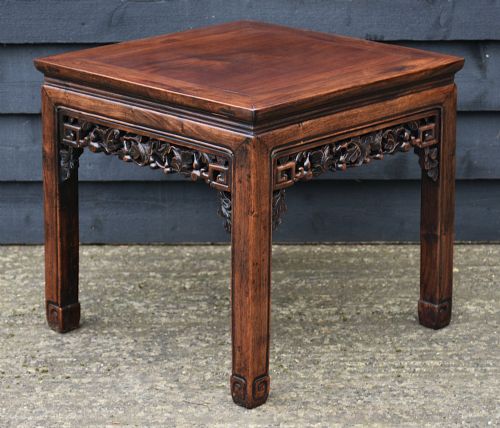
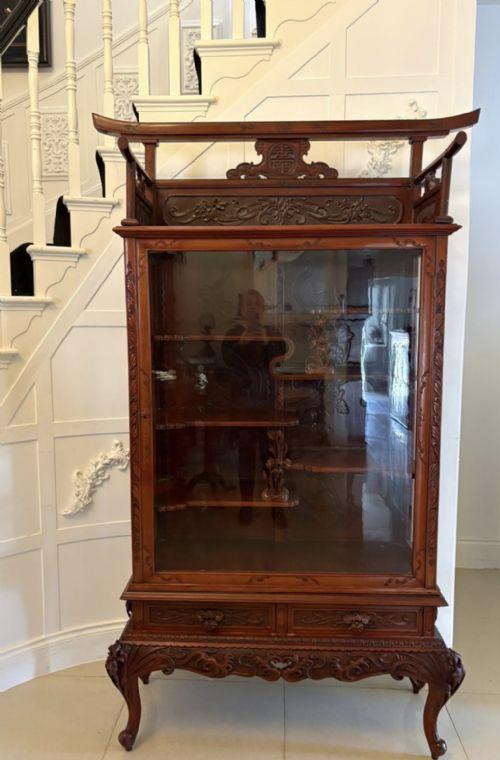
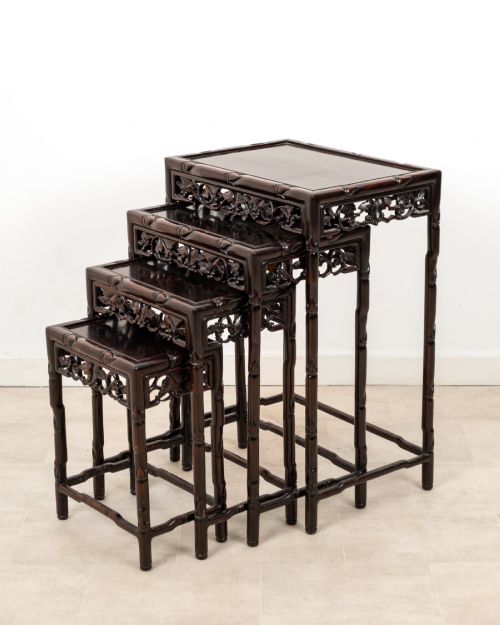
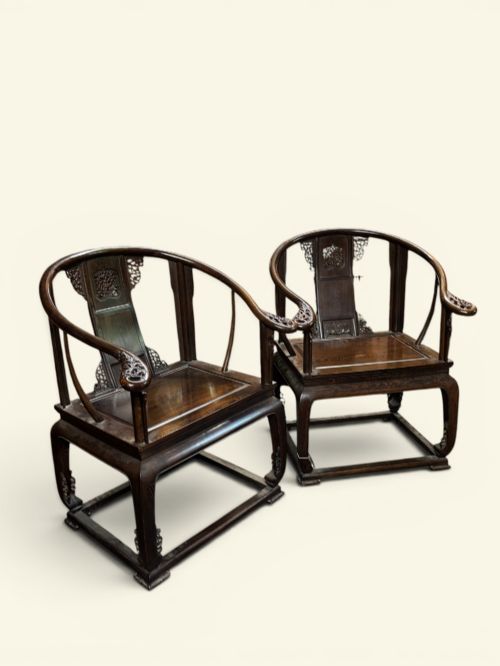
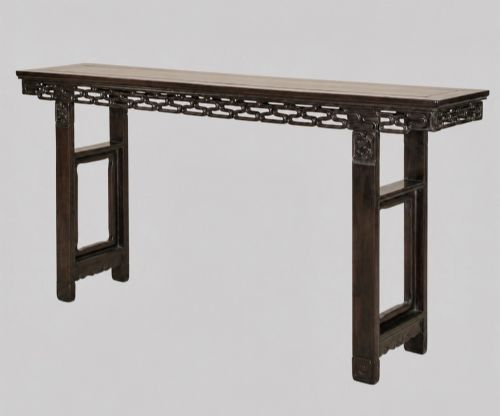
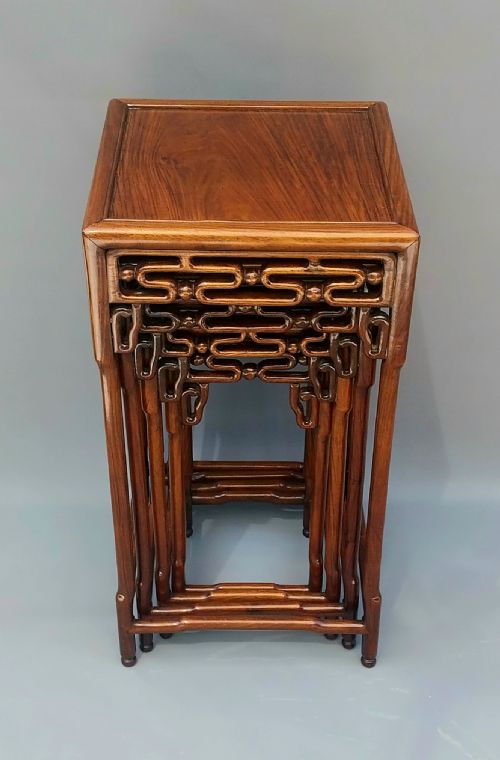
Asian carved hardwood furniture spans utilitarian seating, display cabinetry and low tables originating from nineteenth-century China and Japan. Buyers encounter nests of four tables, horseshoe-back armchairs, altar tables and plant stands constructed during the Qing Dynasty and the Meiji period.
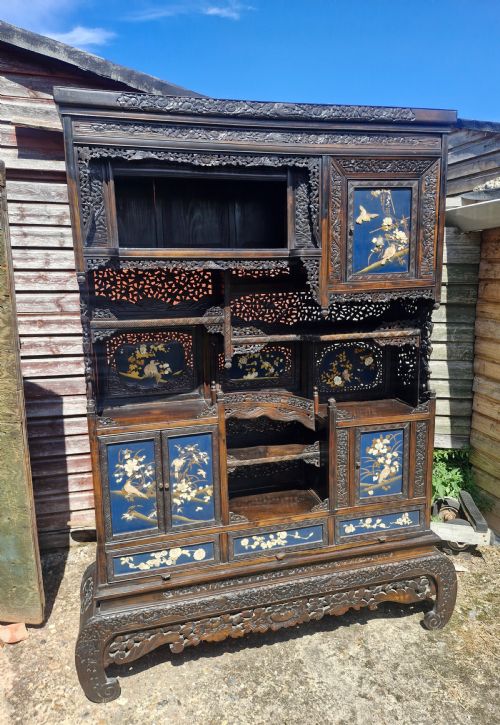
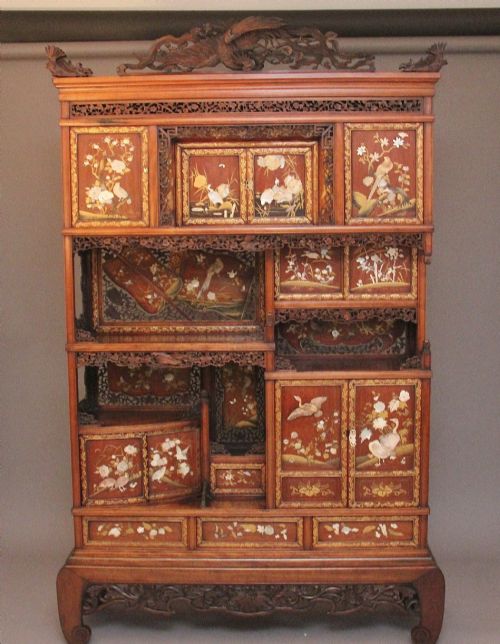
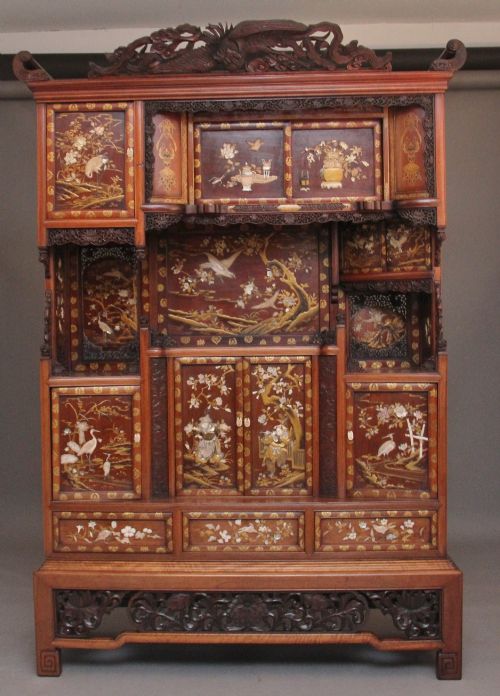
The selection centres heavily on domestic forms intended for display and everyday utility, including opium tables, side tables and multi-tiered shodana cabinets. Chinese huali wood and Japanese red lacquer examples dominate the forms currently available to collectors.
Construction and Materials
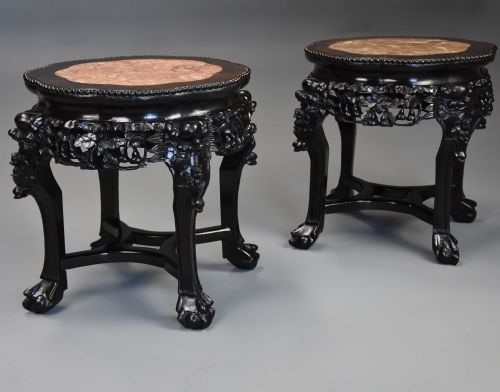
Craftsmen utilised dense timbers such as rosewood, hongmu, padouk and elm, selecting woods capable of supporting intricate relief carving without splintering. These structural elements frequently incorporated inset marble tops or contrasting red lacquer finishes.
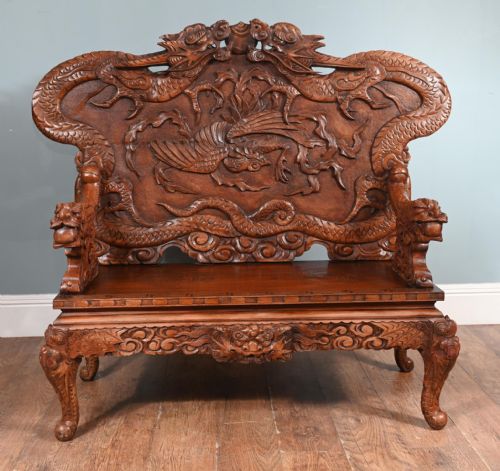
Joinery relied on traditional interlocking framing techniques that accommodated wood movement across seasonal changes without the heavy use of metal fasteners. Surface decoration combined deep hand-carved dragon motifs with smoothed patinated finishes.
Nineteenth-century craftsmen carved ferocious dragons onto seat rails so fierce that sitting down required a degree of diplomatic courage.
Judging Quality
The distinction between tiers rests upon the crispness of the hand-carved detail and the density of the underlying timber. Superior examples exhibit deep, undercut relief work where motifs stand free from the background panel rather than appearing shallow or soft.
Structural integrity and timber selection govern the upper range, particularly where dense hongmu or huali displays a rich, unblemished natural grain beneath decades of handling. Tables and cabinets maintaining original marble inserts and undisturbed patination represent the pinnacle of the craft.
The Asian Carved Hardwood Furniture Glossary
- Hongmu
- A category of dense, heavy Asian hardwoods translated literally as red wood. It encompasses several dense species prized for dark colour and durability.
- Shodona
- A Japanese multi-tiered display cabinet featuring staggered shelving and sliding doors. These pieces emerged prominently during the Meiji period for displaying decorative objects.
- Kang table
- A low platform table traditionally used on heated brick beds in northern China for dining and writing. They frequently terminate in scroll ends.
- Torchere
- A tall stand designed specifically to support a lamp, vase or plant. In Asian furniture, these take the form of heavily carved wooden pedestals.
- Huali
- A fragrant, highly figured hardwood utilised during the Qing Dynasty for fine seating and tables. It yields a warm reddish-brown tone with pronounced grain patterns.
Asian Carved Hardwood Furniture: Frequently Asked Questions
How do I use a nest of tables?
Nests of four tables stack neatly inside one another to conserve floor space when not required. Collectors pull them apart to serve drinks or display objects across a room.
Individual tables maintain matching proportions so they slide smoothly together into a single compact block. This modular design suits compact modern living areas just as well as nineteenth-century drawing rooms.
What is an opium table used for?
Opium tables are low rectangular platforms traditionally positioned for resting items at floor level. Nineteenth-century examples now function effectively as coffee tables in contemporary interiors.
Their modest height and generous top surfaces anchor low seating arrangements. The recessed legs and carved aprons provide visual interest without dominating the floor space.
How do I distinguish Chinese from Japanese pieces?
Chinese pieces from the Qing Dynasty frequently employ dense rosewood, hongmu or huali with deep relief carvings of dragons and floral motifs. Japanese Meiji period items often introduce red lacquer, intricate mixed-metal elements or staggered shodana shelving.
Construction methods also provide clues, as Japanese cabinetry often favours complex tiered compartments. Examining the primary wood species and surface treatment clarifies the geographic origin.
Where should I place a shodana cabinet?
Shodana cabinets require a prominent wall or corner where their asymmetrical shelving can be viewed clearly. They work well displaying small ceramics, bronzes or personal collections.
Because these cabinets are relatively compact, they fit into hallways and studies without overwhelming the room. Positioning them away from direct heat sources protects the lacquer and delicate joinery.
How do I care for hardwood furniture?
Hardwood furniture requires stable indoor humidity to prevent timber from splitting or warping. Dusting with a dry, soft cloth maintains the natural patina without stripping the surface.
Avoid applying modern silicone polishes, which can build up and dull the historic finish. Keeping pieces away from direct sunlight preserves the deep colour of rosewood and hongmu.