


Asian Brass Table Lamp
An asian brass table lamp brings weight and intricate pattern to a room, turning antique vases and bronzes into useful lighting.
Asian Brass Table Lamp
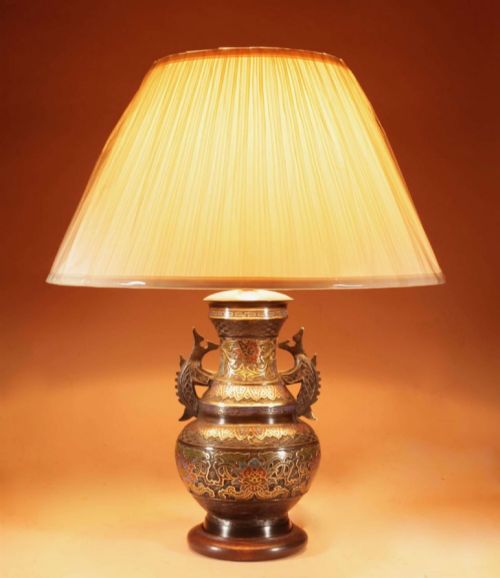
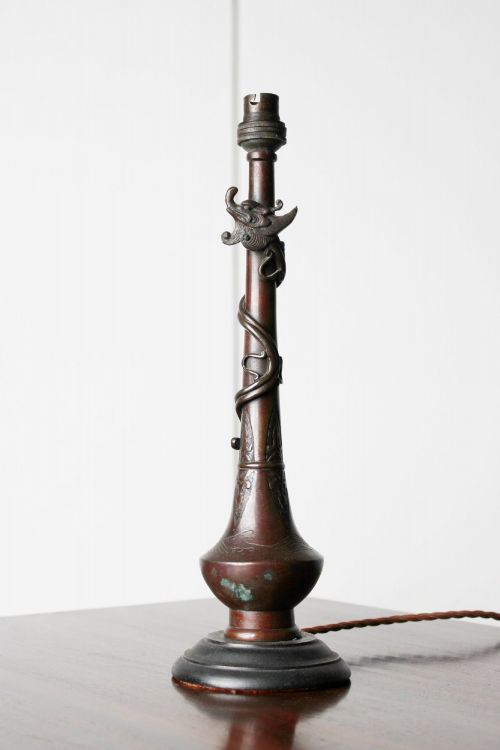
When you search for an asian brass table lamp, you encounter pieces that combine eastern ceramics or metalwork with western electrical fittings. The selection on this page relies heavily on nineteenth-century Japanese and Chinese vessels, including cloisonné, bronze, and porcelain, adapted for modern illumination.
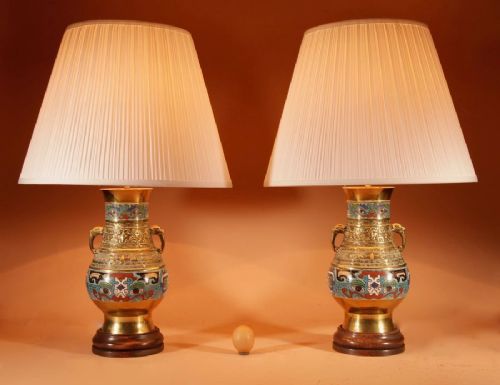
Most examples originate from the Victorian and Edwardian eras, alongside pieces dated around nineteen-ten and nineteen-twenty. You will find both single table lights and matched pairs, often incorporating brass mounts that secure the vase or bronze base.
Materials and construction
These items are constructed by mounting antique metalwork, porcelain, or lacquer onto solid foundations, frequently utilising brass for collars, bases, and electrical hardware. The underlying bodies include bronze, champlevé, and cloisonné enamel, alongside celadon, Imari, and famille verte ceramics.
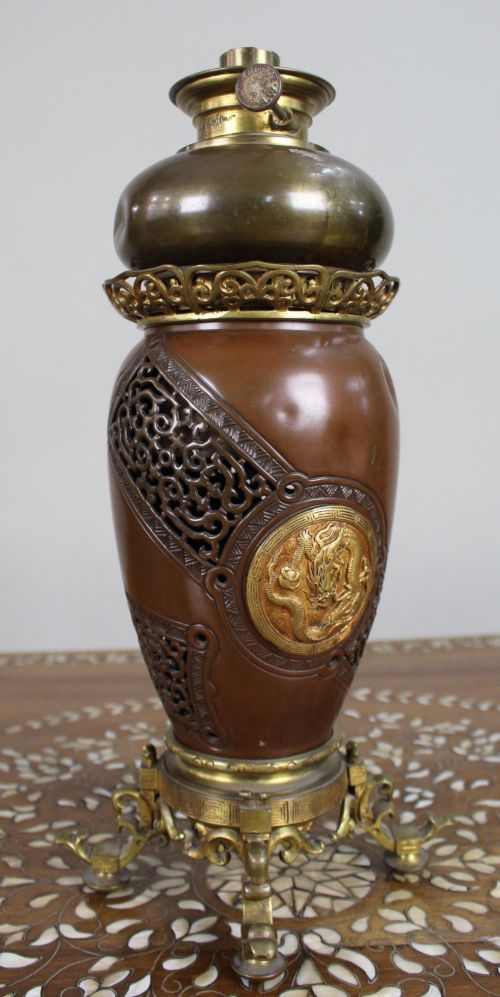
Artisans of the nineteenth and early twentieth centuries combined traditional oriental vessel-making techniques with contemporary metal casting. Vases and oil lamps were converted for domestic table use, incorporating fabric shades and wiring while retaining their original decorative surfaces.
Several lamps started life as oil lamps or spill vases before finding a second career holding lightbulbs.
Evaluating quality and execution
The distinction between standard and superior pieces rests upon the crispness of the bronze casting and the precision of the enamel work. Finer examples display meticulous cloisonné wires or deeply chased champlevé patterns that remain sharp and intact across the entire body.
Quality also manifests in the harmony between the antique vessel and its brass mounts. Superior items feature bespoke metal fittings that complement the proportions and period of the ceramic or bronze base without obscuring its primary decoration.
The Asian Brass Table Lamp Glossary
- Cloisonné
- Enamelwork created by soldering flat metal wire to a metal base to form compartments filled with paste and fired. This technique produces intricate colourful patterns across bronze and copper lamp bodies.
- Champlevé
- A technique where troughs are dug into a metal surface and filled with enamel before firing. It yields bold linear decoration frequently seen on nineteenth-century bronze pieces.
- Imari
- Japanese porcelain decorated in underglaze blue and overglaze red, gold, and other colours. These vibrant vessels frequently serve as the colourful bodies for table lights.
- Celadon
- A pale green jade-like ceramic glaze applied to stoneware or porcelain. It provides a subtle, restrained surface on early-period lamp conversions.
Asian Brass Table Lamp: Frequently Asked Questions
Are these lamps wired for modern use?
The listings on this page include antique bodies fitted with electrical components for contemporary interiors. Buyers should inspect individual specifications regarding plug types and wiring.
Many pieces retain their historical character while functioning as standard table lighting with fabric shades.
How do I date an antique lamp base?
Dating relies upon the style and manufacture of the underlying vessel, such as a Meiji period bronze or a nineteenth-century porcelain vase. Stylistic markers and material composition indicate the primary era of creation.
Brass mounts and fittings often reflect Victorian or Edwardian conversion dates applied to earlier Asian pieces.
What is the difference between cloisonne and champleve?
Cloisonné involves soldered wires creating raised surface cells that hold coloured enamel pastes. This method produces distinct wire borders around each colour field.
Champlevé carves the design directly into the solid bronze or metal base to form recessed channels for the enamel.
Do these lamps come in pairs?
The available selection includes both single feature lights and matched pairs of vases or oil lamps. Pairs are particularly common among nineteenth-century cloisonné and Imari ceramic conversions.
Using matched lamps provides symmetry when placed on side tables or bedside cabinets.