




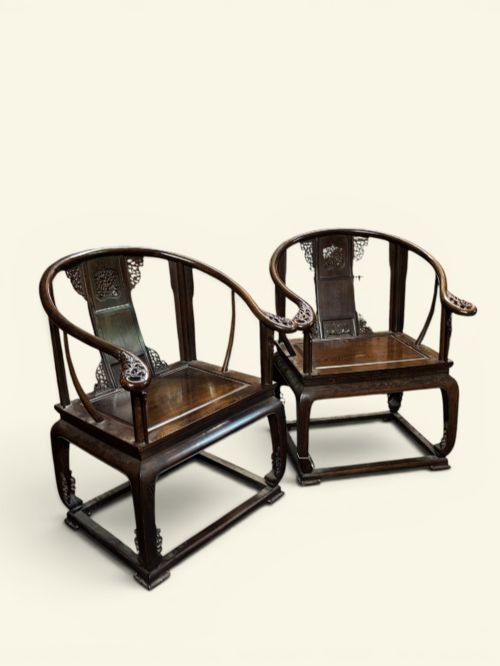


Asian Accent Furniture
Asian accent furniture brings distinctive regional character to a room through traditional forms and tactile materials.
Asian Accent Furniture
Asian accent furniture spans seating and small tables designed to introduce sculptural silhouette and functional surface space into an interior. Buyers investigating asian accent furniture encounter items primarily originating from China, Japan, and Burma during the nineteenth and early twentieth centuries.
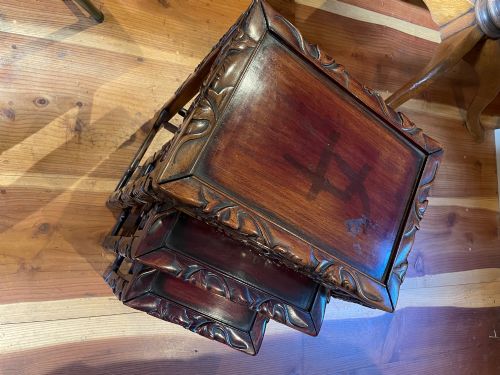
Seating forms include horseshoe-back armchairs, lamp hanger chairs, folding armchairs, and throne chairs constructed for specific domestic postures. Tables range from nests of four and square coffee tables to low side tables inset with marble and tall pedestal stands.
The aesthetic bridges formal dynastic pieces and provincial domestic objects, reflecting stylistic influences from the Qing Dynasty alongside later Japanese and Burmese craftsmanship. These items serve as focal points in contemporary rooms, functioning as occasional tables, plant stands, and statement seating.
How they were made
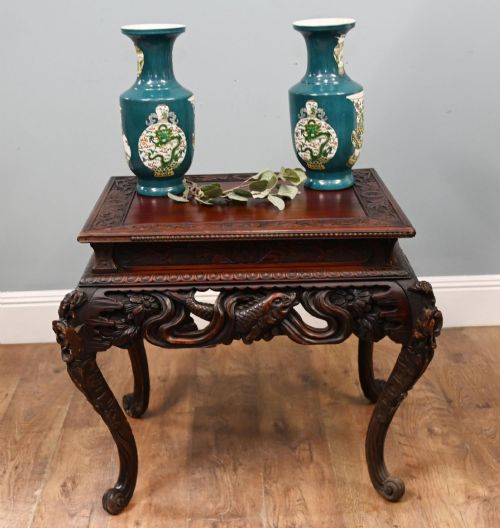
Cabinetmakers utilised dense timbers including hongmu, rosewood, teak, and elm, relying on traditional joinery that accommodated wood movement without metal fasteners. Hardwood frames were shaped through carving and turning to produce intricate dragon motifs, geometric aprons, and slender legs.
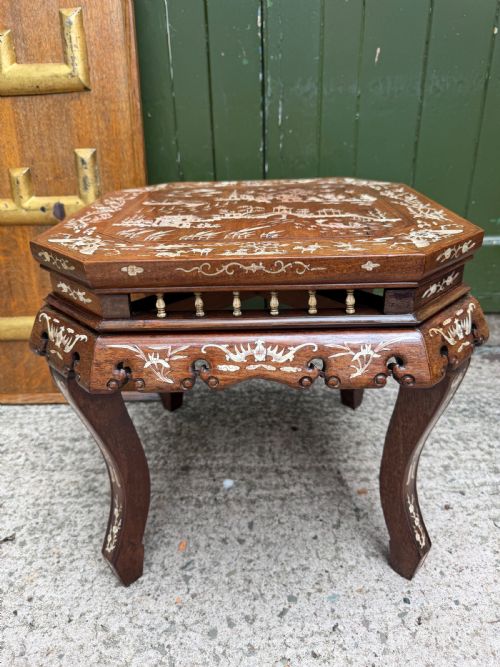
Surfaces received specialised treatments such as polished lacquer, applied bone inlay, and brass wire decoration set directly into the timber. Marble inserts were fitted into table tops to provide cool, durable working and display surfaces resistant to heat and moisture.
Asian Accent Furniture Retail Price Guide 2026
Typical asking prices for asian accent furniture among the pieces listed under this phrase on Sellingantiques today, from the lower quarter to the upper quarter. They describe what is for sale here now, not the wider market.
Listings feature items dated across the nineteenth and early twentieth centuries, spanning the late Qing Dynasty through the Taisho period.
What varies in quality
Quality rests in the density and selection of the timber, distinguishing heavy, stable hardwoods like hongmu and rosewood from lighter provincial elm or softwoods. Superior pieces demonstrate crispness in hand carving and precision in joinery, particularly where structural members intersect under load.
The integrity of decorative elements dictates overall standard, separating deep, undercut relief carving and securely flush bone or brass inlays from superficial surface work. Original finishing materials, including the depth of the lacquer or the fit of inset marble panels, indicate the level of initial workshop care.
The Asian Accent Furniture Glossary
- Hongmu
- A dense, heavy Chinese hardwood prized for its deep colour and durability in traditional cabinetmaking. It forms the structure of many high-status tables and chairs.
- Lamp hanger chair
- A traditional Chinese seating form characterised by a top rail that extends past the vertical rear posts, resembling a rack used for hanging oil lamps. These chairs often feature curved back splats designed for ergonomic support.
- Nest of four tables
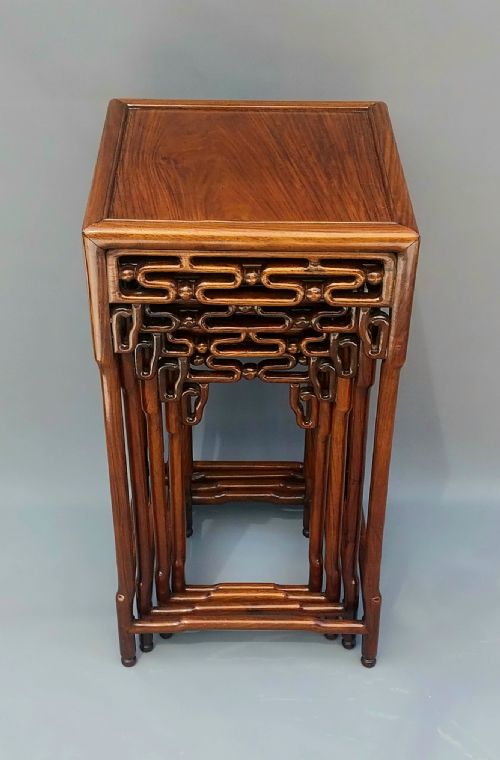
- A graduated set of rectangular or square tables designed to slide neatly beneath one another when not in use. This space-saving form gained popularity for serving tea and displaying decorative objects.
- Horseshoe-back armchair
- A seating design featuring a continuous curved crestrail and armrests that sweep forward in a single fluid arc. It provides comfortable upright posture through steam-bent or segmented joinery.
- Marble top
- A stone inset fitted into the wooden frame of a table to create a decorative and heat-resistant surface. These panels often display natural grey veining against a pale background.
Asian Accent Furniture: Frequently Asked Questions
How do I use a nest of tables?
Nests of four tables provide flexible surface space that adapts to entertaining by separating around a room. When not in use, the smaller tables slide sequentially beneath the largest to occupy minimal floor area.
They function well beside sofas or as bedside surfaces, allowing you to deploy extra stands only when needed.
Where should I place a plant stand?
Tall pedestal stands and urn stands suit corners, empty wall spaces, or flanking larger pieces of furniture. Their narrow footprint elevates decorative objects and plants to eye level without crowding the room.
Ensure the floor surface is level, as these tall, slender forms benefit from stable placement away from high-traffic walkways.
How are horseshoe chairs constructed?
Horseshoe-back armchairs rely on interlocking wooden segments that form the continuous curved top rail. This complex joinery distributes weight evenly down through the armposts and legs without requiring metal nails.
The frame often incorporates a sculpted back splat to support the spine during seated use.
What is the difference between elm and hongmu?
Hongmu is a dense, dark tropical hardwood used for formal furniture during the Qing Dynasty and later periods. Elm is a lighter, resilient domestic timber frequently found in provincial Chinese pieces with a pronounced grain pattern.
While hongmu accepts crisp, deep carving, elm lends itself to simpler lines and pickled or painted surface treatments.