



Ash Country Dining Chairs
Ash country dining chairs combine regional vernacular timber framing with robust spindle or hoop backs designed for daily farmhouse use.
Ash Country Dining Chairs
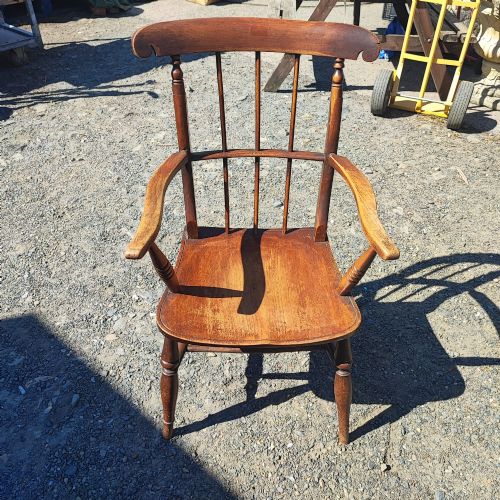
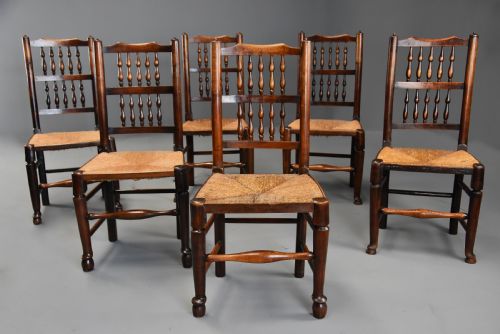
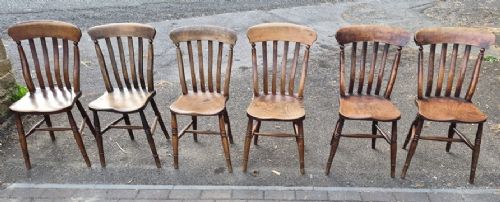
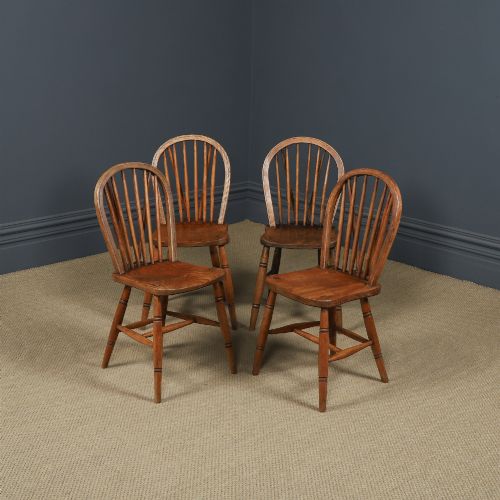
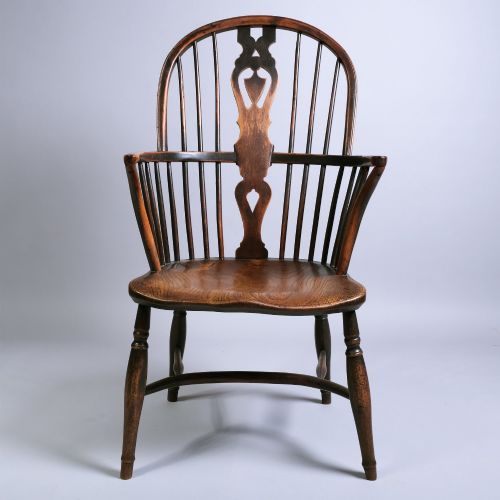
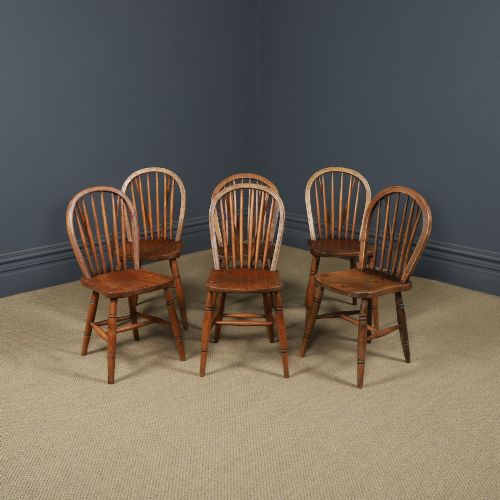
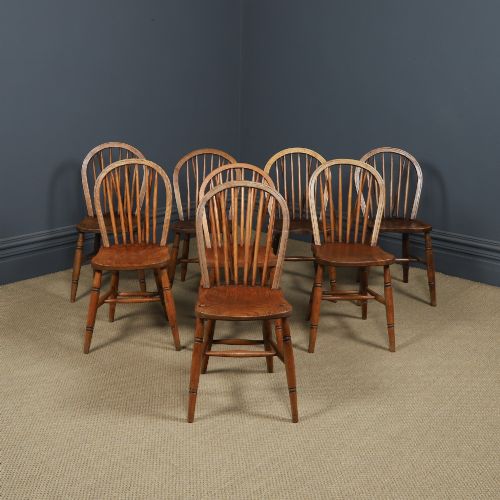
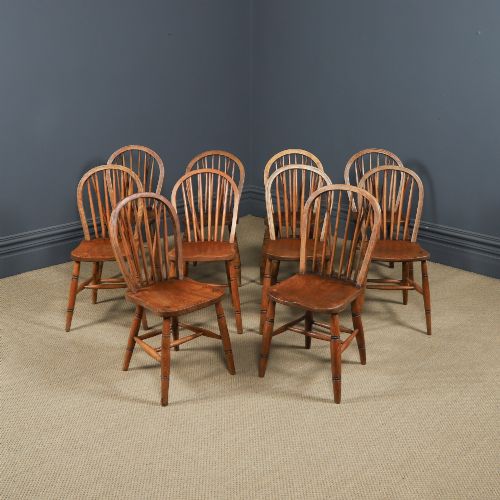
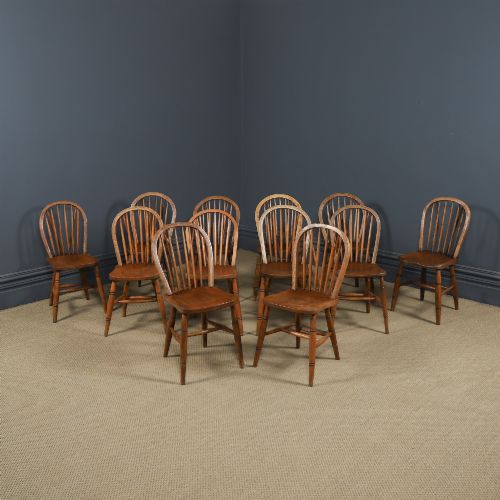
The most common versions met on this page are Windsor chairs and Lancashire or Yorkshire vernacular dining sets combining ash frames with elm seats. These pieces range from single carvers to large matching or harlequin sets intended for everyday dining tables.
How they were made
Maker-joiners utilised locally sourced woods, pairing tough ash for turned legs, spindles, and bows with pliable or durable timbers like elm for carved saddle seats. Alder, oak, beech, and yew also appear in regional frames depending on local availability.
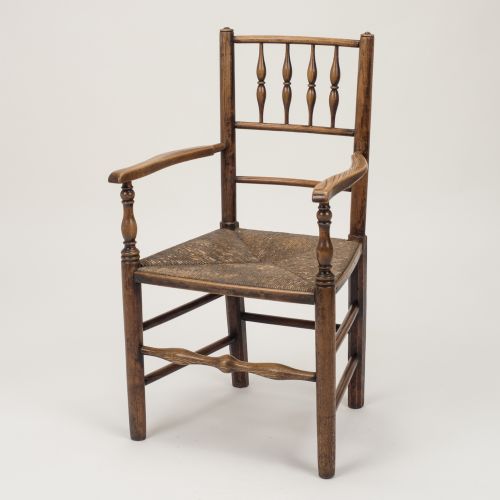
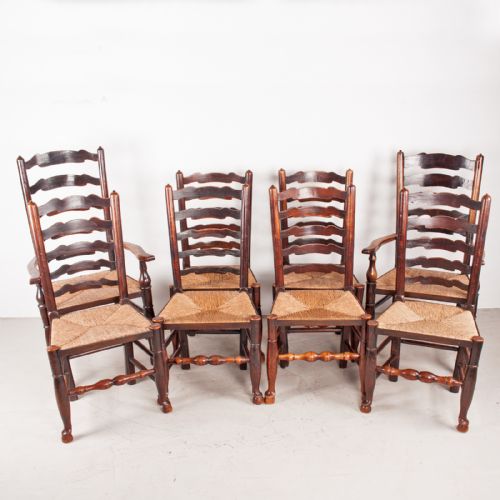
Seating surfaces often feature woven rush, plaited straw known as súgán, or solid sculpted timber secured through traditional pegged and wedged joinery without metal fasteners.
Listings feature ash, elm, rush, and yew across nineteenth-century Windsor and ladder back forms.
What varies in quality
Quality in these vernacular chairs rests upon the depth of the timber's patina, the crispness of the turnings on the spindles and legs, and the integrity of the original construction. Chairs retaining their initial surface finish and unblemished wood grain sit higher in desirability than those altered or excessively sanded.
Proportional harmony and the subtlety of the comb, hoop, or ladder back design also distinguish standard provincial utility seating from finer workshop productions.
Fred Walker Rockley
The Ash Country Dining Chairs Glossary
- Windsor chair
- A wooden chair constructed with a solid sculpted timber seat into which the legs and back spindles are independently inserted. This form evolved into distinct regional variations including hoop backs, comb backs, and low backs.
- Spindle back
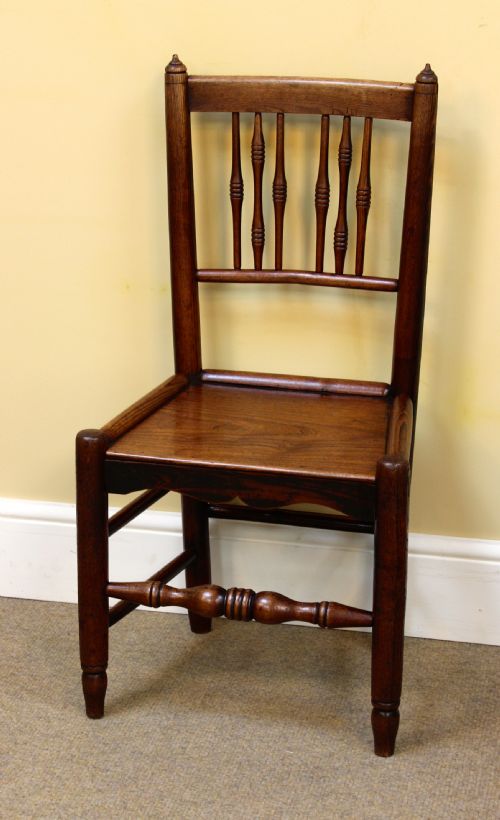
- A chair back constructed from a series of slender turned wooden rods fitted between a top rail and the seat. These components provide lightweight structural support.
- Ladder back
- A chair back featuring horizontal arched slats arranged between two upright rear posts. This style appears frequently in provincial rush-seated dining sets.
- Harlequin set
- A collection of chairs assembled to match in general style, period, or material while exhibiting subtle individual variations in turning or dimension. These groupings formed organically over time.
- Rush seat
- A seating surface woven from dried marsh reeds tightly plait around a wooden frame. This technique yields a resilient and flexible platform for country chairs.
Ash Country Dining Chairs: Frequently Asked Questions
How do I care for rush seats?
Rush seating requires dry indoor conditions and gentle dusting to maintain the natural reed fibres without rotting.
Avoid excessive moisture and weight concentration to preserve the woven structure over decades of daily dining.
What is a harlequin dining set?
A harlequin set is a gathered collection of chairs sharing similar regional styles, timbers, and periods rather than originating from a single workshop order.
These assembled groups offer historical character while providing enough matching elements for a complete dining table.
Are these chairs comfortable for daily use?
Country dining chairs were built for utility, featuring ergonomically scooped elm seats and supportive spindle or bow backs designed for long hours.
Their sturdy vernacular construction handles regular sitting comfortably without modern mechanical adjustments.
How do I distinguish regional chair styles?
Regional differences appear in the turning of the spindles, the shape of the hoop or comb back, and the choice of secondary woods like alder or beech.
Examining the local construction methods reveals whether a piece originated from Lancashire, Yorkshire, or the Thames Valley.