
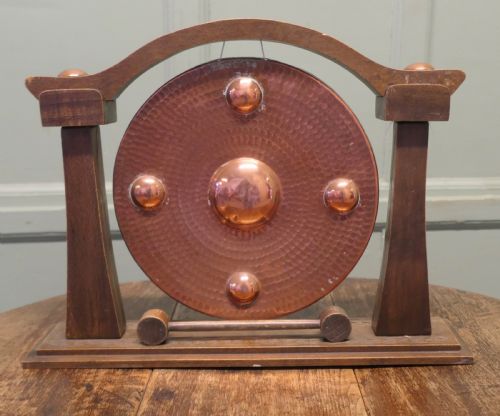


Arts Crafts Copper Table
These arts crafts copper table pieces unite warm metalwork with honest timber frames, bringing tactile domestic utility straight into a room.
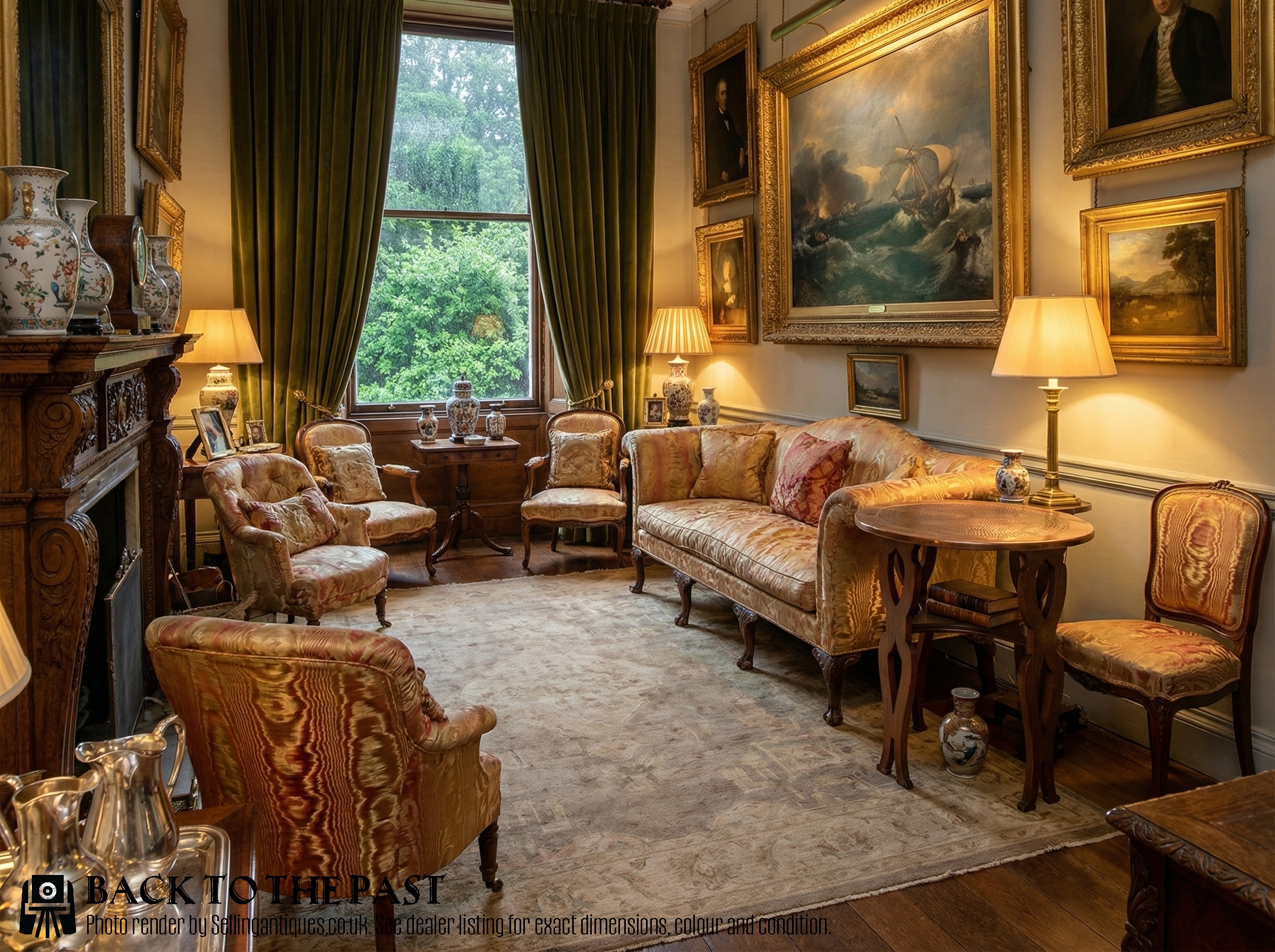
Arts Crafts Copper Table
An arts crafts copper table combines a sturdy timber base with a hammered metal surface, reflecting the utilitarian ideals of the movement. Pieces on this page span several forms including side tables, occasional tables, tray tables, and cricket tables alongside related metalwork items.
Most examples date from the late nineteenth century through to the early decades of the twentieth century, encompassing Victorian and Edwardian periods. Oak serves as the primary companion wood to the copper tops, though walnut and other timbers also appear.
Beyond standard occasional furniture, the category extends to associated tabletop accessories and lighting stands incorporating copper elements. These pieces demonstrate how metalwork integrated into everyday household objects during the period.
Materials and Construction
Makers utilised sheet copper for table surfaces and vessels, often applying hand-beaten or hammered textures that show the direct mark of the artisan. This metalwork was frequently combined with solid oak frameworks, sometimes secured with exposed rivets or bracket joints.
Detailing often included decorative cabochons, such as Ruskin ceramic inserts, or contrasting brass and silvered copper elements. Stands and supports regularly relied on traditional joinery techniques suited to working with dense domestic hardwoods.
Makers occasionally hid stylised honesty seed pods in plain sight on mirror frames, proving even metalworkers had a soft spot for garden weeds.
Quality and Execution
Superior examples display crisp, purposeful hand-hammering on the copper surface rather than uniform mechanical stamping. The weight and gauge of the metal plate used for the top also indicate the standard of production.
The integration between the metal top and the wooden base determines overall integrity, with finer pieces showing considered carpentry alongside well-finished patination on the copper. Original components, including specific glass shades or cabochon stones, elevate the integrity of individual objects.
William Soutter And Sons·W A Benson
The Arts Crafts Copper Table Glossary
- Arts and Crafts
- A design movement advocating handcraftsmanship and simple forms over mass production. It influenced makers from the late nineteenth century onwards.
- Patination
- The natural surface sheen or oxidation developed on copper and wood over time through exposure and handling. This process adds depth to the material.
- Cricket table
- A small three-legged occasional table with a round wooden top, often utilised near firesides. Versions here incorporate metal tops.
- Cabochon
- A polished, convex gemstone or ceramic piece without facets, frequently set into metalwork as a decorative accent. Ruskin pottery examples are typical.
- Spirit kettle
- A water heating vessel mounted on a stand above a small burner. These combine brass and copper elements for functional hospitality.
Arts Crafts Copper Table: Frequently Asked Questions
What is an arts crafts copper table?
These items are small domestic surfaces featuring hammered metal tops paired with wooden frames, typically oak. They reflect the design priorities of the late nineteenth and early twentieth centuries.
Such tables served as functional occasional furniture for tea, reading lamps, or general display in period interiors.
How do I care for copper table tops?
Copper develops a natural dark patination over decades, which many collectors prefer to leave undisturbed. Gentle dusting is usually sufficient for maintenance.
Avoid abrasive cleaners that strip the historic surface finish and remove the character accumulated over generations of use.
How are Victorian and Edwardian pieces distinguished?
Victorian examples often lean towards heavier ornamentation and darker timber finishes, while Edwardian pieces frequently display lighter oak tones and restrained lines.
Both periods overlap considerably in production methods, making construction details and material combinations key indicators of date.
Were these tables used daily?
Original owners utilised these pieces for everyday household tasks such as holding lamps, kettles, or writing materials. Their robust construction suited active domestic environments.
Today they function effectively as accent pieces in modern rooms, providing a tactile historical contrast.