


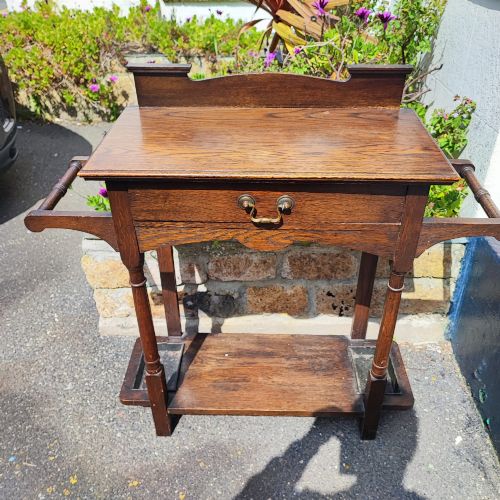

Arts and Crafts Umbrella Stand
When choosing an arts and crafts umbrella stand, you select a utilitarian hallway fixture combining honest materials with functional design.
Arts and Crafts Umbrella Stand
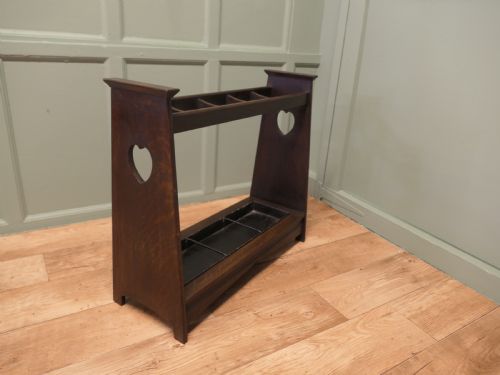
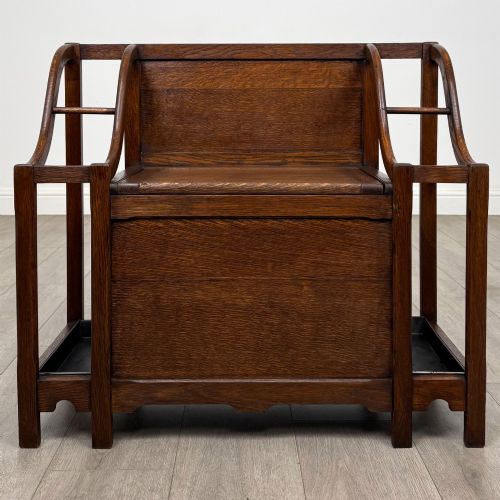
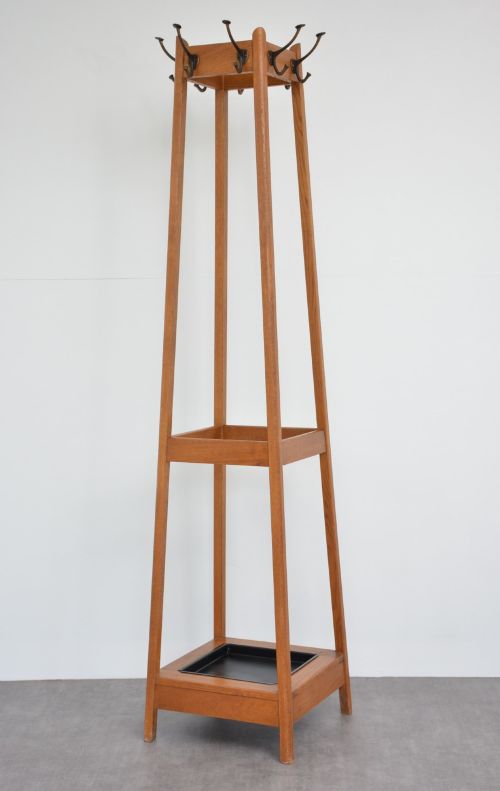
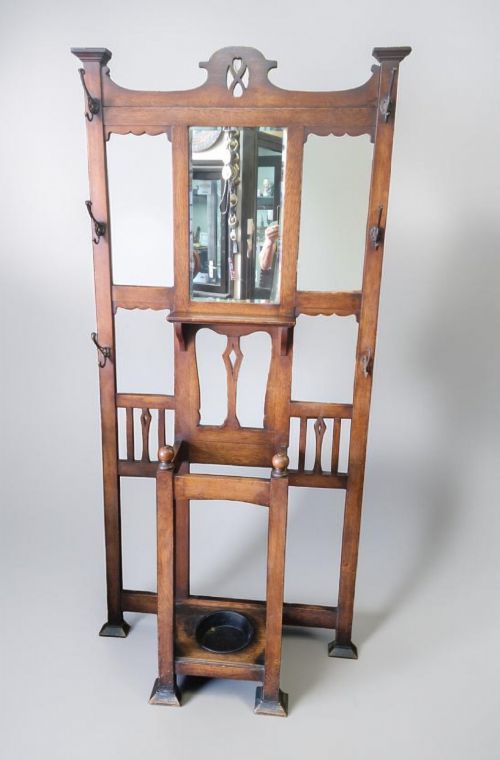
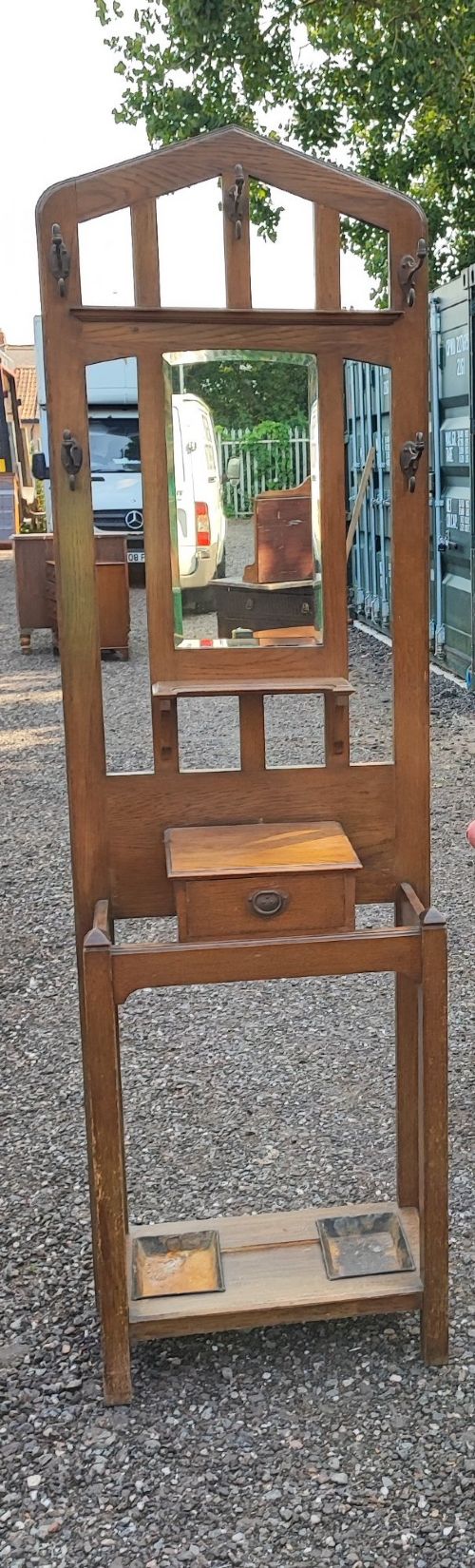
An arts and crafts umbrella stand serves as a functional piece for the entrance hall, frequently appearing as a standalone stick holder, a corner bracket, or integrated into a larger hall stand with coat hooks and a mirror.
The pieces on this page span the late Victorian era, the Edwardian period, and the early twentieth century, reflecting the longevity of the movement's design principles in British homes.
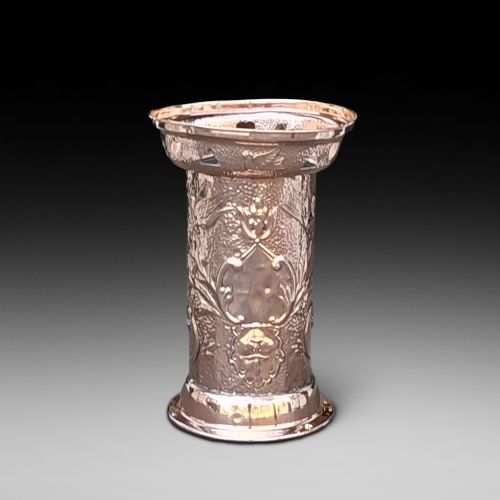
Golden oak and solid dark oak dominate the wooden examples, while hammered and embossed copper or brass provide the primary alternatives for metal vessels.
Materials and Techniques
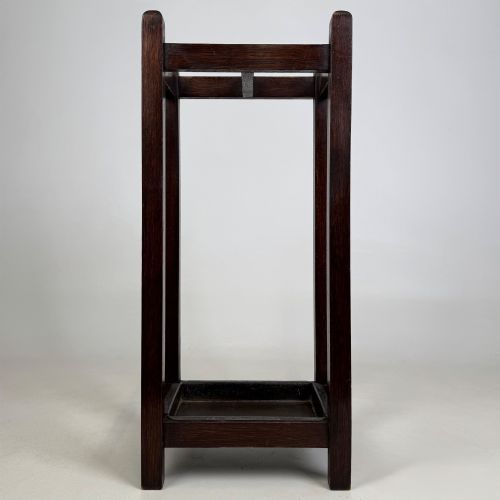
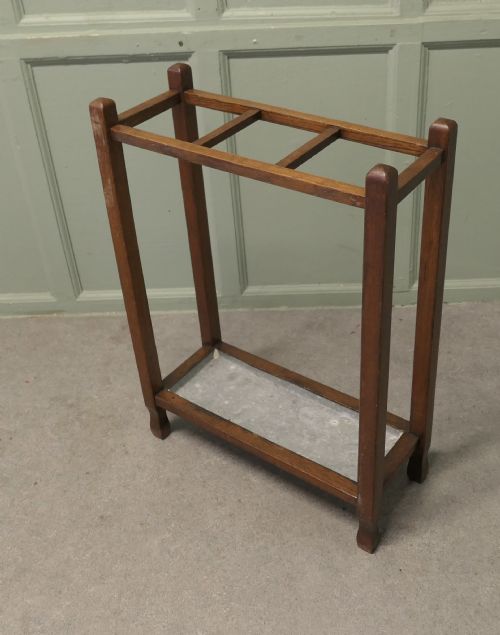
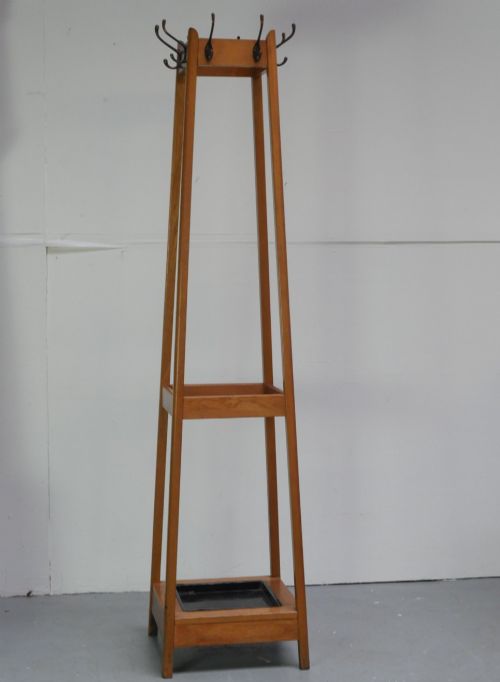
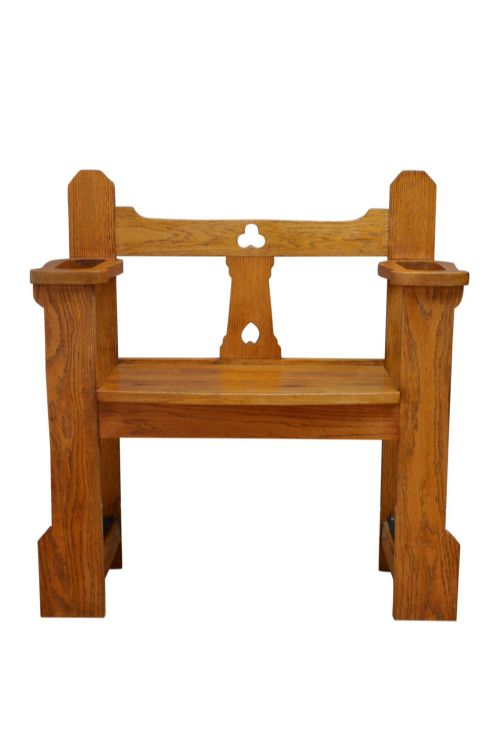
Cabinetmakers constructed the wooden frames from native timber, particularly oak and mahogany, often utilising mortise and tenon joinery to display structural integrity without superfluous ornament.
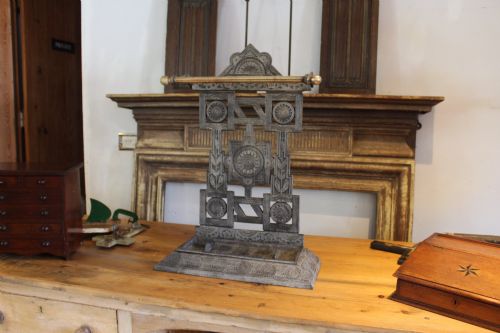
Metal versions utilise sheet copper, brass, and cast iron, frequently shaped by hand-beaming or hammering surfaces to create distinct textures that catch the light.
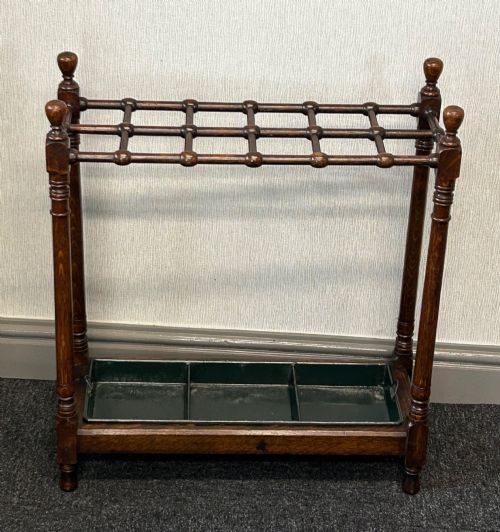
Many examples incorporate practical components such as original cast iron or metal drip trays positioned at the base to catch moisture from wet walking sticks and umbrellas.
Arts and Crafts Umbrella Stand Retail Price Guide 2026
Typical asking prices for arts and crafts umbrella stand among the pieces listed under this phrase on Sellingantiques today, from the lower quarter to the upper quarter. They describe what is for sale here now, not the wider market.
Many umbrella stands retain their original metal drip trays, capturing over a century of rainy British weather.
Evaluating the Pieces
Quality rests upon the integrity of construction and the honesty of the materials, where solid timber framing and substantial gauge metal outlast veneered surfaces and thin sheet brass.
The presence of maker attribution, such as work associated with Liberty and Company or documented designers, elevates a standard hall furnishing to a collected design object.
Proportion and utility govern the design, meaning superior examples balance decorative metalwork or carved wood with robust daily serviceability.
Liberty and Co·Heals of London·Thomas Jeckyll·James Shoolbred·GW Evans
The Arts and Crafts Umbrella Stand Glossary
- Hall stand
- A multi-functional hallway item combining coat hooks, a mirror, a small bench or glove box, and umbrella wells. This form anchors the entrance of larger period properties.
- Drip tray
- A metal base insert designed to catch water running off wet umbrellas. These trays protect wooden floors and the lower frame from water damage.
- Art Nouveau
- A decorative style characterised by flowing, organic lines and plant-inspired motifs. It frequently overlaps with arts and crafts metalwork on copper stands.
- Repoussé
- A metalworking technique where the artisan hammers metal from the reverse side to form a raised design. This process decorates the body of many copper umbrella holders.
- Stick stand
- An alternative term for an umbrella stand designed specifically to accommodate walking sticks and canes. These pieces often feature divided wooden or iron rings at the top.
Arts and Crafts Umbrella Stand: Frequently Asked Questions
What is an arts and crafts umbrella stand?
An arts and crafts umbrella stand is a hallway furnishing designed to hold wet umbrellas and walking sticks, produced during the late nineteenth and early twentieth centuries.
These pieces emphasise visible construction methods and honest materials like oak, copper, and brass over excessive surface decoration.
How do I maintain a copper umbrella stand?
Copper and brass stands require minimal intervention to preserve their historic surface appearance. Dust them gently with a dry cloth and avoid harsh chemical polishes that strip away age.
Ensure that the internal drip tray remains dry after use to prevent corrosion or staining of the surrounding floor and metal.
Where should I place an umbrella stand?
These stands suit entrance halls, boot rooms, and reception areas where guests arrive with outdoor gear. Their narrow proportions allow them to fit neatly beside doorways or into hallway corners.
Ensure adequate ventilation around the stand so that damp umbrellas dry naturally without trapping moisture against the wood or metal.
How can I date an oak umbrella stand?
Dating relies on examining construction techniques, hardware, and stylistic indicators such as whether the piece shows strict arts and crafts simplicity or later Edwardian detailing.
Evidence of hand tools, traditional joinery, and patinated timber surfaces generally point towards production between eighteen-eighty and nineteen-twenty.