



Arts and Crafts Table Set
These arts and crafts table set pieces bring honest construction and solid materials into daily rooms.
Arts and Crafts Table Set
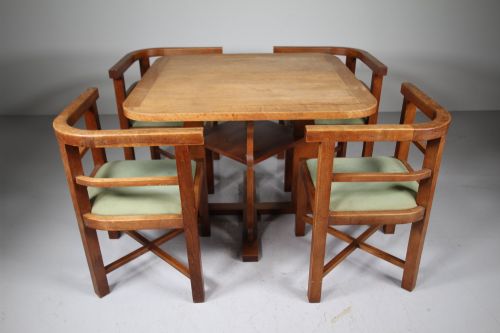
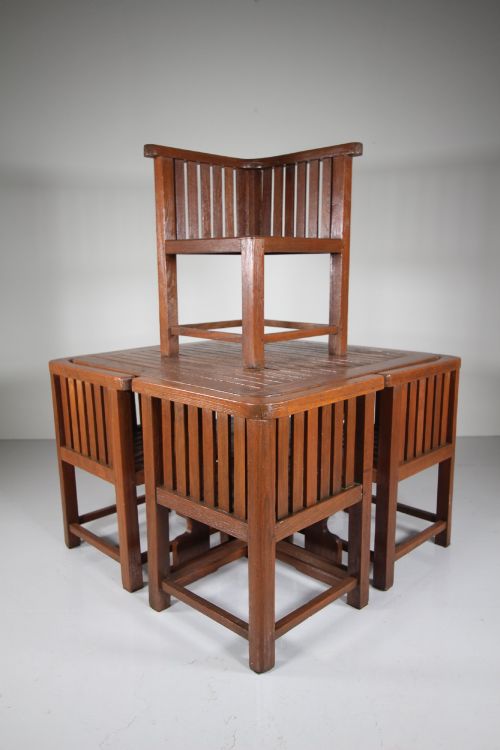
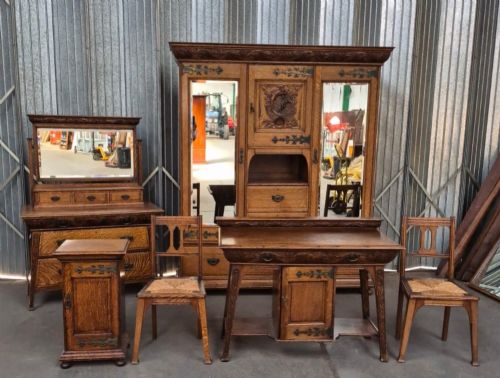
An arts and crafts table set covers domestic groupings of furniture such as dining tables with chairs, console tables paired with mirrors, and bedroom suites built around matching surfaces. These formations reflect the domestic ideals of the movement, prioritizing utility and simple geometry over heavy Victorian ornamentation.
The versions most commonly met in these listings include oak dining arrangements alongside bedroom suites and dressing chests. Oak remains the predominant timber, appearing alongside ash and walnut in configurations designed for functional living spaces.
Origins span British regional workshops, Cotswold traditions, and transatlantic pieces from Boston, showing how widely the style travelled. Every grouping shares a reliance on structural honesty and visible grain, steering clear of veneered excess.
Materials and construction
Cabinetmakers relied heavily on solid oak, walnut, and ash, selecting timber for strength and prominent grain patterns rather than hiding it beneath dark stains. Metal details in iron, copper, and silver plating appear alongside glass, mirror plates, rush, and ceramic cabochons like Ruskin pottery.
Joinery techniques emphasised exposed tenons, pegged joints, and hand-planed surfaces that revealed the maker's hand. Metalware components were often hand-hammered, grounding the wood structures with tactile, worked surfaces.
Arts and Crafts Table Set Retail Price Guide 2026
Typical asking prices for arts and crafts table set among the pieces listed under this phrase on Sellingantiques today, from the lower quarter to the upper quarter. They describe what is for sale here now, not the wider market.
Listings feature oak, walnut, ash, iron, copper, glass, and rush across items dated from eighteen-ninety through nineteen-forty.
Assessing quality
Quality rests on the selection of timber and the integrity of the joinery, distinguishing sturdy workshop production from lighter commercial output. Heavy, well-figured oak and ash command attention through substantial weight and balanced proportions.
The treatment of secondary materials such as hand-hammered copper, ceramic cabochons, and original mirror plates elevates a set from basic utility to considered design. Pieces that retain their original benches, stools, or matching mirrors demonstrate greater coherence.
Jack Grimble·Liberty
The Arts and Crafts Table Set Glossary
- Cotswold School
- A regional offshoot of the movement centred in Gloucestershire, known for unpretentious furniture made using traditional hand tools. This approach emphasised local timbers and honest construction.
- Arts and Crafts
- A design movement spanning the late nineteenth and early twentieth centuries that championed handcraftsmanship and simple forms. It arose as a reaction against mass-produced machine manufacture.
- Ruskin pottery
- A distinctive British ceramic ware featuring crystalline and flambé glazes, frequently set as cabochons into metalwork and furniture. These colourful inserts provide a vibrant focal point.
- Celtic Revival
- A late nineteenth and early twentieth-century style incorporating traditional interlace patterns and ancient motifs into metalwork and decorative objects. It often appears on silver and copper table accessories.
Arts and Crafts Table Set: Frequently Asked Questions
What is an arts and crafts table set?
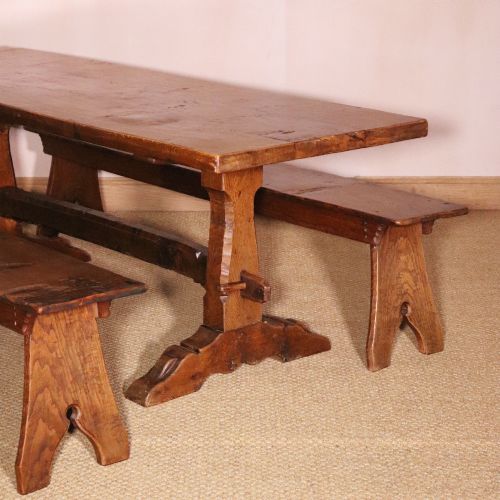
It is a coordinated grouping of furniture or matching table accessories sharing the honest construction and simple aesthetic of the movement. These sets range from dining tables with benches to bedroom suites and dressing chests.
Most examples make use of solid oak or ash, showcasing the natural grain and traditional joinery without excessive ornamentation.
How do I care for these wooden surfaces?
Solid oak and walnut benefit from regular dusting with a dry cloth and occasional application of traditional beeswax to nourish the grain. Keeping pieces away from direct heat sources prevents the timber from splitting.
Avoid modern chemical sprays, which can strip the aged patina built up over decades of use.
Where were these pieces made?
Production spans British workshops, including Cotswold regional centres, alongside transatlantic makers in places like Boston. Liberty supplied notable metalware items, while regional cabinetmakers built the larger bedroom and dining suites.
Local timber availability often dictated whether a maker chose oak, ash, or walnut for a particular commission.
How do I date an arts and crafts set?
Dating relies on stylistic markers such as pegged mortise and tenon joints, hand-hammered metal surfaces, and the specific integration of ceramic cabochons. Most pieces date from the period between eighteen-ninety and nineteen-forty.
Examining underlying construction methods and any maker stamps helps place a set within its specific decade.