






Arts and Crafts Settle Bench
These arts and crafts settle bench examples combine honest construction with utilitarian utility, offering sturdy seating grounded in early twentieth century design traditions.
Arts and Crafts Settle Bench
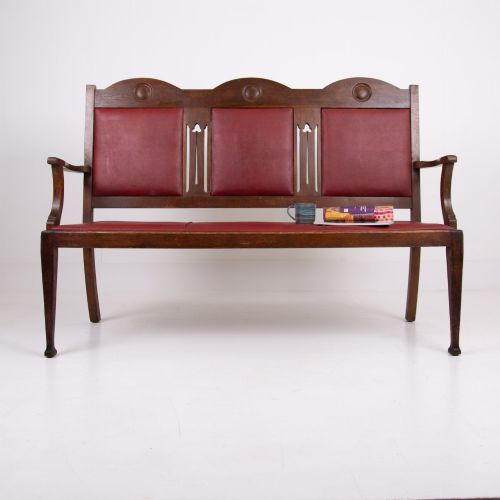
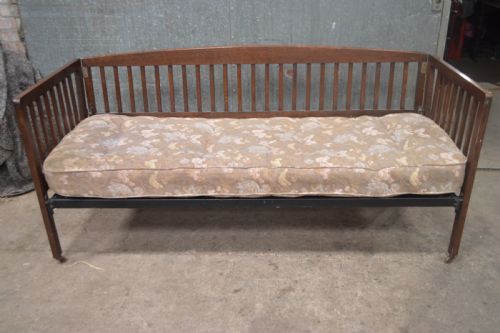
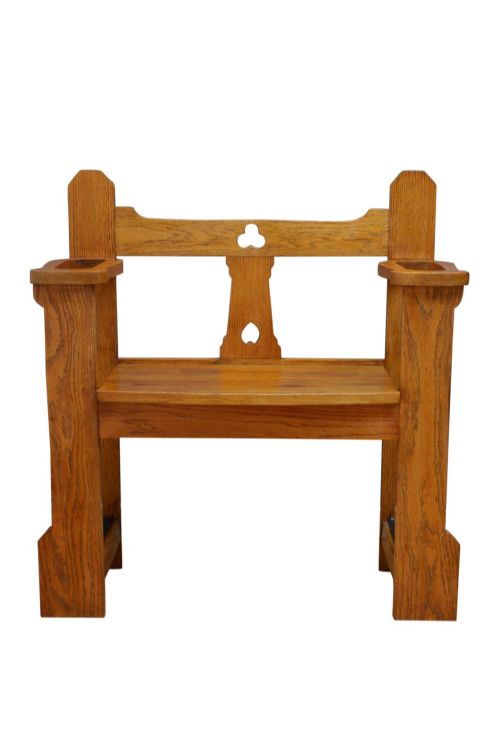
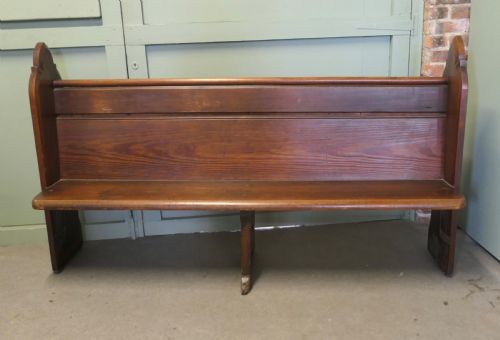
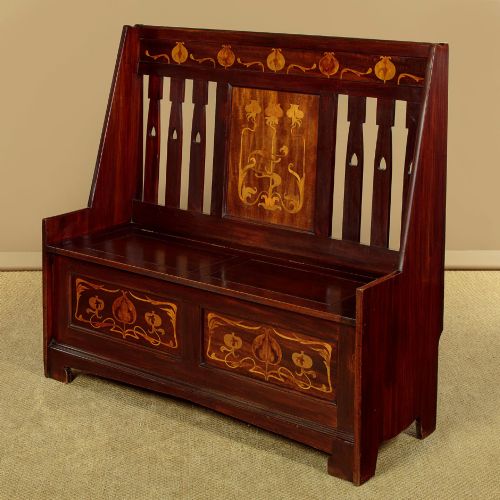
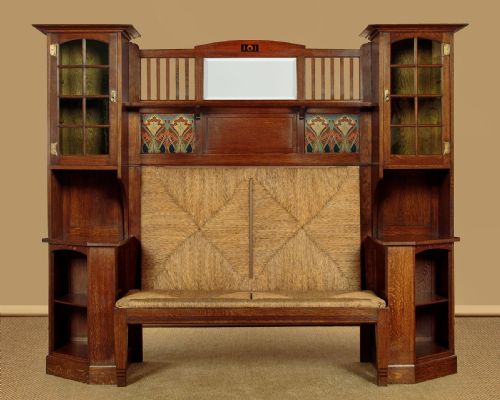
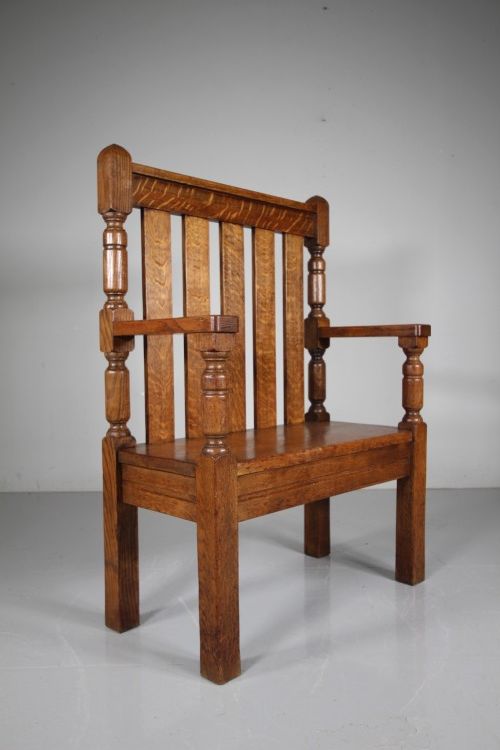
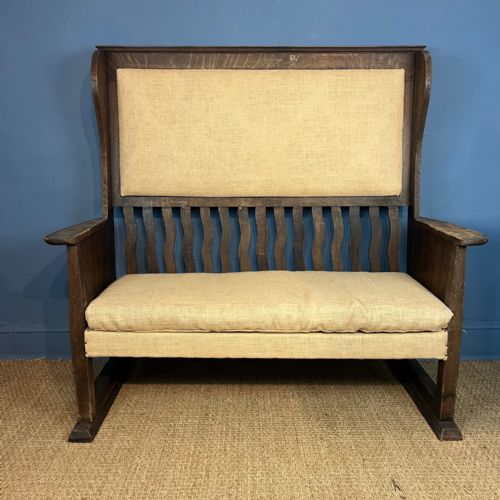
When you search for an arts and crafts settle bench, you are looking at substantial seating forms originating primarily from the nineteenth century through the nineteen twenties. These pieces typically manifest as oak hall seats, box settles, church pews, and monks benches reflecting arts and crafts, Edwardian, and Art Nouveau styles.
The most common versions on this page are oak hall seats and box settles produced around nineteen hundred and nineteen ten. They range from narrow proportions suitable for hallways to larger multi-seater configurations incorporating cupboard storage or fold-down day bed mechanisms.
Regional variations also appear across the selection, including Scottish workshop pieces and English country examples. Certain items incorporate painted finishes or pitch pine and pine construction rather than traditional golden oak.
How they were made
Makers relied heavily on solid oak, pitch pine, and pine for the primary framework of these settles, utilising timber thickness for structural integrity. Selected examples feature boxwood inlay to accent the natural grain of the wood.
Upholstered elements incorporate fabric, leather, and leatherette materials attached to seating bases or backrests. Iron hardware and hinges support functional mechanisms such as fold-down day bed conversions and box settle storage compartments.
Arts and Crafts Settle Bench Retail Price Guide 2026
Typical asking prices for arts and crafts settle bench among the pieces listed under this phrase on Sellingantiques today, from the lower quarter to the upper quarter. They describe what is for sale here now, not the wider market.
Listings feature oak, pine, pitch pine, and mahogany, spanning the nineteenth century through nineteen twenty.
What varies in quality
The distinction between standard utility seating and finer workshop production lies in the handling of the timber and the integration of decorative details. Pieces bearing attribution to known makers display superior joinery and thoughtful proportions.
Surface treatment and hardware execution also separate simpler country items from refined examples. The inclusion of subtle boxwood inlay or specialised metalwork elevates the overall presence of the bench.
James Shoolbred and Co·Liberty·Wylie Lockhead Manufacturers
The Arts and Crafts Settle Bench Glossary
- Settle bench
- A wooden bench with a high back and solid arms, often featuring enclosed storage beneath the seat. This form provides shelter from drafts in traditional hallways and living spaces.
- Box settle
- A variant of the settle featuring a hinged seat lid opening onto a storage compartment. These pieces served practical domestic storage needs in the early twentieth century.
- Monks bench
- A convertible furniture form functioning as a table with a tilt-top backrest that transforms the piece into a settle bench. It demonstrates dual-purpose design characteristic of the period.
- Boxwood inlay
- Small pieces of pale boxwood inserted into recesses within the primary oak surface to form geometric or linear patterns. This technique highlights the decorative aspirations of arts and crafts cabinetmakers.
Arts and Crafts Settle Bench: Frequently Asked Questions
What is an arts and crafts settle bench?
These pieces are solid wood seating items featuring high backs and architectural frames produced during the late nineteenth and early twentieth centuries. They reflect the movement away from industrial mass production toward honest construction and traditional joinery.
Most examples employ oak as the primary material and serve functional roles as hall seats, storage settles, or convertible monks benches within domestic interiors.
How were these settles used originally?
Households placed these benches in hallways, entranceways, and principal rooms to provide seating and storage for outdoor garments or household goods. Box settles and monks benches offered enclosed compartments and convertible tabletops to maximise utility in compact spaces.
Church pews and hall seats accommodated visitors and family members in public and domestic settings alike, prioritizing durability and upright posture.
How do I live with an oak settle?
Integrating an oak settle into a modern interior involves placing the piece against a sturdy wall where its high back and architectural profile can anchor the room. The integrated storage found in box settles makes them practical for stowing blankets or daily clutter.
Routine care requires simple dusting and occasional conditioning of the timber to maintain the natural finish of the oak or pine.
How do I date an antique settle?
Dating relies on examining the construction methods, timber selection, and stylistic markers associated with periods like nineteen hundred or nineteen ten. Arts and crafts and Art Nouveau characteristics point toward the turn of the twentieth century.
Maker signatures, workshop stamps, and specific hardware choices also help establish the chronological origin of individual pieces.