



Arts and Crafts Hall Bench
An arts and crafts hall bench brings solid oak construction and vernacular design straight into the entranceway.
Arts and Crafts Hall Bench
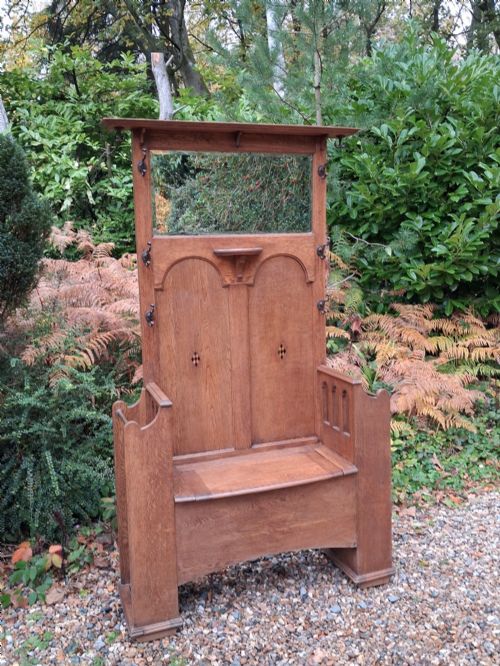
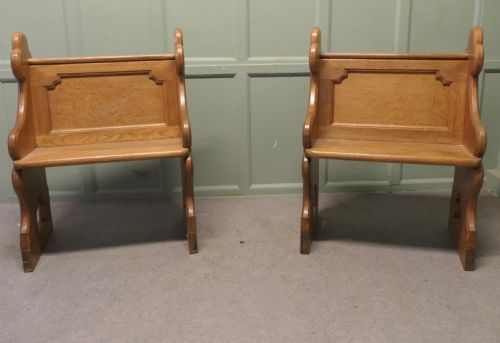
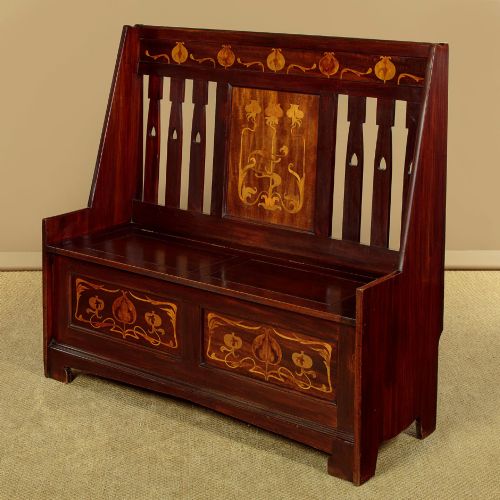
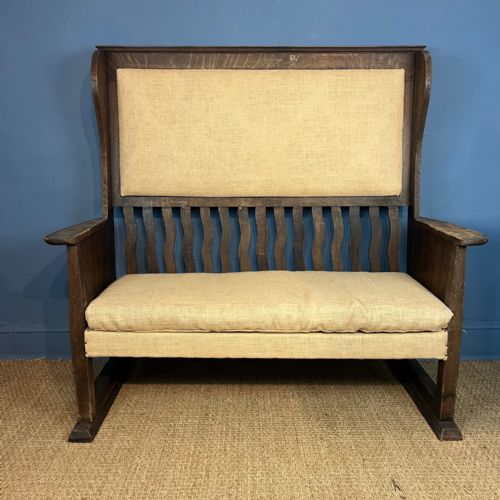
When you search for an arts and crafts hall bench, you encounter sturdy seating designed for the entrance hall, often combining practical storage with robust wooden frames. These pieces typically take the form of settles, box settles, or narrow hall seats intended for hallways and landings.
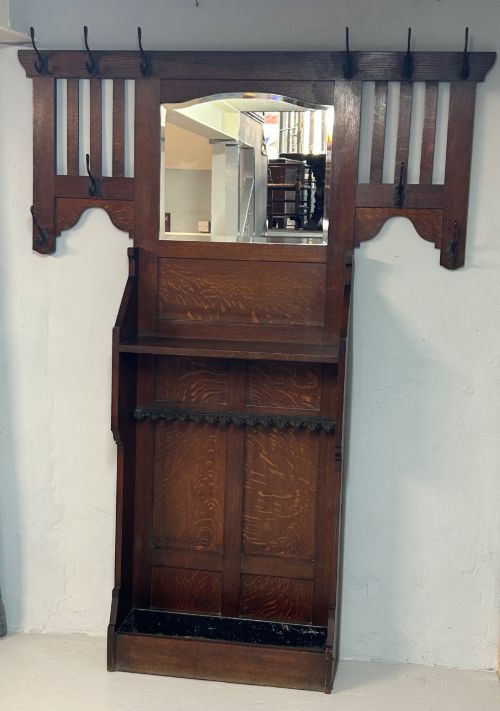
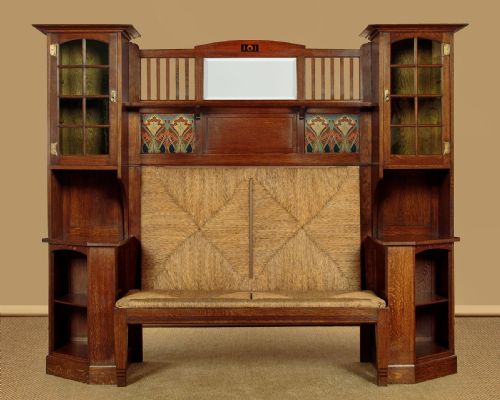
The examples available here draw primarily on the Arts and Crafts, Art Nouveau, and Gothic Revival styles, spanning from the late nineteenth century into the Edwardian period. Many incorporate high backs, lift-up seats, or integrated stands, reflecting the domestic requirements of the era.
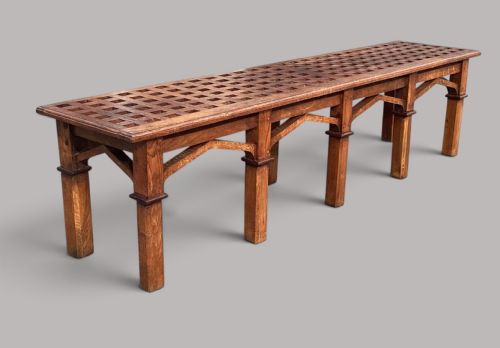
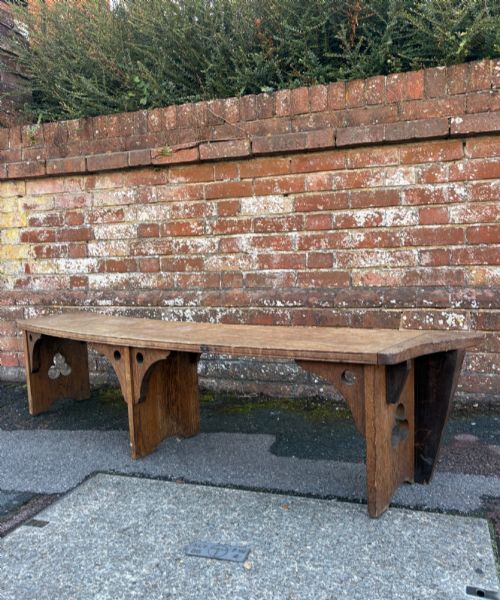
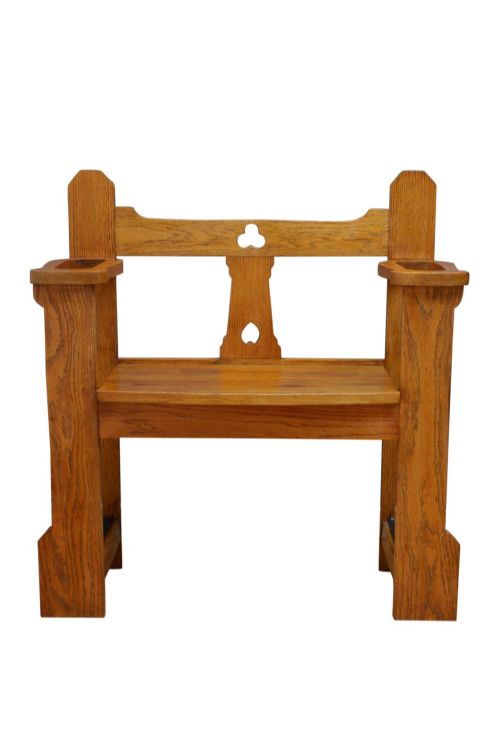
Makers and designers from this period favoured honest construction, often utilising plain timbers shaped with minimal ornamentation. You will find both compact narrow proportions suitable for tight spaces and larger scaled curved forms with trefoil carved supports.
Materials and Construction Methods
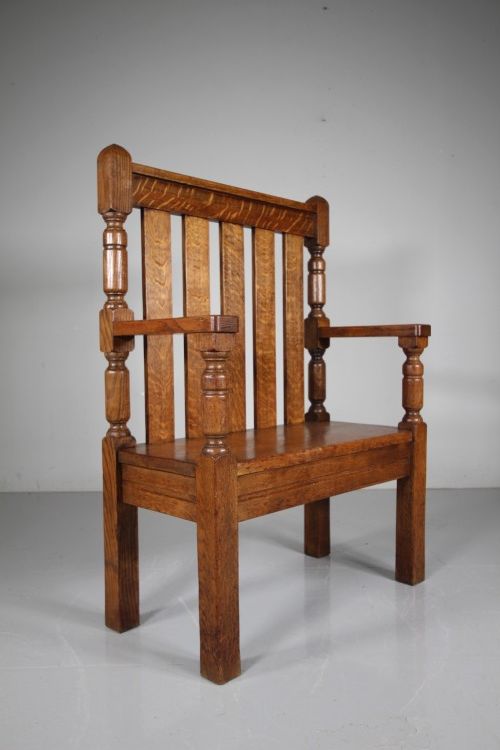
Solid oak provides the primary structural material across these pieces, frequently complemented by secondary timbers such as elm. Cabinet makers utilised traditional joinery methods to ensure durability in high-traffic entrance areas.
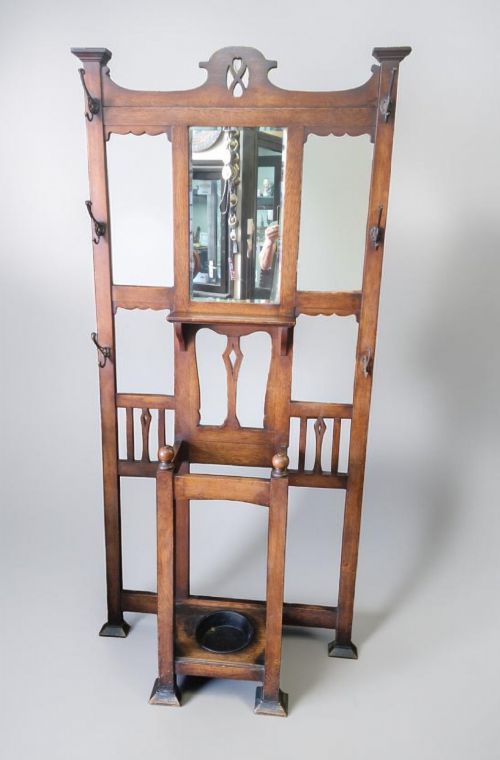
Decorative detailing relies on carved motifs, floral panels, and marquetry inlay rather than applied gilding. Elements such as brass fittings, ceramic tiles, and leaded glass occasionally appear on more elaborate hall stands and settles.
Surfaces generally display natural grain or waxed finishes, though some examples incorporate painted highlights or fabric upholstery. Structural integrity is maintained through pegged joints and solid panel construction.
Arts and Crafts Hall Bench Retail Price Guide 2026
Typical asking prices for arts and crafts hall bench among the pieces listed under this phrase on Sellingantiques today, from the lower quarter to the upper quarter. They describe what is for sale here now, not the wider market.
Listings feature oak as the dominant material, accompanied by brass, glass, ceramic, and painted finishes across nineteenth-century and Edwardian periods.
Assessing Quality in Construction and Design
Quality in these benches rests on the weight of the timber and the integrity of the joinery rather than surface polish. Superior pieces exhibit tight, hand-cut joints and thick solid oak panels that withstand heavy daily use without shifting.
Design ambition separates standard commercial production from workshop pieces bearing distinct aesthetic character. The finest examples display thoughtful proportions, balanced carved relief work, and integrated hardware such as bespoke brass hooks or hand-painted ceramic tiles.
James Shoolbred and Co·Liberty·Wylie Lockhead Manufacturers·Ellen E Houghton of Minton
The Arts and Crafts Hall Bench Glossary
- Settle
- A wooden bench with a high back, solid arms, and often a hinged seat concealing a storage box beneath. This form offers shelter from draughts in entrance halls and living spaces.
- Trefoil
- A three-lobed decorative ornament resembling a clover leaf, frequently pierced through wooden supports or carved in relief on Gothic Revival furniture.
- Marquetry Inlay
- The art of applying pieces of veneer to a structure to form decorative patterns, utilising contrasting woods to create pictorial designs.
- Box Settle
- A heavy wooden seat featuring a compartment under the squab for storing boots, blankets, or household items.
- Gothic Revival
- An architectural and design movement drawing inspiration from medieval forms, characterised by pointed arches, heavy timbers, and ecclesiastical motifs.
Arts and Crafts Hall Bench: Frequently Asked Questions
What defines an arts and crafts hall bench?
These benches are defined by sturdy oak construction, functional storage compartments, and honest joinery that celebrates natural materials. They often incorporate restrained Gothic or Art Nouveau carved details rather than excessive ornamentation.
Such pieces were built to anchor entranceways, providing a practical place to sit while removing boots or waiting in the hallway.
How were these benches used originally?
In period homes, hall furniture provided a transitional spot for family members and visitors to shed outerwear upon entering. Box settles offered concealed storage for damp cloaks, walking sticks, and heavy footwear.
Their substantial weight prevented tipping in busy corridors, making them central functional fixtures of the Edwardian and late Victorian hallway.
How do I fit a hall bench into a modern home?
A narrow proportioned oak seat works well in contemporary entrance halls without overwhelming smaller floor plans. They provide immediate utility for shoe storage while adding architectural warmth to plain corridors.
Pairing the timber bench with neutral walls allows the grain and subtle carved details to serve as a focal point.
How can I tell the period of a hall bench?
Dating relies on observing structural clues such as hand-cut joinery marks, timber selection, and stylistic crossovers like Art Nouveau whiplash curves or Gothic trefoil cut-outs. Late nineteenth-century pieces often display heavier proportions and deeper hand-carving.
Edwardian iterations frequently balance lighter framing with functional cupboard combinations and simpler linear panels.