
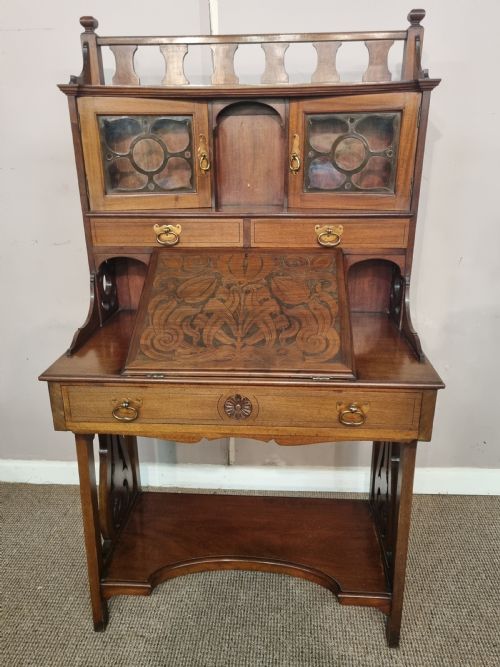
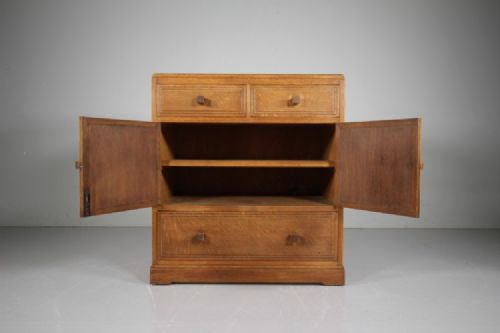


Arts and Crafts Secretary Desk
These arts and crafts secretary desk pieces offer practical writing spaces combined with characteristic period design, built for daily study and correspondence.
Arts and Crafts Secretary Desk
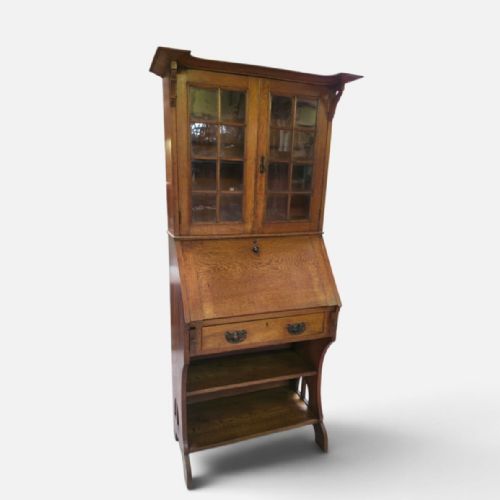
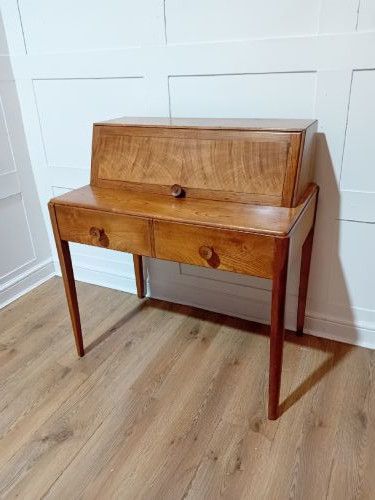
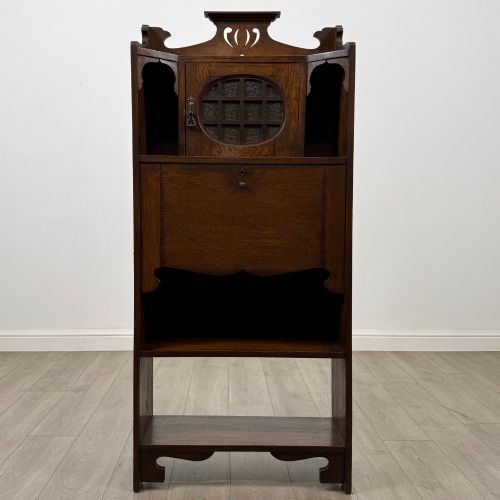
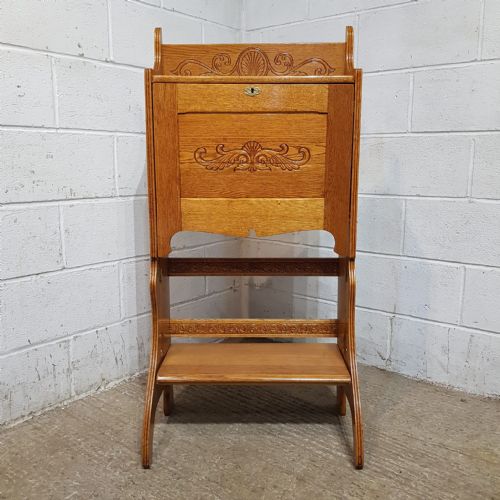
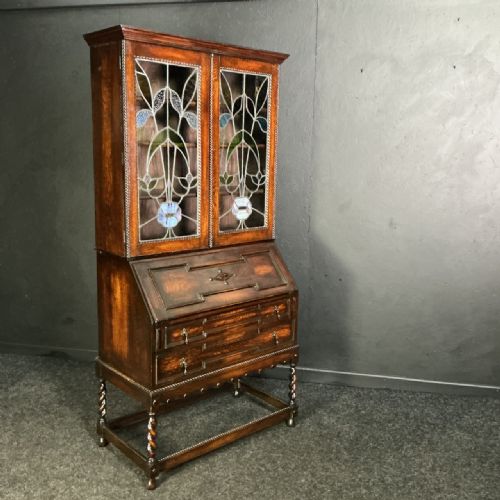
When you search for an arts and crafts secretary desk, you encounter writing furniture that bridges the late Victorian period, the Edwardian era, and the 1930s. The forms span compact writing bureaux, tall bureau bookcases with display sections, and fitted cabinet desks.
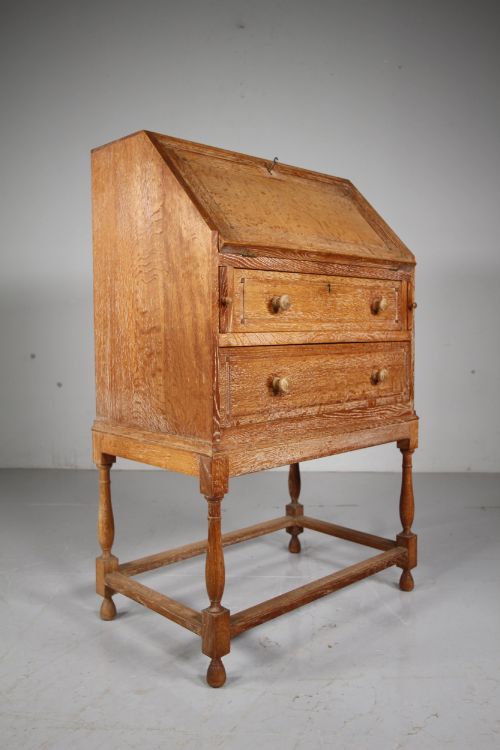
The version you are most likely to meet on this page is constructed from solid oak in styles varying from straightforward Arts and Crafts to Tudor Revival and Jacobean Revival. These pieces frequently feature fall-front writing surfaces that conceal internal pigeonholes and small drawers.
Originating from workshops across Britain, these desks reflect the transition from ornate nineteenth-century cabinetry towards simpler, functional forms. Makers ranging in scale from independent Cotswold School cabinetmakers to prominent London department stores produced these varied designs.
Assessing Quality
The distinction between standard commercial output and fine workshop production lies in the handling of materials and joinery. Finer pieces demonstrate careful timber selection, where grain patterns align intentionally across the fall front and drawers.
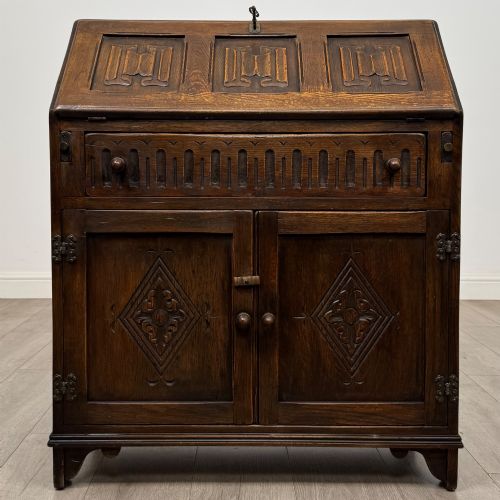
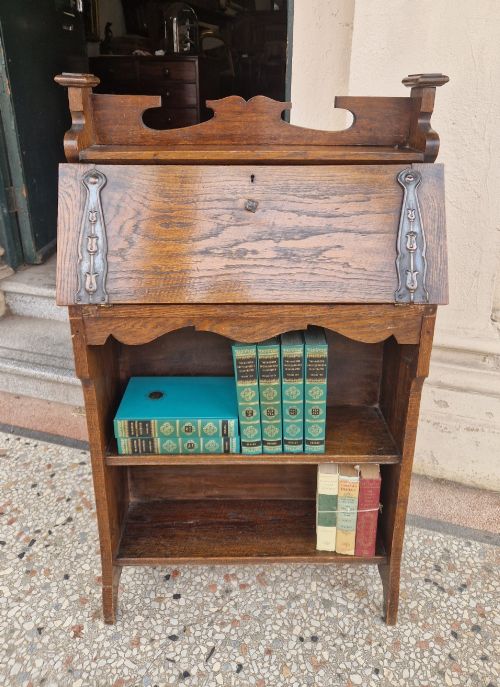
Hardware execution marks another level of difference. Hand-hammered copper or brass handles and distinctive carved detailing, such as linenfold panels or regional motifs, separate standard factory items from workshop commissions.
Materials recorded across the inventory include oak, mahogany, brass, copper, lead, iron, and glass.
Arthur Basil Reynolds·George W Jack·Harris Lebus·James Shoolbred and Co·Liberty and Co·Morris and Co·Robert Mouseman Thompson
The Arts and Crafts Secretary Desk Glossary
- Bureau
- A writing desk featuring a sloping fall-front flap that opens to reveal internal compartments and a flat writing surface. It often stands on legs or incorporates drawers below.
- Bureau Bookcase
- A combined form where a writing bureau supports a shelved or glazed upper cabinet for books. This piece maximises vertical storage in domestic interiors.
- Fall Front
- The hinged writing flap of a bureau that drops down to a horizontal position for writing. When closed, it conceals the inner stationery compartments.
- Linenfold
- A style of carved wooden panelling that resembles folded vertical linen fabric. It appears frequently on panels of period furniture.
- Cotswold School
- An influential twentieth-century woodworking movement focused on traditional hand-tool techniques and honest construction. Practitioners emphasised the natural grain and qualities of solid timber.
Arts and Crafts Secretary Desk: Frequently Asked Questions
What is an arts and crafts secretary desk?
It is a practical writing cabinet featuring a fall-front desk space, frequently combined with drawers, shelves, or a bookcase upper section. The form prioritises functional utility and honest construction over excessive surface ornamentation.
These pieces were produced from the late nineteenth century through the Edwardian era and into the 1930s. They serve as compact workstations that conceal writing clutter behind closed panels.
How do I distinguish between an Edwardian bureau and an Arts and Crafts example?
Arts and Crafts pieces typically feature hand-worked metal hardware, exposed joinery, and simpler structural lines derived from movement ideals. Edwardian interpretations often incorporate lighter woods, subtle inlay, or revival details such as Jacobean turning.
Examining the interior fittings and handles reveals the design intent. Plain oak surfaces with hammered copper hinges point directly to the Arts and Crafts aesthetic.
What woods were used for these desks?
Oak is the primary material seen across these listings, appearing in native, golden, and Welsh varieties. Mahogany also occurs in specific Edwardian and Art Nouveau designs.
Secondary woods support the internal drawer linings and hidden dividers. Metal elements in brass, copper, and iron complement the primary timber structure.
How should I care for an oak bureau?
Keep the piece away from direct heat sources and strong sunlight to prevent the timber from drying out or splitting. Maintaining stable room humidity preserves the movement of solid oak panels and fall fronts.
Apply traditional wax polish occasionally to nourish the wood and maintain the finish. Avoid silicone-based sprays that can damage the antique surface.