
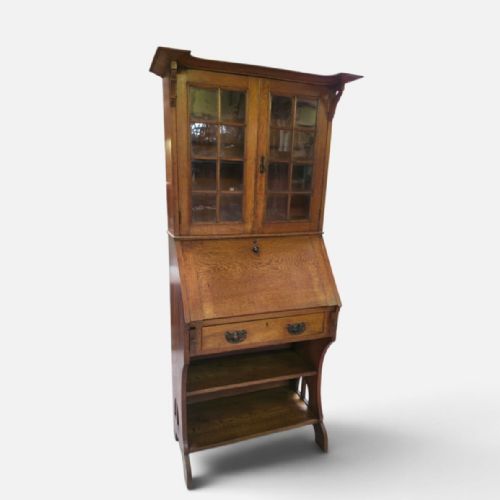
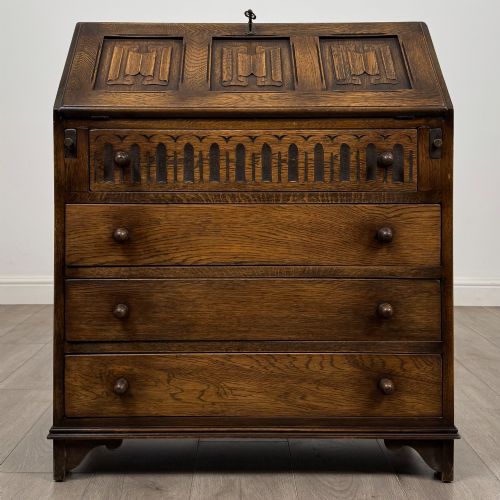
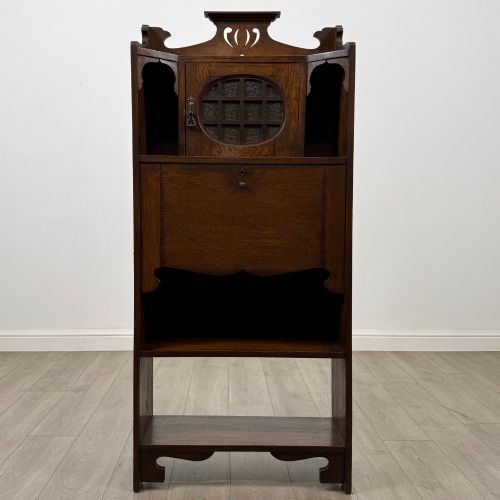
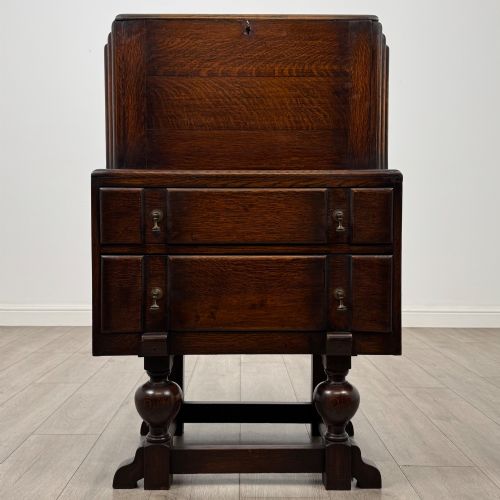
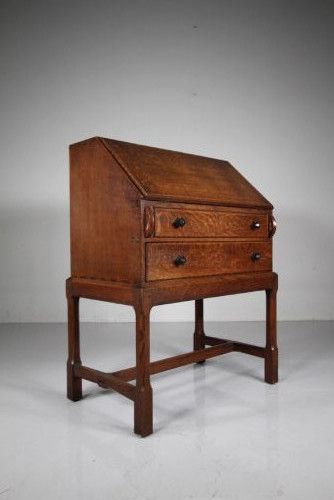
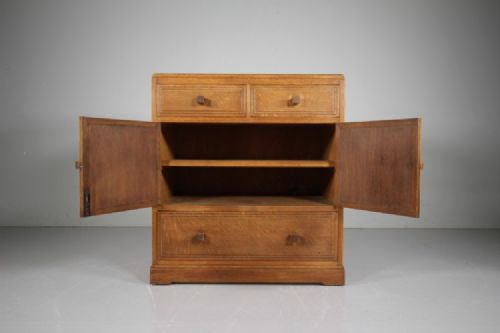


Solid Oak Writing Cabinet
A solid oak writing cabinet provides a sturdy workspace, bringing heavy timber construction and practical compartments to domestic studies.
Solid Oak Writing Cabinet
When you search for a solid oak writing cabinet, you encounter sturdy pieces designed for correspondence and storage. These items primarily manifest as bureaux, desks, and bureau bookcases across this selection.
The objects stem from various periods including the Georgian era, Victorian times, Edwardian decades, and the 1930s. Most examples adhere to styles such as Arts and Crafts, Jacobean Revival, and Tudor Revival.
Forms range from narrow writing bureaux and roll-top desks to large bureau bookcases and carved side cabinets. Oak serves as the dominant primary wood throughout these historical iterations.
How they were made
Maker construction relies heavily upon English oak, sometimes enhanced with decorative linenfold carving or heavy mouldings. Workshops utilised solid timber boards to build durable writing furniture intended for daily domestic utility.
Metal components such as brass, copper, wrought iron, and standard iron appear on hinges, handles, and fittings. Glass and lead also feature within the glazed doors of taller bureau bookcase variations.
One notable piece carries a carved wooden mouse trademark alongside a sign-written beer keller provenance.
What varies in quality
Distinctions in quality often rest upon the depth and execution of hand carving, such as intricate linenfold panels or Jacobean-style detailing. Finer examples display superior timber selection and deliberate grain matching across large surfaces.
Attribution to notable workshops or makers elevates certain pieces above standard commercial production of their respective eras. Original labels, signatures, or documented provenance further separate standard items from superior specimens.
Stanley Webb Davies·Bryn Mawr·Robert Mouseman Thompson·Liberty and Co·James Shoolbred and Co
The Solid Oak Writing Cabinet Glossary
- Bureau
- A writing desk featuring a sloping flap that opens to reveal a fitted interior of small drawers and pigeonholes.
- Bureau bookcase
- A tall piece combining a lower bureau desk section with an upper bookcase enclosed by doors.
- Linenfold
- A style of wood carving representing folded linen, frequently seen on panels of early twentieth-century furniture.
- Roll-top desk
- A desk featuring a flexible tambour top made of narrow slats of wood that slide in a track to cover the writing surface.
- Arts and Crafts
- A design movement valuing handcraftsmanship, simple forms, and traditional materials over mass production.
Solid Oak Writing Cabinet: Frequently Asked Questions
What is a bureau bookcase?
A bureau bookcase combines a sloping writing flap and internal compartments with upper shelving enclosed by glazed or wooden doors.
This hybrid form provides both a functional workspace and prominent display or storage space for books.
How do I identify Arts and Crafts oak furniture?
Arts and Crafts pieces often display honest construction methods, visible joinery, and minimal applied decoration. They favour solid English oak and sometimes feature characteristic metalwork hinges or handles.
Makers from this movement prioritised traditional handcrafting techniques over ornate revival styles.
When were roll-top desks made?
Large roll-top desks appear frequently in Edwardian and early twentieth-century inventories. Their tambour mechanism allowed owners to quickly conceal paperwork.
This form was popular in offices and substantial domestic studies for managing correspondence.
Are these cabinets made from solid wood?
The pieces listed here utilise solid oak construction throughout their main carcases and writing surfaces. Regional variations and specific workshop traditions dictated the precise timber thickness used.
Secondary metals like brass or iron appear strictly for operational hardware.