



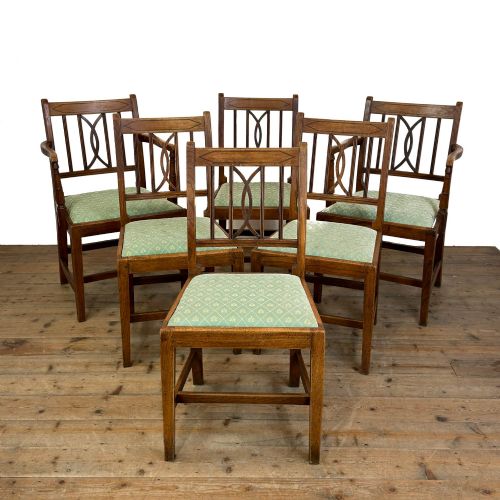

Arts and Crafts Oak Dining Chairs
These arts and crafts oak dining chairs bring honest construction and tactile materials directly to the table.
Arts and Crafts Oak Dining Chairs
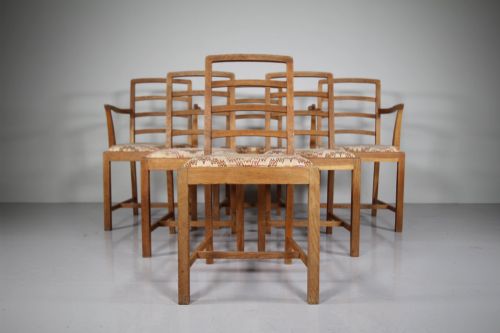
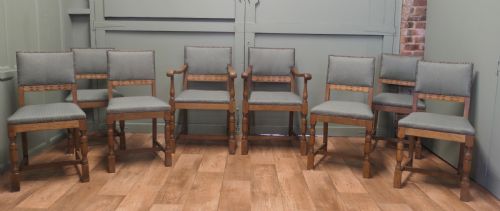
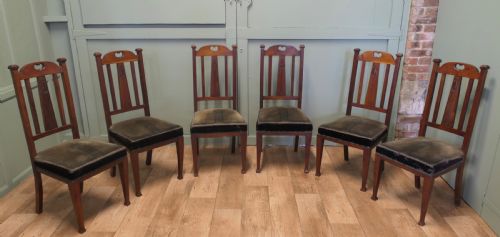
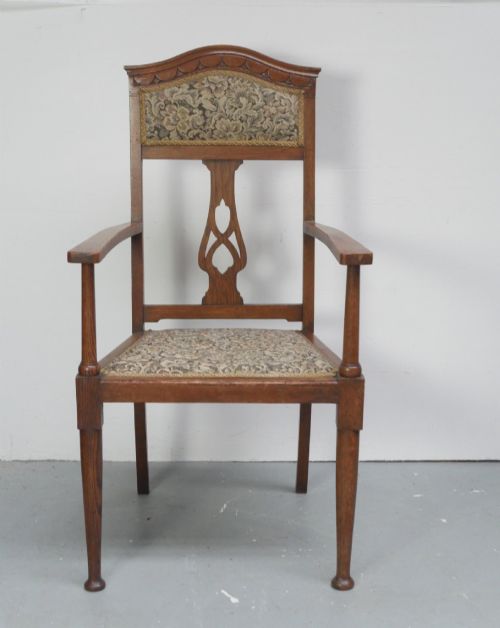
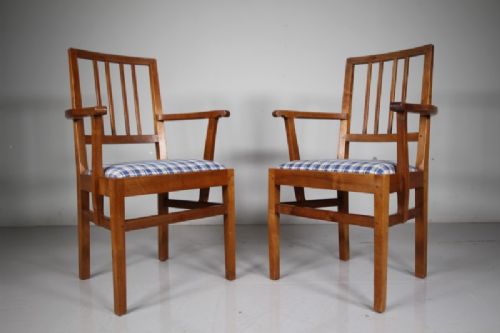
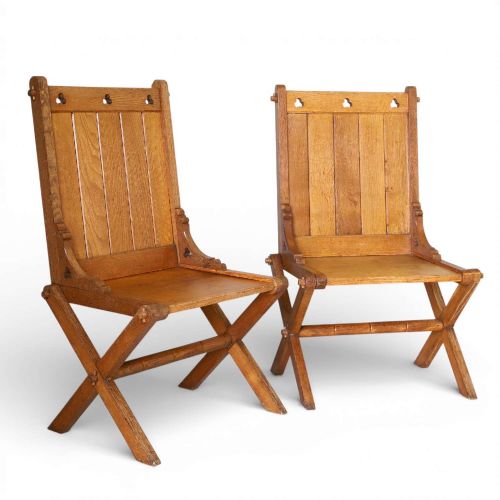
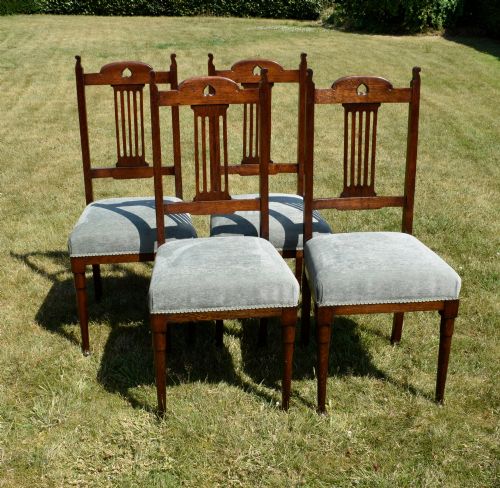
When searching for arts and crafts oak dining chairs, a buyer looks at seating produced primarily between the late nineteenth century and the nineteen-thirties, spanning individual craft workshops and larger commercial retailers. The listings here contain side chairs, armchairs, and highback carvers originating from periods such as the Edwardian era and the nineteen-tens, alongside country interpretations.
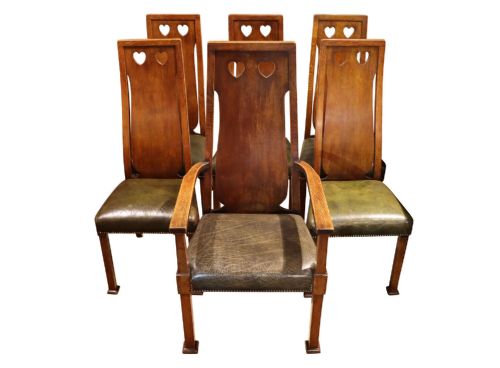
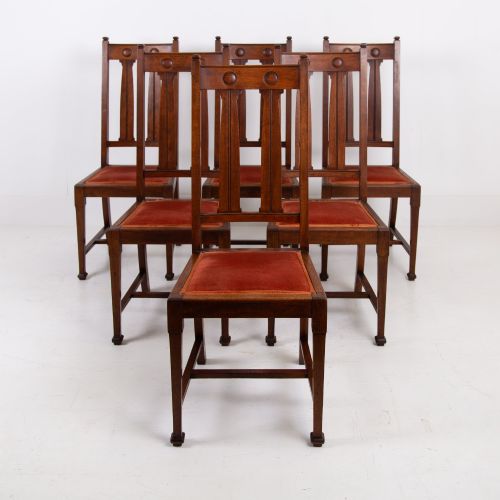
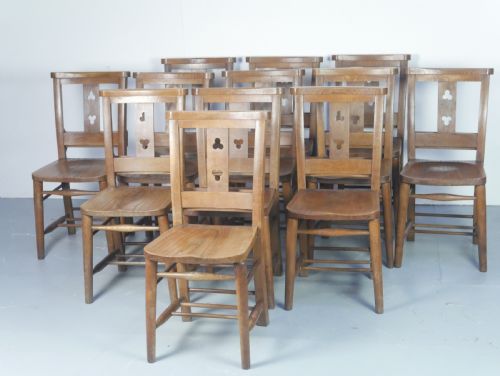
Most pieces met on this page are constructed from solid oak, sometimes referred to as golden oak or English oak, and frequently paired with tactile seating inserts. Forms range from simple ladder-back or rush-seated country chairs to architect-designed dining suites with leather pads and brass details.
Regional variations appear across the selection, including Scottish designs and town workshops, showing how different makers interpreted the movement's focus on utility and material honesty.
Materials and construction
The primary material across these listings is solid oak, utilised for its strength and grain pattern, paired with natural seating surfaces like woven rush and upholstered leather. Metal components appear as brass or general metal fixings, while occasional fabric and velvet insertions provide softer padding on upholstered models.
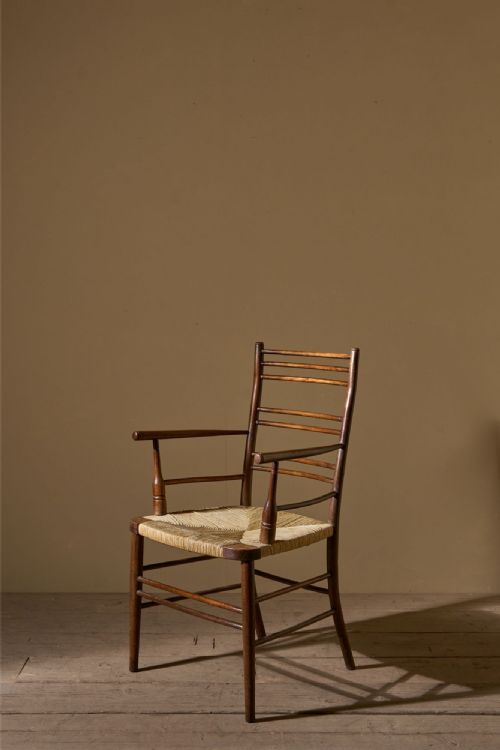
Makers relied on traditional joinery methods to build these frames, allowing the timber's natural characteristics to remain visible without heavy veneers or elaborate concealment. Rush seating was hand-twisted and woven directly into the wooden rungs, while leather pads were fixed with brass studs.
Arts and Crafts Oak Dining Chairs Retail Price Guide 2026
Typical asking prices for arts and crafts oak dining chairs among the pieces listed under this phrase on Sellingantiques today, from the lower quarter to the upper quarter. They describe what is for sale here now, not the wider market.
Listings feature oak dining chairs spanning the nineteenth century, the Edwardian era, and the nineteen-tens through the nineteen-thirties.
Variations in quality
Quality in these chairs rests upon the integrity of the timber selection and the precision of the underlying joinery, separating robust workshop pieces from standard commercial production. A well-constructed frame retains structural rigidity through traditional joints rather than relying on modern adhesives.
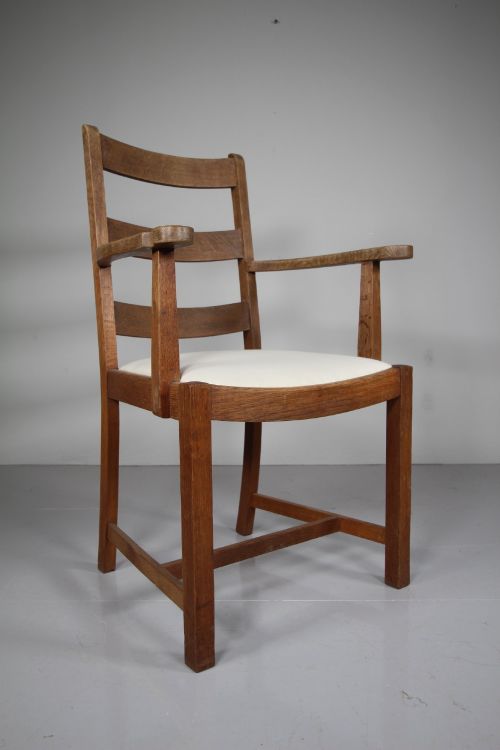
The degree of hand-finishing defines the upper tier, seen in the thoughtful shaping of armrests, trefoil cut-outs, and highback proportions. Original seating materials, whether intact leather or tightly woven rush, contribute significantly to the authenticity and overall coherence of the piece.
Heals of London·Goodyers London·Edward Barnsley·William Morris·Liberty and Co·Charles Bevan·Lawrence Neal·Edward Gardener·Shapland and Petter·Mouseman·George Henry Walton
The Arts and Crafts Oak Dining Chairs Glossary
- Carver
- An armchair designed to sit at the head of a dining table. These typically feature open wooden arms integrated into the structural uprights.
- Rush
- Dried marsh grass twisted into cord and hand-woven to form a durable, textured seat. It appears frequently on country and movement-inspired seating.
- Highback
- A chair style featuring an extended vertical backrest designed to provide additional support and visual presence around the dining table.
- Trefoil
- A three-lobed decorative shape resembling clover leaves, often pierced through wooden splats or back panels in Gothic Revival and movement designs.
- Gossip chair
- A low seating form designed for seated conversation, occasionally found within broader antique furniture groupings.
Arts and Crafts Oak Dining Chairs: Frequently Asked Questions
How do I clean leather seats?
Wipe leather surfaces gently with a damp cloth to remove dust, avoiding harsh chemical detergents that can dry out the hide. Apply a suitable leather conditioner periodically to maintain suppleness.
Keep these chairs away from direct heat sources and strong sunlight to prevent the leather from cracking or fading over time.
Can these chairs handle daily use?
Solid timber frames joined with traditional methods offer robust structural integrity suitable for everyday dining. Checking that joints remain tight ensures the chair handles regular movement without strain.
Original rush or leather inserts require more mindful care than modern synthetics, but well-maintained examples withstand normal household activity.
How do I identify the period?
Examine the timber finish, construction marks, and hardware details such as brass studs or stamped maker signatures. Pieces from the late nineteenth century often display heavier proportions, while nineteen-twenties and thirties items can show simpler geometric lines.
Comparing the specific chair form against known workshop catalogues helps narrow down the decade of production.
Are replacement rush seats authentic?
Replacements woven in traditional materials maintain the functional utility of the chair when original seating has degraded beyond repair. Many antique country and movement chairs have received sympathetic re-weaving over their lifespan.
Matching the gauge and colour of the original rush preserves the visual harmony of the piece.