
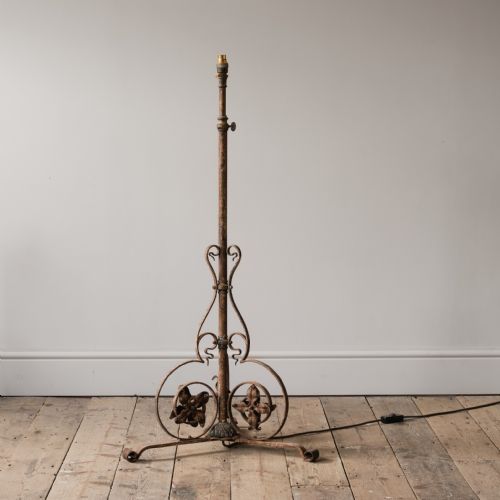
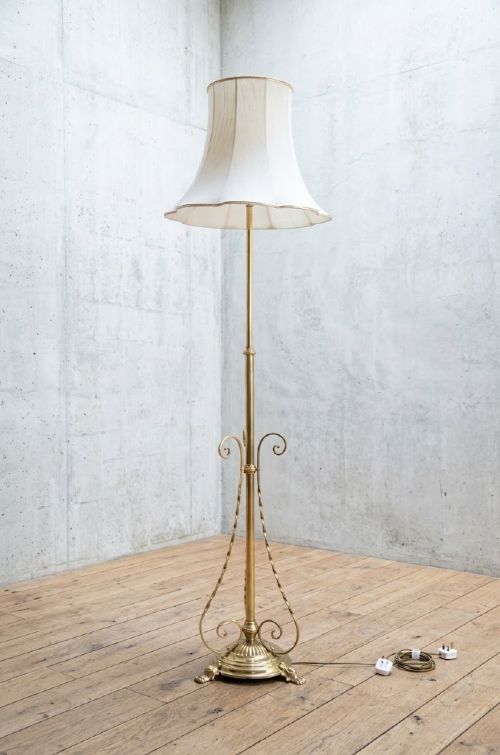
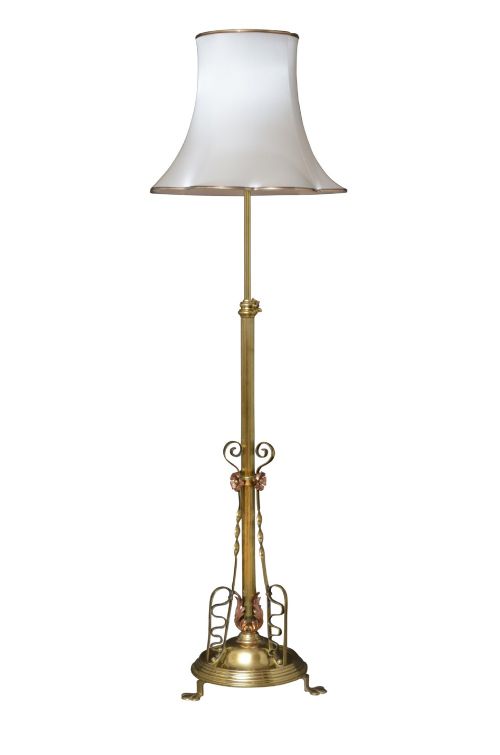


Arts and Crafts Floor Light
An arts and crafts floor light is a sturdy and practical standard lamp designed to illuminate a room with adjustable height or a telescopic arm.
Arts and Crafts Floor Light
An arts and crafts floor light provides focused illumination through heavy metal standards and adjustable arms. Buyers examining these pieces will find tall lamps designed to stand beside armchairs or reading desks.
The versions most commonly met on this page span from the late nineteenth century through the 1930s. They combine utilitarian strength with decorative metalwork typical of the period.
Standard lamps and floor lamps appear frequently across Victorian, Edwardian, and later twentieth-century periods. These objects reflect a shift toward functional domestic lighting during the early industrial age.
How they were made
Makers shaped these lights from durable metals such as brass, copper, wrought iron, and cast iron. Oak also appears as a primary material for wooden shafts and heavier bases.
Blacksmiths and metalworkers utilised techniques like forging, riveting, and telescopic adjustments to create movable arms and height-adjustable columns. Many pieces began as oil lamps before later conversion to electricity.
The listings here include standard lamps made from brass, copper, wrought iron, cast iron, and oak across Victorian and Edwardian periods.
What varies in quality
The calibre of metalwork and the robustness of the telescopic mechanism dictate the grade of each standard lamp. Heavier bases and finely hammered copper or brass indicate superior construction.
The integrity of the original joints and the precision of the adjustable arms distinguish standard productions from workshop-specific pieces. Maker attribution also separates standard examples from notable pieces.
Heals & Sons·Whytock & Reid·W A S Benson
The Arts and Crafts Floor Light Glossary
- Telescopic
- Describing a standard lamp shaft that extends vertically through sliding inner sections. This allows the overall height of the light to be adjusted.
- Standard lamp
- A tall floor-standing light fixture designed to illuminate a room from a fixed base. These pieces often feature heavy weighted feet for stability.
- Wrought iron
- Iron shaped through heating and hammering by a blacksmith. This material provides strong, fibrous structural support for floor lamps.
- Arts and Crafts
- A design movement prioritising handcraftsmanship and simple utility over mass production. Objects in this style display visible construction methods and honest materials.
Arts and Crafts Floor Light: Frequently Asked Questions
What is an arts and crafts floor light?
An arts and crafts floor light is a tall standard lamp constructed from metals like brass, copper, or wrought iron. They were built to provide adjustable illumination in domestic spaces.
These pieces often feature telescopic columns and heavy bases designed for everyday durability and functional utility.
How do I date an arts and crafts floor light?
Dating relies on examining the materials, construction marks, and stylistic elements such as Art Nouveau curves or Gothic Revival influences. Period ranges span from the late nineteenth century into the 1930s.
Maker attributions and conversion details from oil to electricity also offer clues to the approximate decade of manufacture.
Were these lamps originally electric?
Many early examples were manufactured as oil lamps before being converted to electricity during later decades. Burner mechanisms and oil reservoirs often remain integrated into the design.
This history of adaptation is common among nineteenth-century and early twentieth-century standard lamps.
How do I live with a heavy metal floor lamp?
Place the lamp on a stable floor surface where its weighted base provides secure balance next to seating areas. The adjustable arms allow you to direct light precisely where needed.
Ensure the vintage wiring is inspected by a qualified professional before daily use in a modern home.