




Arts and Crafts Fireside Bin
These arts and crafts fireside bins bring functional hearth storage into the room through hammered metalwork and honest construction.
Arts and Crafts Fireside Bin
When you search for arts and crafts fireside bins, you encounter practical hearth containers designed to hold coal, logs, and kindling beside the fireplace. These pieces serve as both utility items and decorative objects that reflect the design priorities of their period.
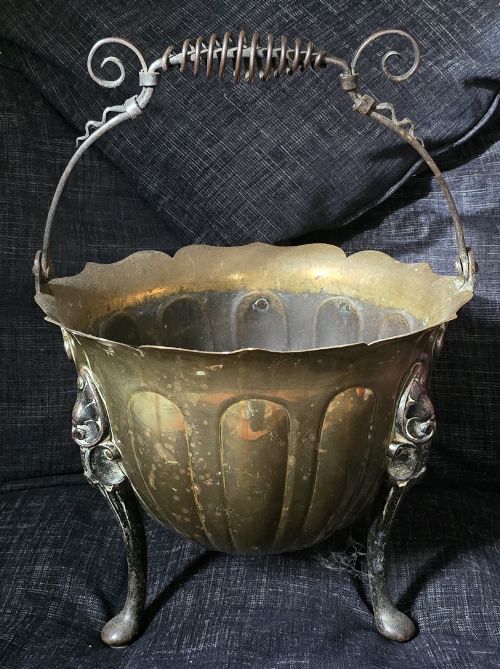
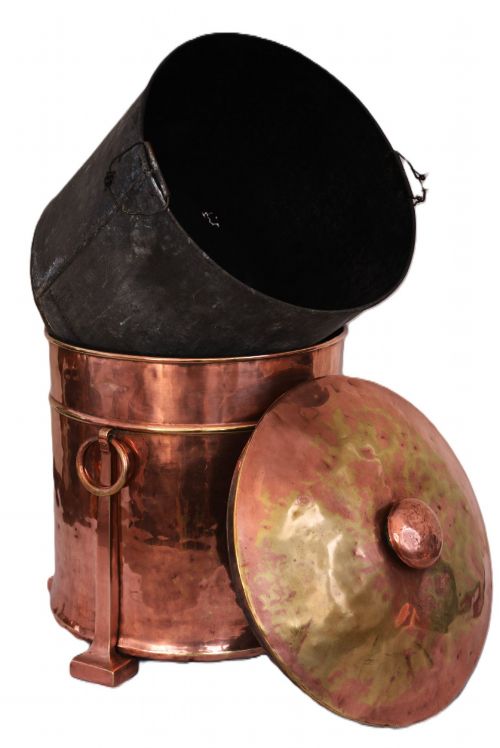
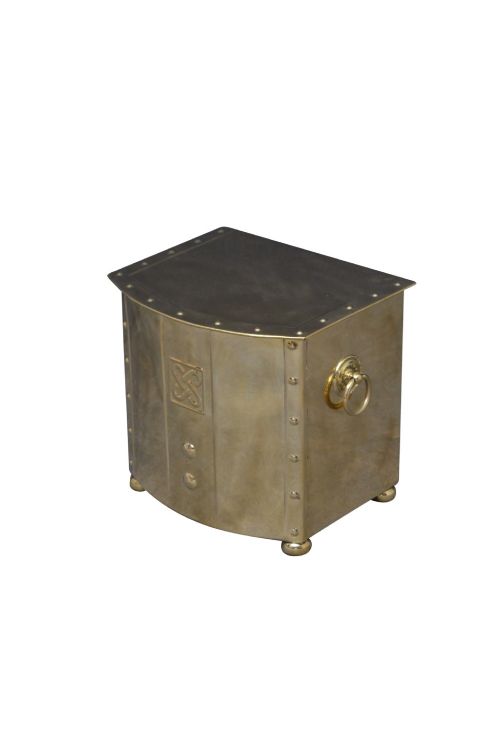
The versions you meet most frequently on this page combine sheet copper or brass bodies with structural elements in iron, oak, or other woods. Forms range from cylindrical buckets and helmet scuttles to lidded boxes and purdoniums.
Originating predominantly from the late nineteenth and early twentieth centuries, these containers span Victorian, Edwardian, and later Arts and Crafts idioms. Makers often utilised repoussé techniques or applied decorative panels to transform standard coal storage into domestic art.
Materials and Techniques
Craftsmen built these bins using heavy-gauge sheet copper and brass, often shaping the metal by hand through extensive hammering. This hammer-beaten texture creates light-catching surfaces that distinguish hand-wrought pieces from plain factory pressings.
Metal bodies frequently meet structural framing in wrought iron, cast iron, or solid oak. Rivets, strap hinges, and swing handles join these disparate materials together with visible, honest joinery characteristic of the movement.
Arts and Crafts Fireside Bin Retail Price Guide 2026
Typical asking prices for arts and crafts fireside bin among the pieces listed under this phrase on Sellingantiques today, from the lower quarter to the upper quarter. They describe what is for sale here now, not the wider market.
Some copper bins feature cheerful tavern scenes or sailing galleons hammered directly into the metal.
Quality and Distinction
The hierarchy of these pieces rests on the weight of the metal gauge and the ambition of the surface decoration. Heavier copper plates resist denting and hold crisp relief work, whereas thin sheet metal feels insubstantial and shows careless distortion.
Design execution separates standard production items from superior workshop output. Pieces featuring hand-hammered surfaces, riveted joints, and integrated decorative scenes display a level of individual craftsmanship that elevates simple fuel storage into notable metalwork.
Henry Loveridge·Liberty London
The Arts and Crafts Fireside Bin Glossary
- Purdonium
- A specialised coal box or scuttle, typically featuring a sloping front flap and a shovel stored in an internal or side compartment. This form kept solid fuel tidy within Victorian and Edwardian sitting rooms.
- Repoussé
- A metalworking technique where the artisan hammers the design from the reverse side to form raised relief patterns on the front. It appears frequently on the copper and brass panels of these bins.
- Helmet Scuttle
- A coal bucket shaped with a flared rim and a pointed lip resembling a classical helmet, designed to pour fuel cleanly into the grate. A swing handle arches over the top for lifting.
- Coal Receiver
- An alternative term for a bin or box intended to hold solid fuel near the hearth. These containers often include lids or drop-front doors to conceal the contents.
Arts and Crafts Fireside Bin: Frequently Asked Questions
What is an arts and crafts fireside bin?
These pieces are metal or wood containers made to hold coal, logs, and kindling beside a fireplace. They combine utilitarian storage with decorative metalwork characteristic of the late nineteenth and early twentieth centuries.
Craftsmen built them to sit visibly in the hearth, using materials like hammered copper, brass, oak, and iron to complement domestic interiors.
How were these coal bins used originally?
Householders used them to store solid fuel close to the fireplace for daily tending of coal fires. Lidded boxes, buckets, and purdoniums kept hearth areas tidy while holding coal or logs.
Many designs included pivoting handles or integrated shovels to make transferring fuel into the grate straightforward.
How do I care for antique copper and brass?
Metal surfaces require gentle dusting and occasional cleaning with appropriate non-abrasive polishes if you wish to maintain a bright shine. Many owners prefer to leave the aged patina untouched.
Avoid harsh chemical cleaners that strip away historical character and the natural oxidation accumulated over decades.
How can I tell the period of a bin?
Dating relies on observing construction methods, material choices, and stylistic markers such as Victorian proportions or Edwardian oak framing. Hand-riveted joints and specific hammer marks point towards workshop production from the movement's peak.
Maker marks, where present, help confirm the workshop origin and narrow down the decade of manufacture.