

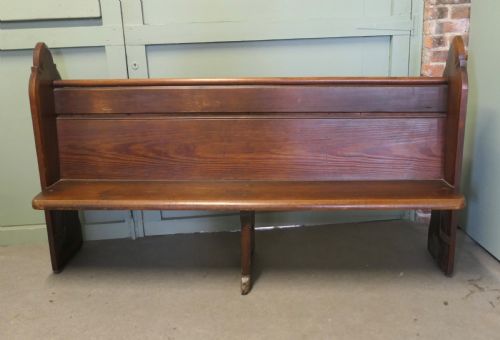
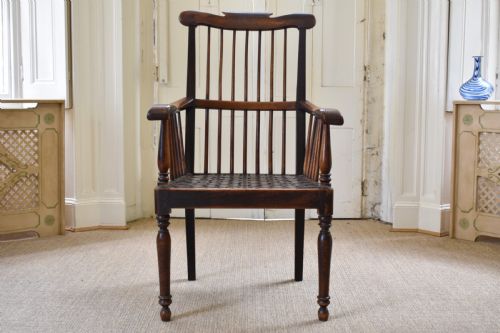
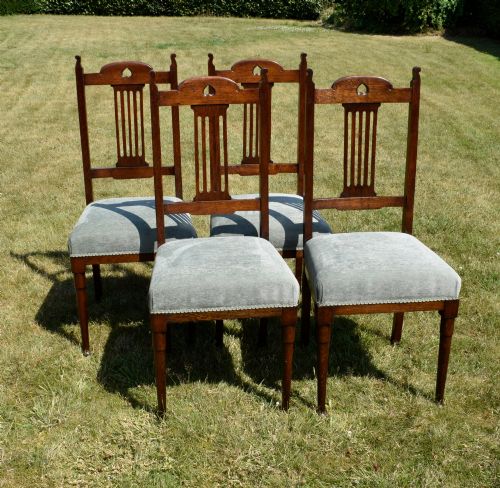
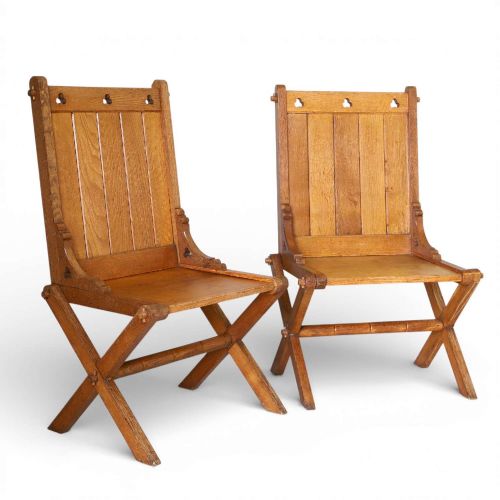
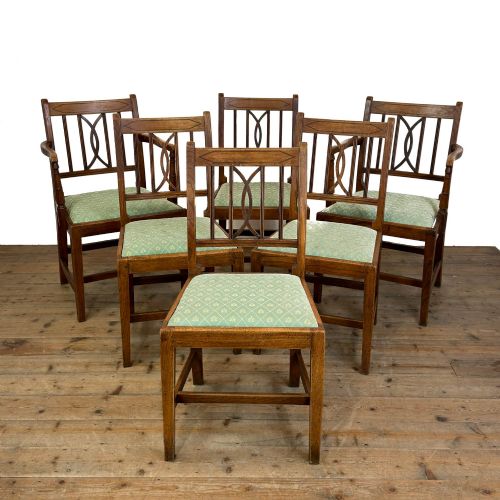


Arts and Crafts Dining Seats
These arts and crafts dining seats bring honest timber and traditional construction straight to the table.
Arts and Crafts Dining Seats
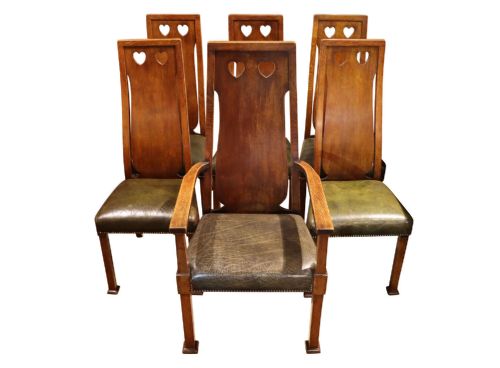
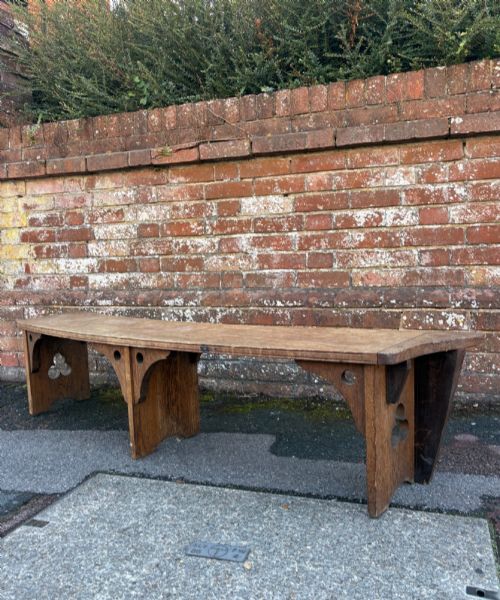
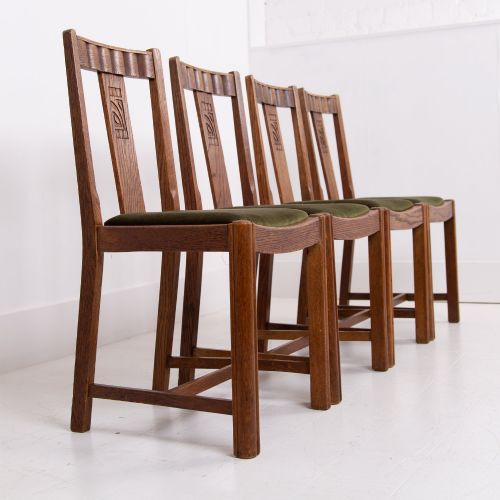
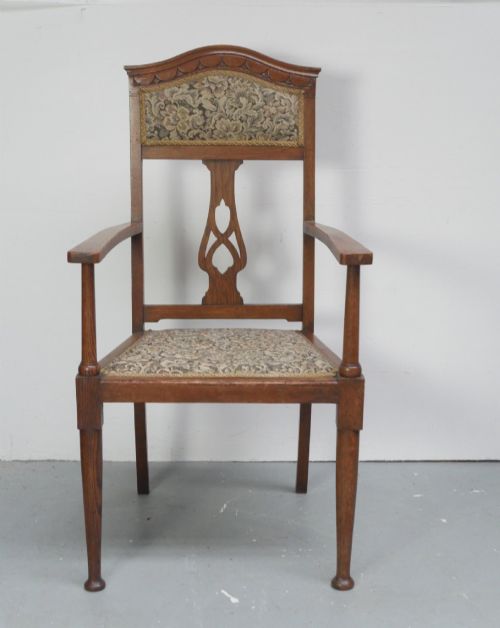
When you search for arts and crafts dining seats, you are looking at sturdy chairs and benches built to last generations. The most common pieces you will meet on this page are oak dining chairs and armchairs shaped by the principles of the movement.
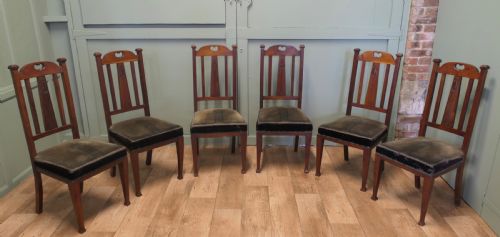
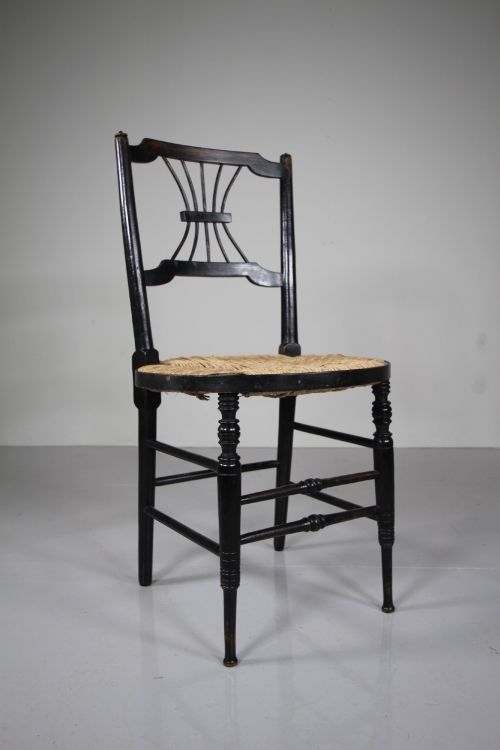
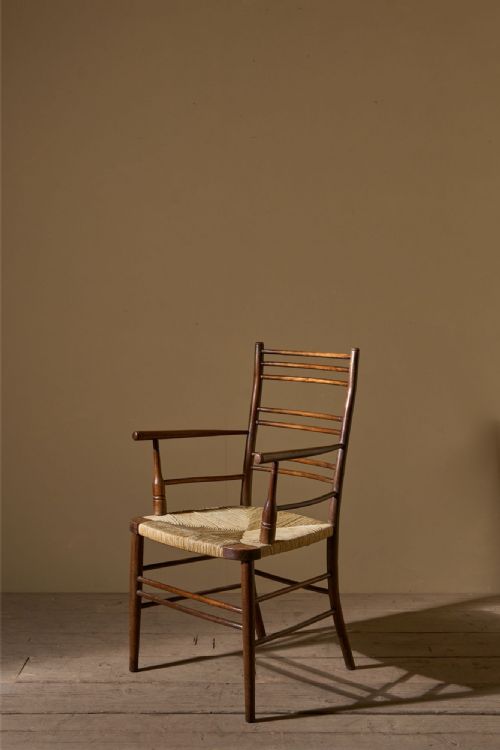
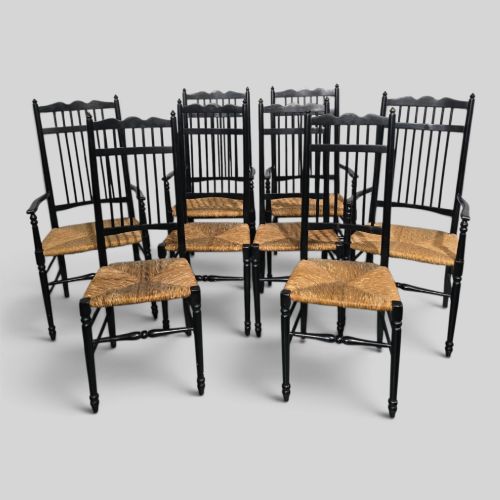
Makers drew on various periods, producing items from simple rush-seated ladder backs to high-backed oak carvers. You will find single chairs alongside matched sets of six, eight, or twelve suitable for daily dining.
The materials and styles span the late nineteenth century through to the 1930s, incorporating country influences alongside Gothic revival details.
Materials and Construction
Craftsmen relied primarily on solid oak, alongside beech, mahogany, and occasional country timbers like laburnum, elm, and pitch pine. These woods were chosen for their grain and strength, often left with natural finishes rather than heavy varnish.
Seats were finished with woven rush, plain leather, fabric, or brass details, fastened securely to the wooden frames. Joinery relied on traditional pegged mortise and tenon joints to withstand the rigours of daily use.
Listings span oak, rush, leather, and ebonised beech, documenting dining chairs, side chairs, armchairs, and benches from the late nineteenth century to the 1930s.
Assessing the Craft
Quality rests in the integrity of the timber selection and the precision of the joinery. A superior chair shows careful hand-shaping in the spindles and slats, with tight, uncompromised joints that need no metal reinforcement.
The treatment of the seat also marks the tier of the piece, whether it is tightly woven rush or supple leather correctly fastened. Consistency across a large set determines whether the chairs were produced by a skilled workshop or standard factory methods.
William Morris·Liberty and Co·Heals·Morris and Co·Lawrence Neal
The Arts and Crafts Dining Seats Glossary
- Rush seat
- A woven seating surface made from dried marsh grasses. This traditional method provides a resilient and comfortable base for country and movement chairs.
- Ladder back
- A chair back featuring horizontal wooden slats resembling the rungs of a ladder. This form originates in vernacular country tradition and was adopted widely by movement designers.
- Glastonbury chair
- A type of folding armchair with X-frame supports and a sloping panel back. Examples often feature carved trefoil motifs.
- Carver
- An armchair designed to match a set of dining chairs, usually placed at the head of the table. These pieces feature supportive armrests integrated into the frame.
- Drop-in seat
- A removable upholstered frame that fits into a recess in the chair seat rails. This construction allows for straightforward reupholstery without disturbing the structural joints.
Arts and Crafts Dining Seats: Frequently Asked Questions
How do I care for rush seats?
Keep rush seating away from excessive moisture and direct heat sources to prevent the natural fibres from becoming brittle.
Clean them gently with a dry brush and occasionally apply a damp cloth if necessary, ensuring the material dries completely.
Can I mix different chair styles?
Mixing single carvers with simpler side chairs reflects the historic practice of gathering seating over time. Ensure the seat heights and wood tones share a common harmony so the arrangement looks deliberate around the dining table.
Are these chairs comfortable for daily use?
Movement chairs were built with human proportions in mind, offering supportive upright postures rather than deep lounging. Models with upholstered drop-in pads or woven rush provide plenty of comfort for long dinner parties.
How do I date an oak chair?
Look closely at the tool marks, the method of joint construction, and the type of finish applied to the timber. Machine-cut components usually point towards the twentieth century, while hand-planed surfaces indicate earlier nineteenth-century origins.