



Arts and Crafts Copper Tray
An arts and crafts copper tray brings tactile warmth and hammered texture to a room, offering both everyday utility and distinct period character.
Arts and Crafts Copper Tray
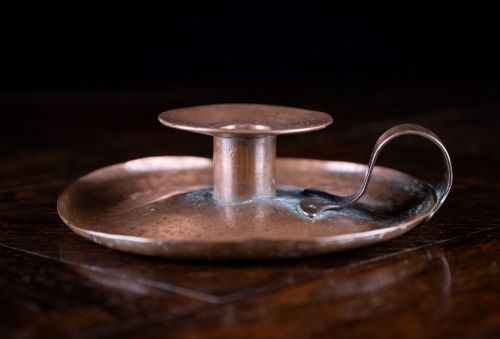
An arts and crafts copper tray is a functional domestic object defined by hand-hammered surfaces and characteristic regional motifs produced around the turn of the twentieth century. These pieces emerge primarily from the late nineteenth century through the 1920s, bridging the Arts and Crafts movement and Art Nouveau design. Buyers encounter varied forms on this page ranging from small visiting card trays and twin-handled serving platters to large decorative chargers and tray tables.
Makers working within this tradition utilised copper as the primary medium, frequently mounting the metal within oak frames or resting it on wrought iron stands. While most examples function purely as tablewares, the listings also include related domestic items such as hanging kettles, brass animal-motif trays, and occasional umbrella stands. The visual language relies heavily on floral relief, repoussé work, and stamped workshop marks that identify specific regional British production centres.
How they were made
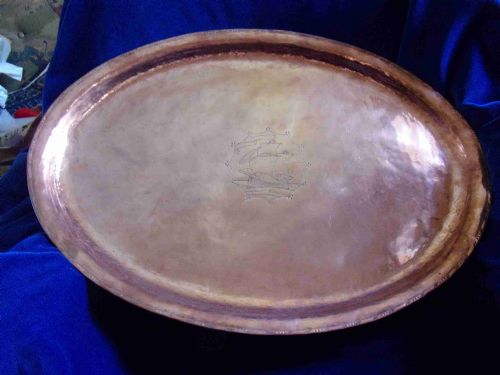
Makers constructed these items by hammering sheet copper by hand, a technique that leaves visible tool marks and subtle surface undulations across the metal. Artisans shaped the raised edges and sunken wells using traditional hand-raising methods rather than heavy industrial presses.
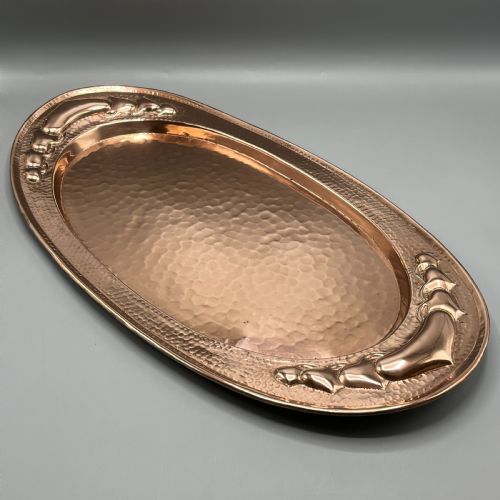
Decoration was frequently applied through repoussé work, pushing the copper from the reverse side to create raised floral, animal, or geometric relief on the face. Workshops also incorporated supporting elements of oak, wrought iron, brass, and enamel to assemble composite items like umbrella stands and spirit kettles.
Arts and Crafts Copper Tray Retail Price Guide 2026
Typical asking prices for arts and crafts copper tray among the pieces listed under this phrase on Sellingantiques today, from the lower quarter to the upper quarter. They describe what is for sale here now, not the wider market.
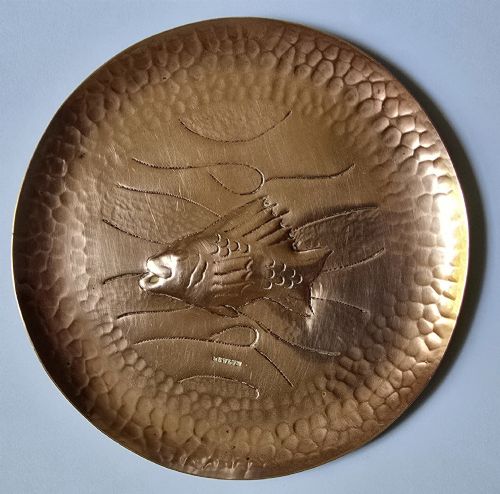
Some trays feature fierce animal motifs, proving that Edwardian visitors dropped their cards past the watchful gaze of hammered fish and beasts.
What varies in quality
Quality in an arts and crafts copper tray rests upon the crispness of the repoussé relief and the confidence of the hammer work across the surface. Stronger examples display deliberate, rhythmic texturing that follows the contours of the design rather than uniform machine stamping.
The integration of materials also defines the better pieces, such as secure riveting on twin handles and solid oak or wrought iron mounts. Verified workshop attribution, such as clear Newlyn stamps, distinguishes standard domestic output from more accomplished studio production.
Newlyn·Hugh Wallis
The Arts and Crafts Copper Tray Glossary
- Repoussé
- A metalworking technique where the artisan hammers the metal from the reverse side to form a raised design on the front. This method creates the characteristic three-dimensional floral and figurative motifs seen on period metalwork.
- Arts and Crafts
- A design movement spanning the late nineteenth and early twentieth centuries that emphasised handcrafted execution and traditional materials over industrial mass production. The style values honest construction and visible evidence of the maker's hand.
- Art Nouveau
- An international style of the late nineteenth and early twentieth centuries characterised by flowing, organic lines and floral motifs. This aesthetic heavily influenced the decorative borders and handles found on many copper serving pieces.
- Charger
- A large decorative plate or tray used traditionally for display rather than for serving food. In metalwork, these large circular pieces provide an expansive surface for detailed hand-hammered decoration.
- Visiting card tray
- A small domestic dish placed in a hallway to receive calling cards from guests. These compact trays often feature specific regional hallmarks or stamped workshop identifiers along the rim.
Arts and Crafts Copper Tray: Frequently Asked Questions
How do I clean an old copper tray?
Maintenance requires minimal intervention to preserve the aged patina that collectors value. Gentle dusting with a soft cloth is usually sufficient for everyday care.
Harsh chemical polishes should be avoided because they strip away the historical darkening and character accumulated over a century of age.
Can I use these trays for serving food?
Most antique metal trays are best reserved for display or dry decorative use rather than wet serving. The vintage copper and brass surfaces may react with moisture or acidic foods.
Placing items like letters, calling cards, or dry botanical arrangements on the surface prevents unnecessary wear while maintaining the piece in a domestic setting.
How do I spot a Newlyn tray?
Authentic pieces from the Cornish cooperative often bear stamped maker marks along the rim or underside. The hand-hammered texturing frequently incorporates marine or floral motifs characteristic of the regional coastal style.
Comparing the weight and gauge of the metal against unmarked examples helps differentiate West Country studio output from later commercial productions.
What is the difference between Arts and Crafts and Art Nouveau?
Arts and Crafts design focuses on honest construction, visible hand-hammering, and simple utility rooted in traditional craftsmanship. The aesthetic prioritises the physical labour of the artisan above ornate ornamentation.
Art Nouveau introduces sweeping, asymmetrical plant tendrils and whiplash curves into the metal surface. Many items on this page successfully blend both movements within a single piece.