


Artist Picture Easel
An artist picture easel holds canvas and panel work in the studio or displays finished watercolours and oils to clients.
Artist Picture Easel
An artist picture easel provides a sturdy, adjustable stand for painters at work or for exhibiting finished canvases in a gallery. When you search for an artist picture easel, you encounter robust studio models alongside smaller tabletop formats designed for domestic display.
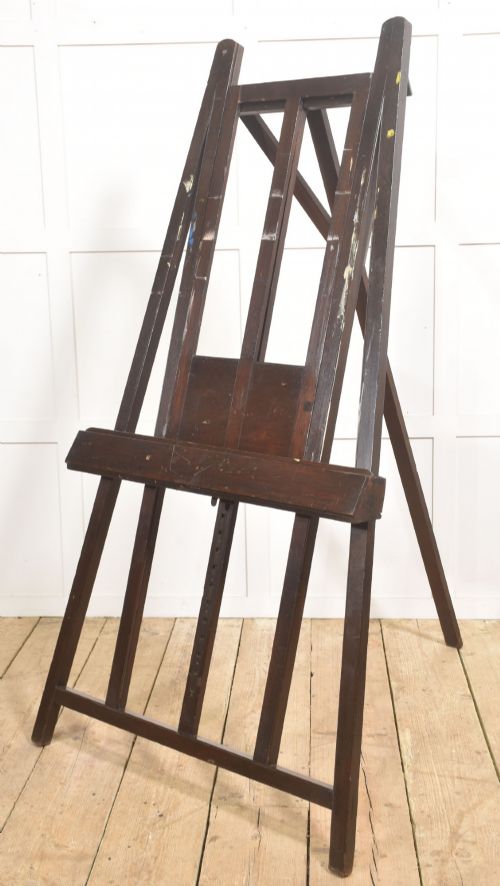
The pieces on this page span the nineteenth and twentieth centuries, featuring heavy studio variants alongside lighter French oak designs and folding timber stands. Forms range from simple floor standing tripods to double-sided gallery pieces and folio stands.
Origin and period vary significantly, with English Georgian and Victorian workshops represented alongside French provincial examples and later twentieth-century studio equipment. Each type serves a distinct function, whether supporting a monumental canvas during creation or presenting a single framed picture.
Materials and construction
Makers relied primarily on dense hardwoods such as oak, mahogany, walnut and beech to withstand the daily weight and pressure of heavy canvases. Oak dominates the selection, frequently paired with brass winding mechanisms, cast iron adjustment levers and metal ratchets.
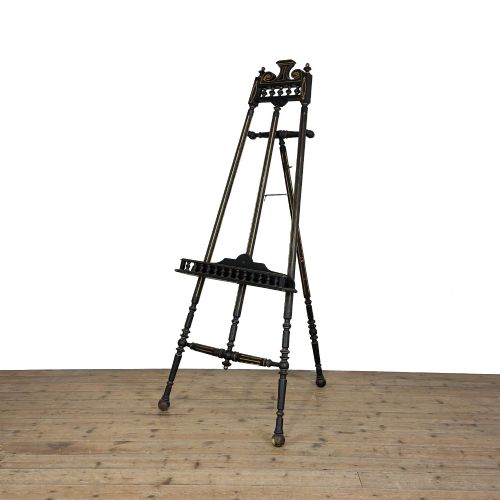
Finishes range from natural waxed grain and ebonised wood to gold leaf highlights and occasional ivory inlay on finer gallery pieces. Joinery is robust, utilising substantial screws, peg construction and sliding timber brackets to ensure structural stability.
Assessing quality and finish
The standard of a piece rests upon the complexity of its mechanical adjustments and the integrity of its timber. Superior examples feature smooth, original winding mechanisms, heavy brass fittings and stable, well-balanced bases that hold position securely under load.
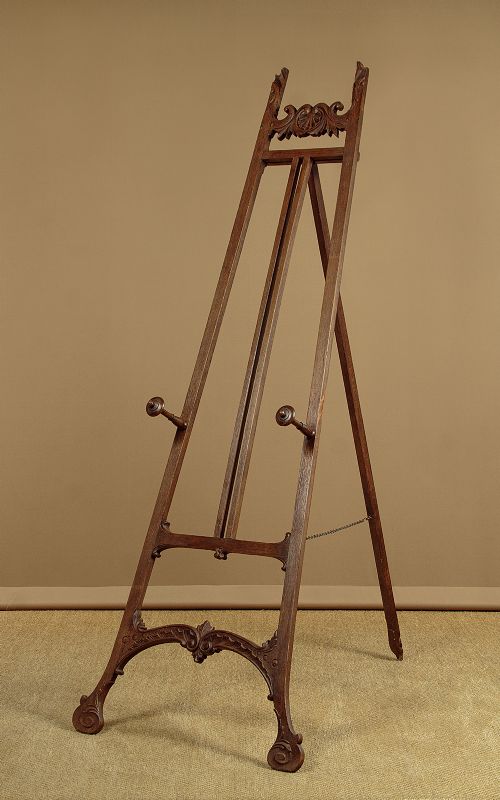
Refined craftsmanship appears in decorative details such as carved ornamentation, swan designs, or specialised double-sided framing. Simpler utility stands rely on plain timber construction, whereas gallery-grade pieces incorporate costly veneers, precise joinery and sophisticated height regulation.
Windsor and Newton
The Artist Picture Easel Glossary
- Studio easel
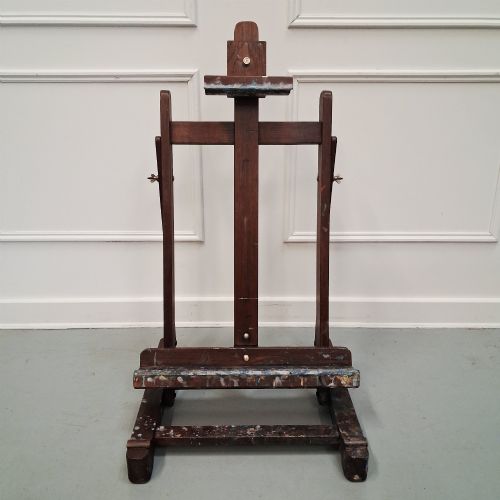
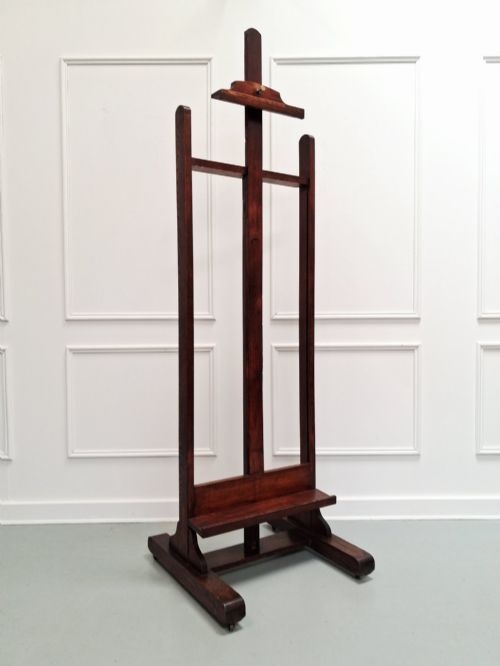
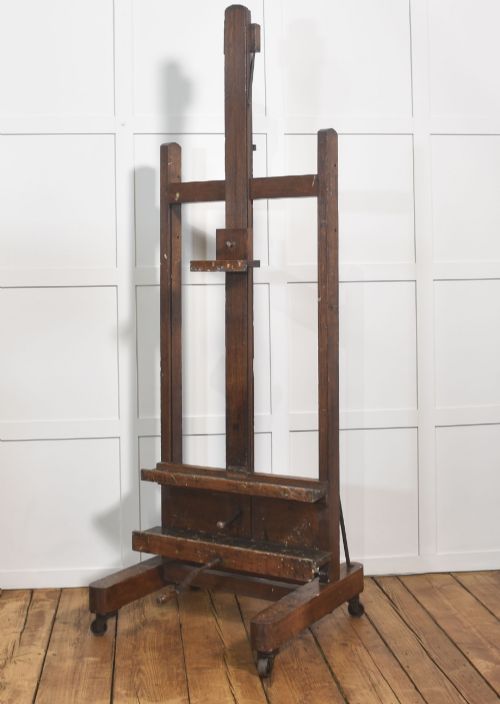
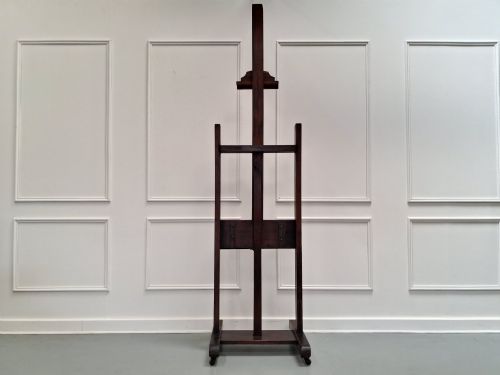
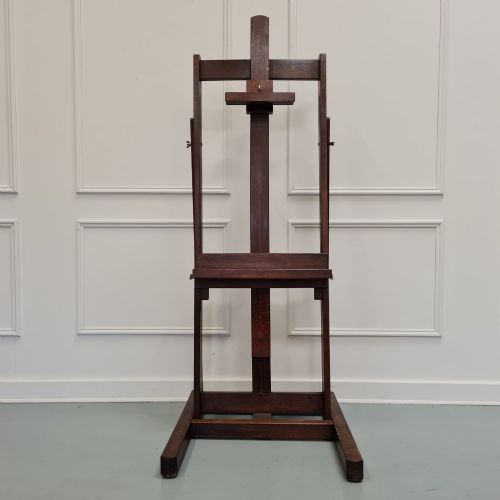
- A large, heavy floor-standing timber frame built to support substantial canvases during the painting process. These pieces usually include winding cranks and heavy castors.
- Tabletop easel
- A compact portable stand designed to sit upon a desk or table for smaller works. They offer simpler height adjustments than their floor-standing counterparts.
- Gallery easel
- A display stand configured to present finished artwork to prospective buyers. These often feature double-sided boards or ornate timber framing.
- Folio stand
- A flat storage rack designed to hold loose prints, drawings and unmounted canvases. They are frequently constructed from mahogany or oak with slatted bases.
- Ratchet mechanism
- A mechanical ladder system used on adjustable frames to alter the height of the picture shelf quickly. It engages with iron or wooden pegs to lock position.
Artist Picture Easel: Frequently Asked Questions
How do I adjust the height on these easels?
Most antique studio models use a combination of wooden sliding masts, metal ratchets, and brass winding handles to raise and lower the central shelf. Turning the handle or shifting the peg allows you to lock the canvas carrier at the required level.
Heavier nineteenth-century pieces rely on robust iron mechanisms that require firm handling, while lighter tabletop versions use simple thumb screws or notched wooden supports.
Can I use an antique easel for daily painting?
Many large studio models remain entirely functional and suit daily artistic work just as well as they did a century ago. Their heavy hardwood construction and adjustable frames accommodate standard canvas sizes securely.
Delicate gallery pieces with intricate veneers or fragile decorative inlay are better suited to displaying finished artwork rather than enduring the heavy pressure of active painting.
How do I date an antique easel?
Dating relies on timber choice, manufacturing methods, and mechanical hardware such as brass fixings and cast iron ratchets. Georgian and Regency pieces typically show plain mahogany construction with simple peg adjustments, while Victorian examples often feature ebonised wood or heavier decorative carving.
Twentieth-century iterations from the 1900s to the 1930s often display simpler oak frames, lighter folding actions, and standardised metal fittings.
What is the difference between a studio and display easel?
Studio models prioritize mechanical utility, featuring heavy bases, adjustable tilting frames, and winding cranks designed to bear the physical weight of active painting. They are engineered for stability under the pressure of the brush.
Display or gallery models focus on aesthetic presentation, often incorporating finer woods, decorative carving, or double-sided frames intended to showcase finished pictures to viewers.