




Art Nouveau Wood Cabinet
An art nouveau wood cabinet brings sinuous organic line and floral motifs into domestic spaces, offering both practical storage and striking period focal points.
Art Nouveau Wood Cabinet
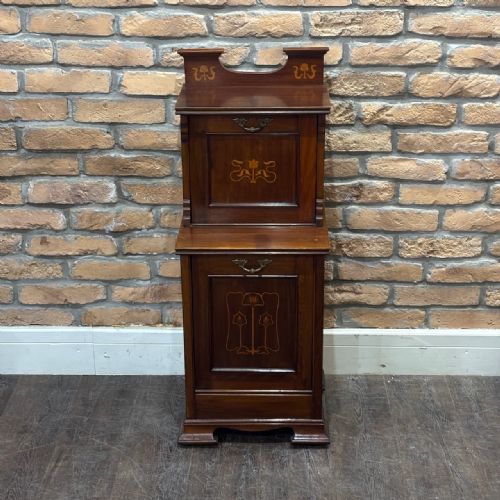
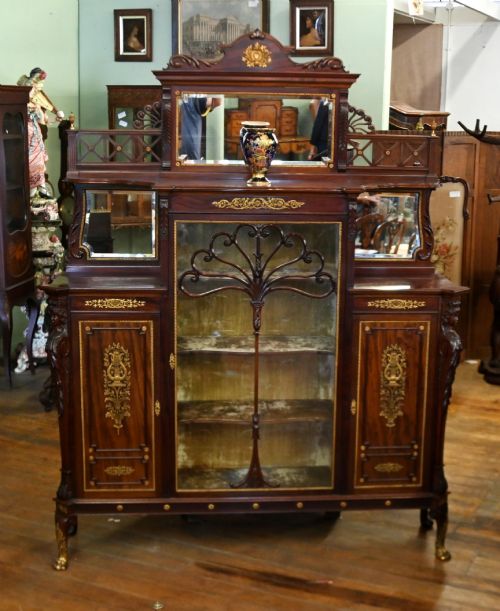
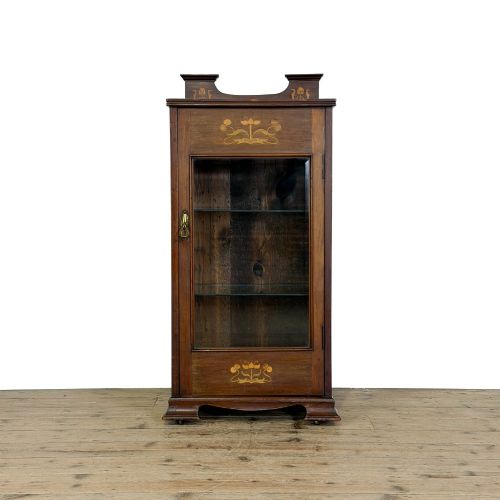
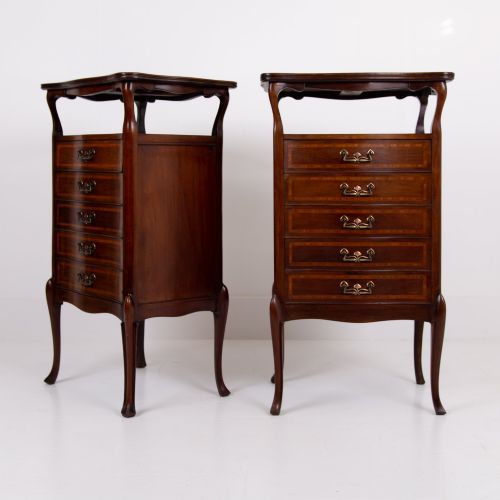
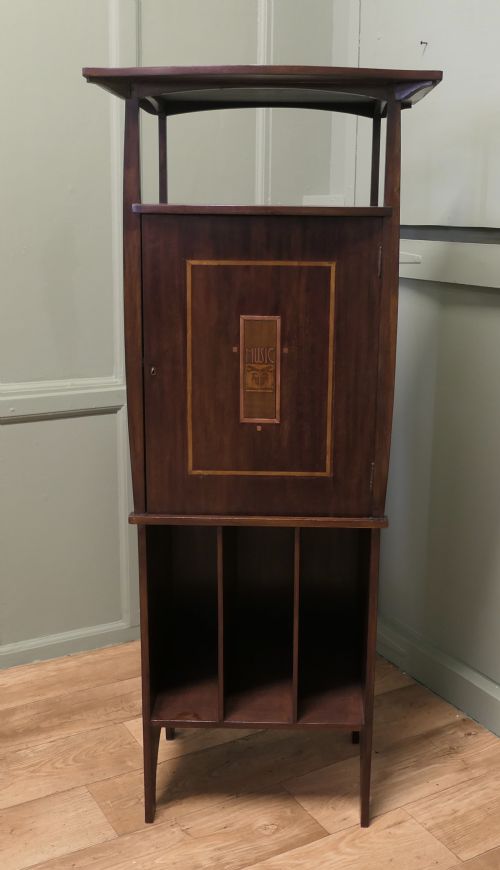
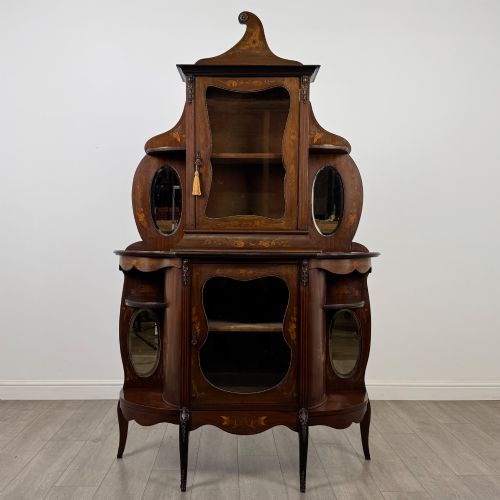
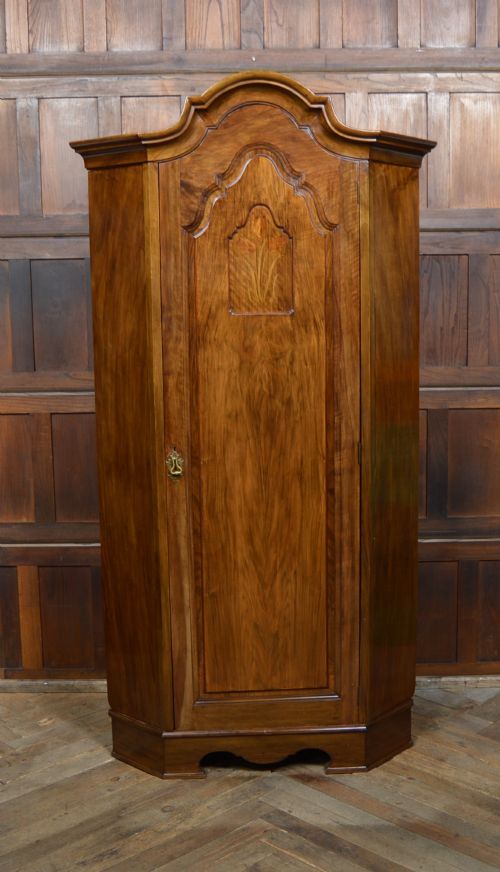
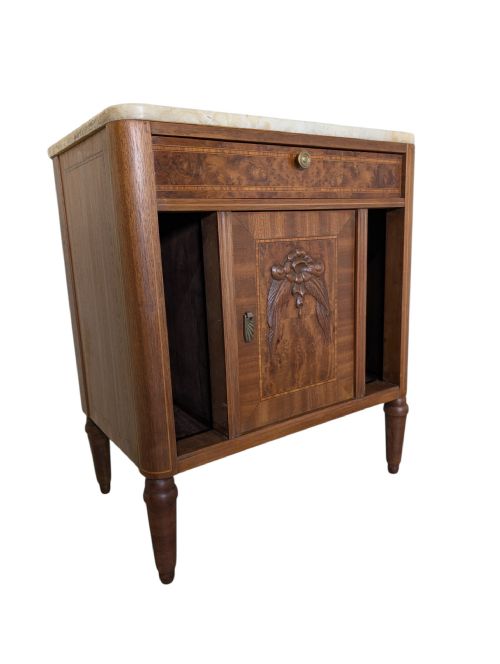
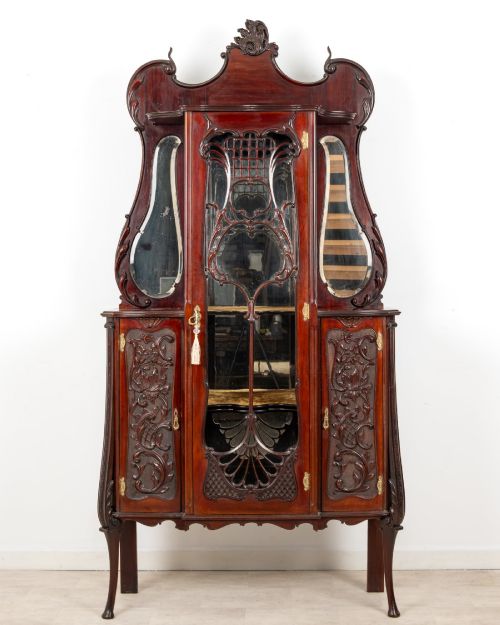
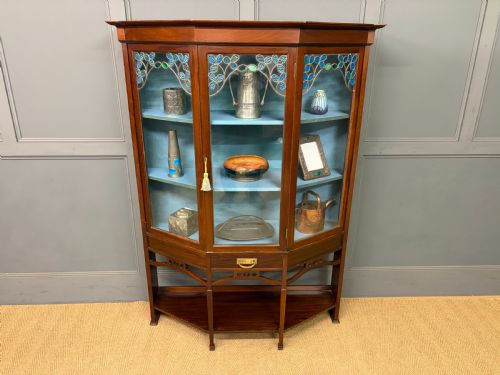
When searching for an art nouveau wood cabinet, buyers encounter diverse forms ranging from display cabinets and music cabinets to sideboards, bedside tables, and wall-hanging cupboards. These pieces predominantly emerge from periods spanning the late nineteenth century through the Edwardian era, incorporating overlapping styles such as Arts and Crafts, French Art Nouveau, and Renaissance Revival.
Display cabinets with oval mirrors and mahogany inlaid cupboards dominate the selections, alongside specialised items like revolving bookcases and coal boxes. Makers working in these styles utilise rich timbers and decorative mounts to achieve the characteristic fluidity associated with the turn of the twentieth century.
How they were made
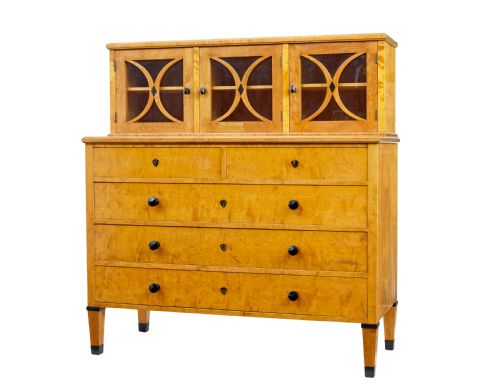
Cabinet makers constructed these pieces using primary timbers such as mahogany, walnut, satinwood, coromandel, and Swedish birch, often incorporating intricate wood inlay and marquetry. Surfaces frequently feature brass hardware, glass panels, and mirror inserts to complement the timber grain.
Techniques relied on traditional joinery combined with decorative carving and metalwork, occasionally applying silver cladding or specific stylistic motifs in the manner of established designers and retail houses.
Art Nouveau Wood Cabinet Retail Price Guide 2026
Typical asking prices for art nouveau wood cabinet among the pieces listed under this phrase on Sellingantiques today, from the lower quarter to the upper quarter. They describe what is for sale here now, not the wider market.
Materials recorded across the inventory include mahogany, walnut, satinwood, coromandel, brass, glass, and mirror.
What varies in quality
The standard of execution depends heavily on the precision of the marquetry, the complexity of the wood inlay, and the crispness of any hand-carved botanical motifs. Superior examples display seamless integration between the timber structure and applied brass or glass elements.
Structural integrity, the selection of figured wood veneers, and the sophistication of the overall design distinguish finer workshop productions from simpler commercial outputs of the period.
GM Elwood for JS Henry·Shapland & Petter
The Art Nouveau Wood Cabinet Glossary
- Marquetry
- The art and craft of applying pieces of veneer to a structure to form decorative patterns and pictures. Makers utilised contrasting woods to depict naturalistic floral and organic motifs.
- Inlay
- A technique where pieces of material are set into a contrasting background surface of wood. This method creates decorative borders and linear patterns on cabinet doors and panels.
- Coromandel
- A dense, dark timber with striking contrasting grain patterns imported from Asia. Cabinet makers prized this exotic wood for high-status occasional furniture and bedside tables.
- Satinwood
- A pale, lustrous hardwood often used for contrasting stringing and detailed inlay work. Its reflective quality brightens inlaid panels on mahogany cabinets.
Art Nouveau Wood Cabinet: Frequently Asked Questions
How do I identify an art nouveau cabinet?
Look for whiplash curves, stylised floral carvings, and organic botanical motifs integrated into the woodwork. These distinct aesthetic markers set them apart from heavier Victorian or simpler Edwardian designs.
Hardware such as brass hinges and handles often follows the same flowing lines, frequently complemented by glass display panels or inlaid marquetry.
What rooms suit a wood display cabinet?
Display cabinets work well in dining rooms or living spaces where ceramics, glassware, or collections require visible storage. The reflective glass and mirror elements help bounce light around smaller spaces.
Ensure the timber tone complements existing furniture, as mahogany and walnut dominate these periods.
How do Arts and Crafts and Art Nouveau overlap?
Both movements rejected mass production in favour of craftsmanship, leading makers to often blend structural honesty with organic decorative motifs. Pieces from this era frequently share stylistic traits between the two.
Listing titles often reflect this crossover, grouping cabinet designs under both Arts and Crafts and Art Nouveau headings.
How do I care for antique wood furniture?
Maintain stable indoor humidity levels and keep wooden cabinets away from direct heat sources to prevent veneer lifting or timber splitting. Regular gentle dusting preserves the polished finish.
Avoid harsh chemical cleaning products, utilising traditional furniture wax sparingly to nourish the mahogany, walnut, or satinwood surfaces.