


Art Nouveau Table Clock
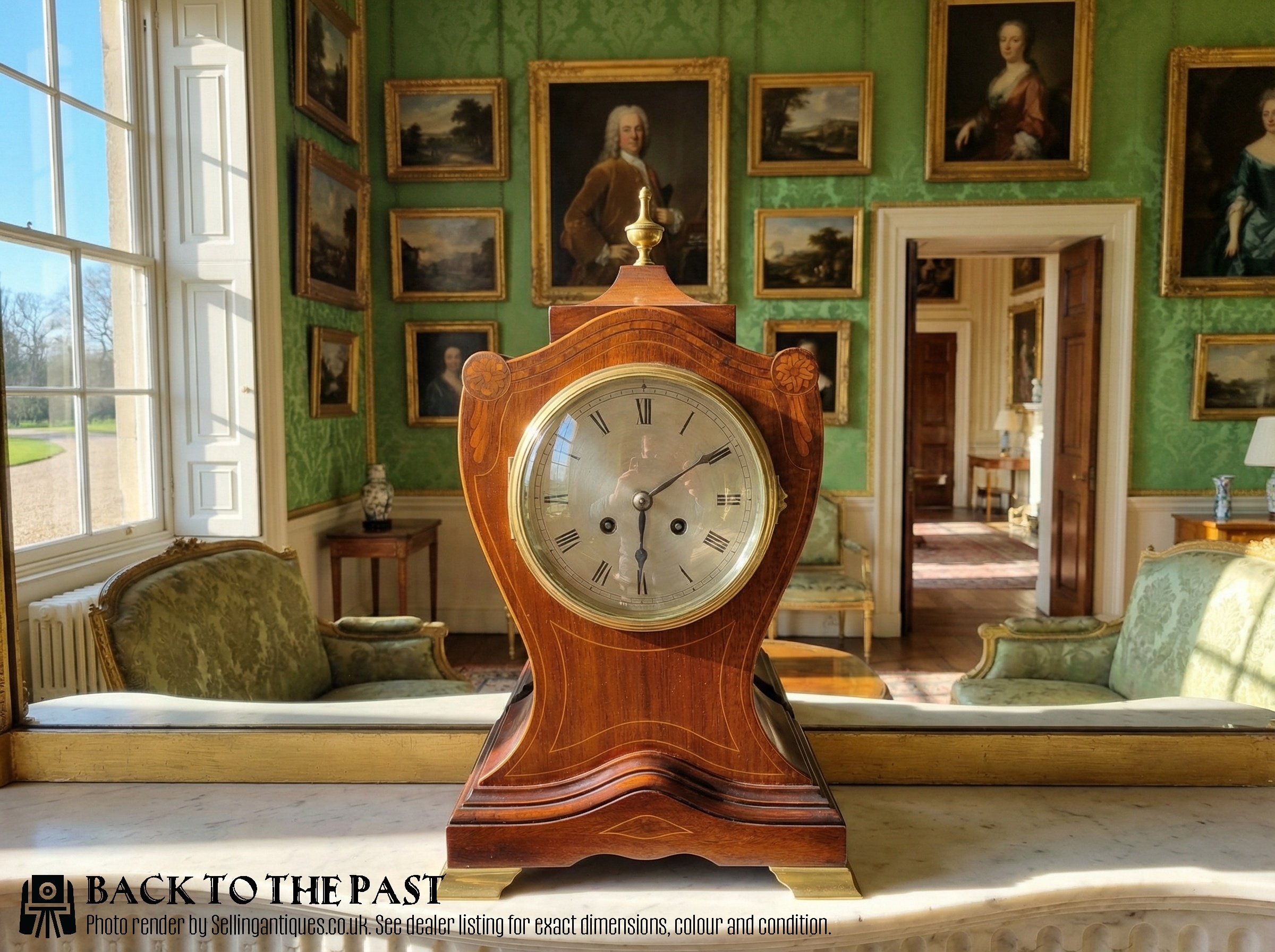
An art nouveau table clock brings flowing organic lines and distinctive craftsmanship straight onto your mantelpiece.
Art Nouveau Table Clock
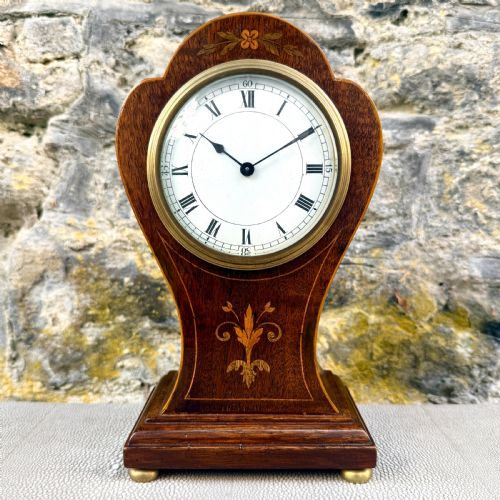
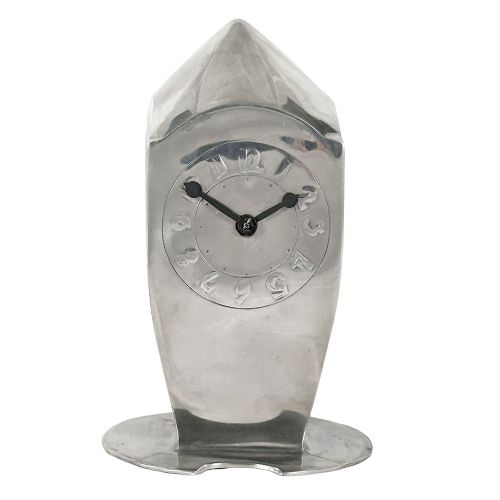
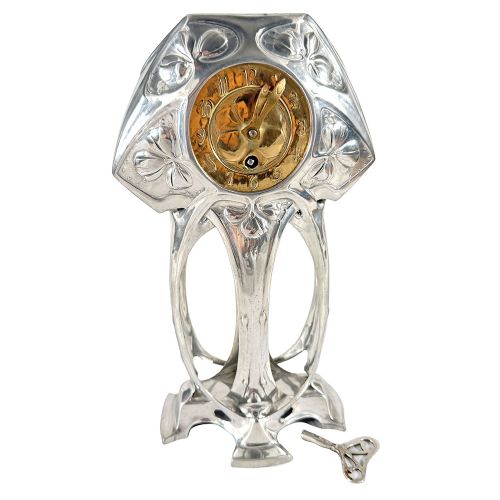
An art nouveau table clock takes the form of a mantel clock, desk clock, or carriage clock designed during the early twentieth century and the late nineteenth century. You are most likely to meet wooden mantel clocks in mahogany, oak, or satinwood alongside metal pieces cast in pewter, silver, and silver plate.
The aesthetic bridges several related design movements, drawing heavily on Art Nouveau, Arts and Crafts, Jugendstil, and Amsterdam School styles. These pieces function as decorative timepieces intended to anchor a desk or a mantelpiece with characteristic period flair.
How they were made
Maker workshops utilised cast metals such as pewter and brass, frequently incorporating enamel, glass, abalone, or champlevé enamel details into the metalwork. Wood variants relied on mahogany, oak, satinwood, and macassar ebony, often featuring inlay work and floral motifs.
Silversmiths and metal foundries shaped pliable metals into flowing organic contours, while cabinetmakers constructed wooden cases to house delicate clockwork movements. Artisans combined traditional joinery with emerging industrial techniques to produce both miniature desk pieces and substantial mantel clocks.
What varies in quality
The distinction between standard examples and top-tier pieces rests upon the sophistication of the design and the pedigree of the maker. Designer-led commissions from prominent firms exhibit superior metal casting, refined enamel work, and carefully selected timber veneers.
Workmanship in the movement housing, the crispness of the chased metal, and the integration of decorative elements like abalone shell or hand-painted dials elevate certain examples far above mass-produced counterparts.
Archibald Knox for Liberty & Co·Georg Adam Scheid·Friedrich Adler for Osiris·David Veasey for Liberty & Co·WMF
The Art Nouveau Table Clock Glossary
- Champlevé
- An enamel technique where troughs are carved into a metal surface and filled with vitreous enamel before firing. This method creates vibrant coloured patterns across clock faces and cases.
- Tudric
- A brand of pewter alloy utilised by Liberty & Co during the early twentieth century. It often contained a proportion of silver, giving the metal a brighter finish.
- Jugendstil
- The German manifestation of the Art Nouveau movement. It emphasises youthful, organic dynamism and sinuous plant-inspired lines.
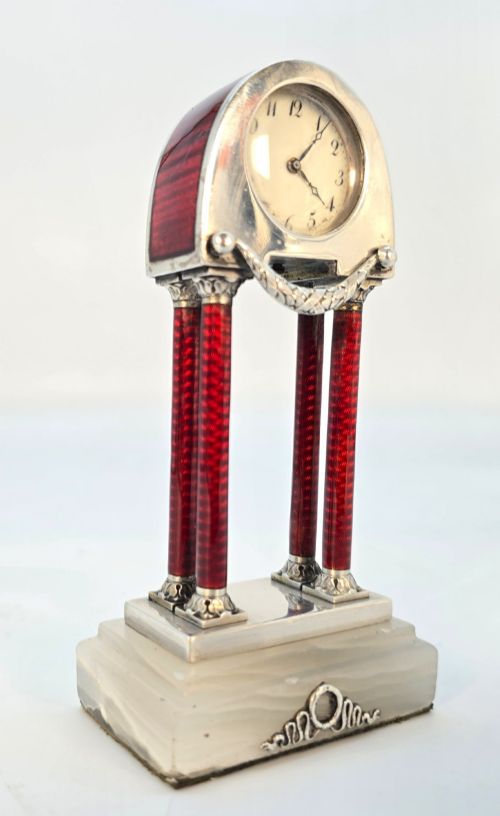
- Portico clock
- A architectural clock style featuring a dial suspended within a frame supported by columns. Miniature versions sit easily upon a desk or table.
- Strut clock
- A portable timepiece fitted with a hinged prop on the reverse to allow upright display. These are commonly found in travel and desk formats.
Art Nouveau Table Clock: Frequently Asked Questions
Where should I place an art nouveau table clock?
These timepieces suit prominent flat surfaces such as a mantelpiece, a library desk, or a sideboard where their decorative cases can be appreciated from multiple angles.
Ensure the location remains stable and away from direct heat sources to protect delicate wood veneers and antique enamel work.
How do I identify an art nouveau table clock?
Look for characteristic design motifs such as whiplash curves, stylised floral patterns, and naturalistic forms derived from plants and stems. Materials commonly include cast pewter, inlaid wood, and enamel dials.
Check for period manufacturing traits, maker stamps, or registration numbers stamped into the metal or timber case.
Were these clocks used for travel?
Certain smaller formats, such as strut clocks and carriage clocks, were designed for portability during travel or for easy placement on a writing desk. Mantel clocks remained stationary due to their weight and size.
Miniature portico clocks and easel clocks offered a portable way to keep time in domestic and hotel settings.
What materials are typical for these clocks?
Metal examples frequently utilise pewter, silver, silver plate, and brass, often accented with coloured enamel, glass, or abalone shell. Wooden versions rely on mahogany, oak, satinwood, and macassar ebony.
Many designs combine timber cases with metal bezels and dials to create textural contrast.
How do I care for an antique clock?
Keep the clock in a dry environment with consistent temperature to prevent wood warping and metal tarnishing. Dust gently with a soft, dry cloth without applying harsh chemical polishes.
Consult a professional horologist for movement maintenance rather than attempting mechanical repairs independently.