



Art Nouveau Silver Set
An art nouveau silver set brings together fluid organic lines and precious metal, offering both practical utility and distinct period character for daily use or display.
Art Nouveau Silver Set
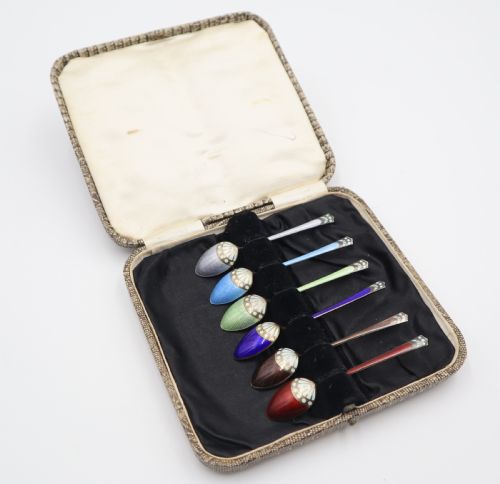
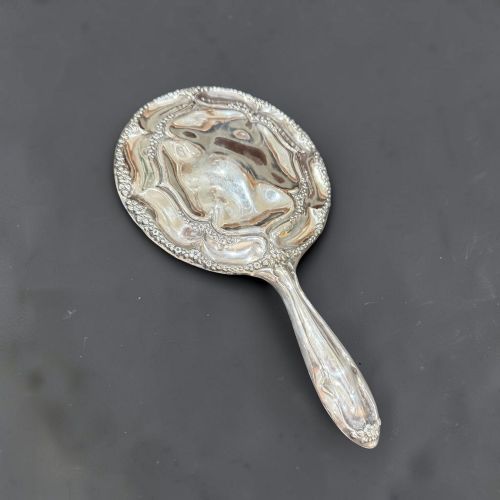
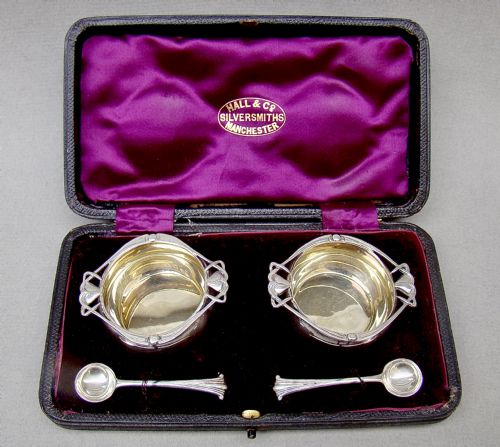
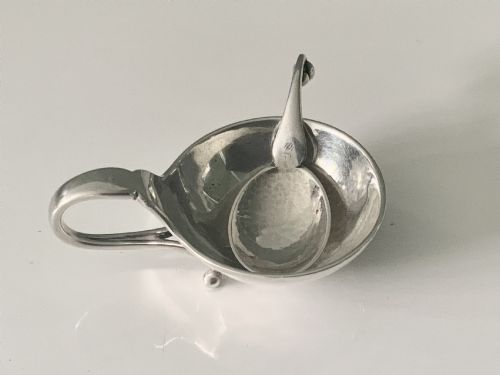
The aesthetic bridges several overlapping periods, drawing heavily on Edwardian production, Victorian manufacturing, and the contemporaneous Arts and Crafts movement. Surviving examples range from cased condiment pairings to larger dresser ensembles and boxed button cards intended for personal adornment.
Buyers encountering these groupings will find that sets often incorporate complementary materials alongside metalwork, including glass, enamel, and velvet linings within original presentation boxes. Such configurations reflect the original retail presentation of high-end department stores and specialist silversmiths.
Materials and construction
The physical construction relies primarily on sterling silver and silver plate, shaped through casting, hammering, and detailed repoussé work to achieve characteristic whiplash curves and floral motifs. Pewter and silvered metal also appear, particularly in continental output utilising specialised manufacturing techniques.
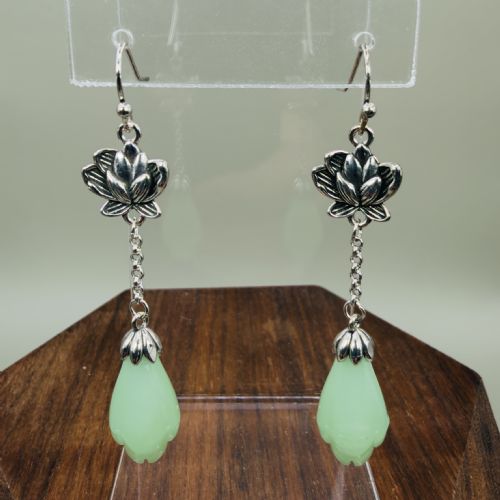
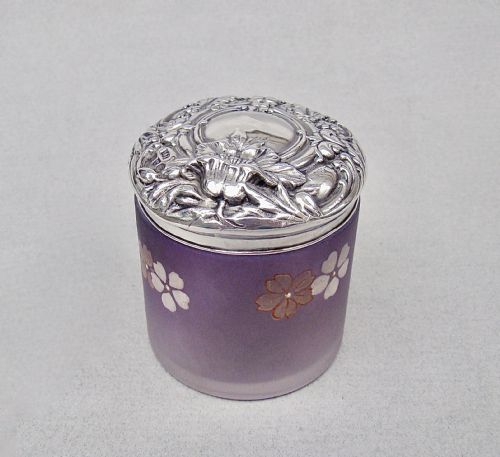
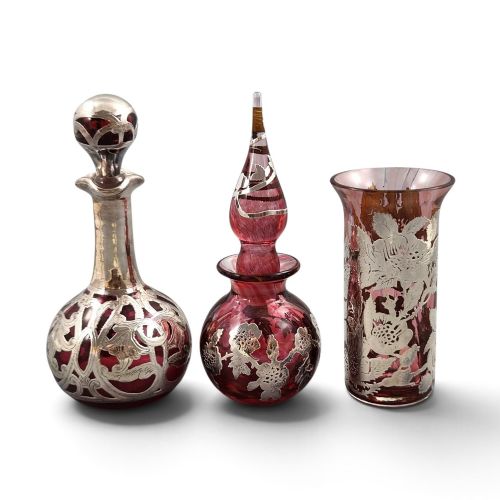
Enamel work, including plique-à-jour and painted floral designs, frequently decorates the surfaces alongside inset stones such as moonstone, green chalcedony, and turquoise matrix. Glass elements, from frosted jars to ruby glass vessels, are paired directly with fitted silver lids and mounts.
Makers utilised fitted wooden cases lined in silk and velvet to house multiple spoons, salts, or buttons, ensuring the delicate metalwork and glass components remained protected during transit and storage.
Art Nouveau Silver Set Retail Price Guide 2026
Typical asking prices for art nouveau silver set among the pieces listed under this phrase on Sellingantiques today, from the lower quarter to the upper quarter. They describe what is for sale here now, not the wider market.
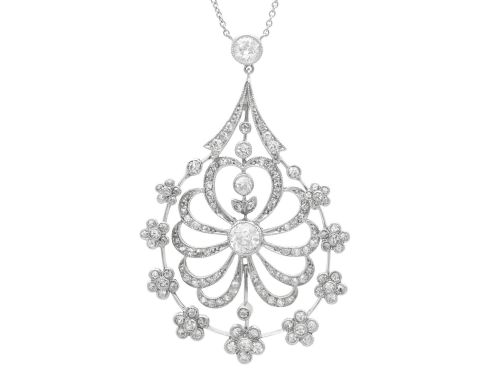
Available forms range from domestic teaspoons and salt cellars to vanity jars, buttons, and pendant jewellery.
Judging quality and execution
Quality in these groupings is determined by the crispness of the cast ornamentation and the integration of secondary materials like enamel or coloured glass. Superior examples display hand-finished chasing that accentuates the organic asymmetry typical of the design style.
The presence of original fitted presentation cases and matching hallmarks across every component elevates the integrity of a grouping. Maker attribution also plays a central role, with distinguished workshops and identifiable designers commanding greater attention for their superior metal thickness and artistic ambition.
Josiah Williams & Co·Georg Jensen·Gorham·WMF·David Andersen·Dorrie Nossiter·Archibald Knox for Liberty·Christofle·James Deakin & Sons·Martin Mayer·Zimmermann·John Round
The Art Nouveau Silver Set Glossary
- Plique-à-jour
- An enamelling technique where enamel is applied within a cellular framework without a backing, creating a translucent, stained-glass effect. This delicate method is frequently seen on high-end pendants and decorative items.
- Repoussé
- A metalworking method in which the metal is hammered from the reverse side to form a raised design in relief. Silversmiths used this technique to create flowing plant stems and naturalistic contours.
- Sterling silver
- An alloy consisting of silver and other metals, usually copper, meeting a specific standard of purity for durability. Most quality tableware and vanity components from this era carry hallmarks certifying this standard.
- Parure
- A matched set of jewellery intended to be worn together, typically comprising earrings, a necklace, and a ring or brooch. These coordinated suites share identical motifs and material treatments.
- Silver plate
- A base metal substrate coated with a thin layer of silver through electroplating or older fusion methods. It allowed manufacturers to produce larger tableware sets at a lower cost than solid silver.
Art Nouveau Silver Set: Frequently Asked Questions
How do I clean antique silver sets?
Maintenance requires gentle washing with warm water and mild soap, followed by drying with a soft cloth to protect delicate surfaces. Avoid harsh dips that strip patination from recessed areas.
Items set with enamel, glass, or gemstones demand extra care to prevent moisture from seeping beneath vulnerable mountings. Periodic gentle buffing preserves the original finish without wearing down the metal.
Were these sets used daily?
Many collections, such as teaspoons, salt cellars, and dressing table jars, were produced for regular domestic routines in prosperous households. Cased button sets and vanity ensembles served personal grooming and formal attire.
Over time, many of these items transitioned from active household service to display and occasional use. Their survival in original presentation boxes often indicates limited handling and careful preservation.
How can I identify the maker?
Makers mark their pieces with stamped initials, symbols, or full company names, usually accompanied by assay office marks and date letters. These small stamps provide precise clues regarding the city of origin and year of manufacture.
Continental makers and larger firms often used distinct punch marks or catalogue numbers. Consulting period trade records helps match these stamps to specific workshops and silversmiths.
What is the difference between silver and plate?
Solid silver objects consist uniformly of precious metal throughout their structure, bearing official hallmarks that guarantee metal purity. Silver plated items utilise a base metal core, such as brass or pewter, covered by a thin outer layer of silver.
Plated items generally feel lighter and may show base metal beneath the silver layer where wear occurs. Both varieties received detailed artistic attention during the period.