

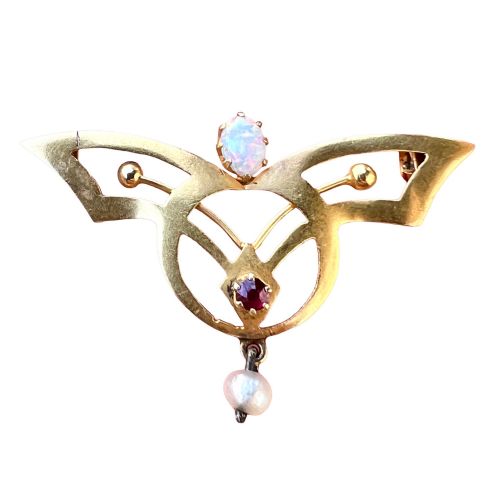


Art Nouveau Pin
Art nouveau pin designs capture the fluid botanical curves and stylised female forms of the early twentieth century in wearable metal.
Art Nouveau Pin
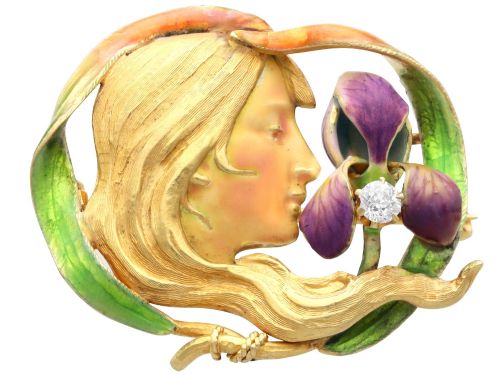
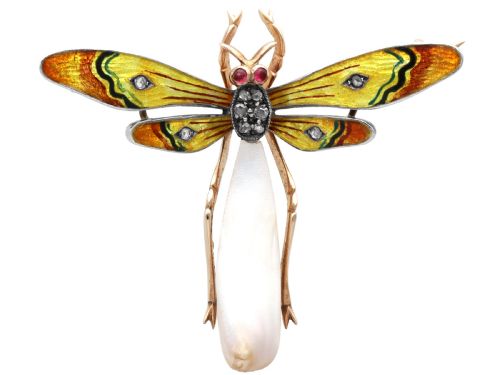
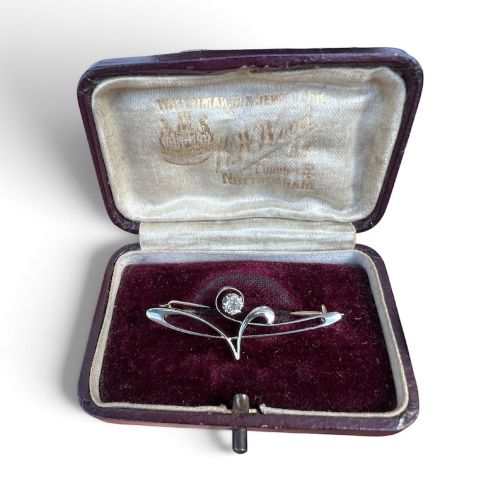
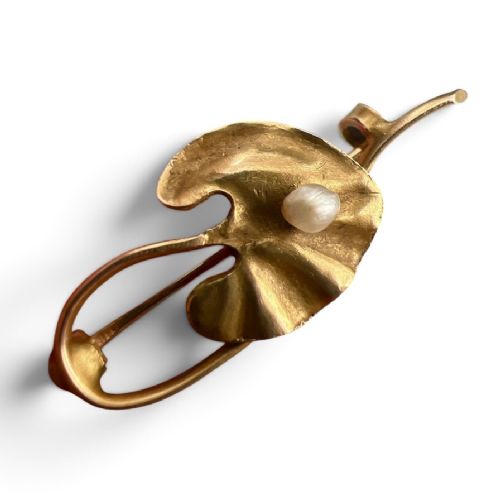
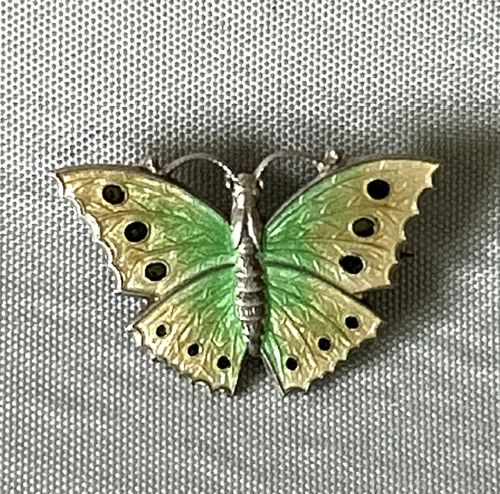
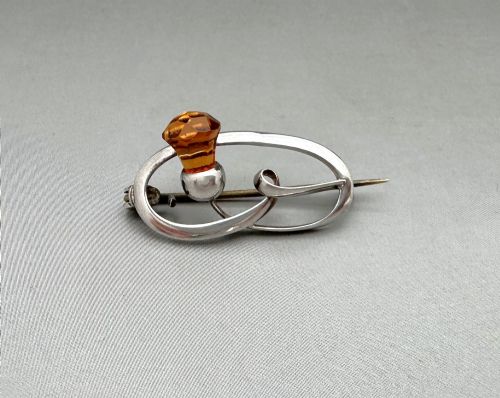
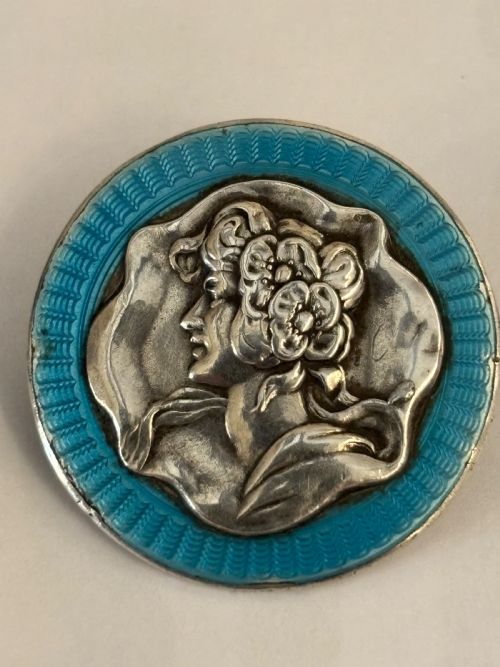
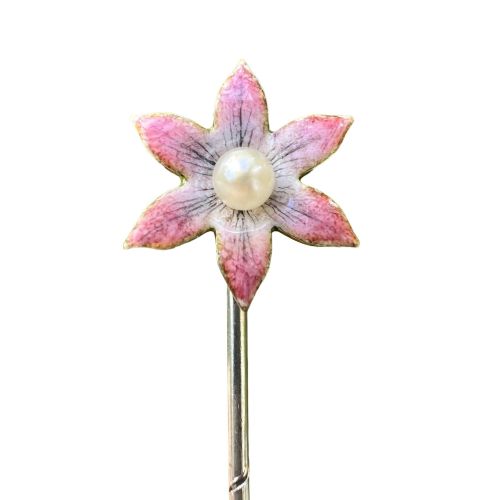
When you search for an art nouveau pin, you encounter small personal ornaments and fasteners designed between the late Victorian era and the Edwardian period, incorporating organic motifs like whiplash stems, flowers and insects. Brooches and stick pins dominate the selection, often taking the form of butterflies, dragonflies or floral sprays shaped with characteristic asymmetry.
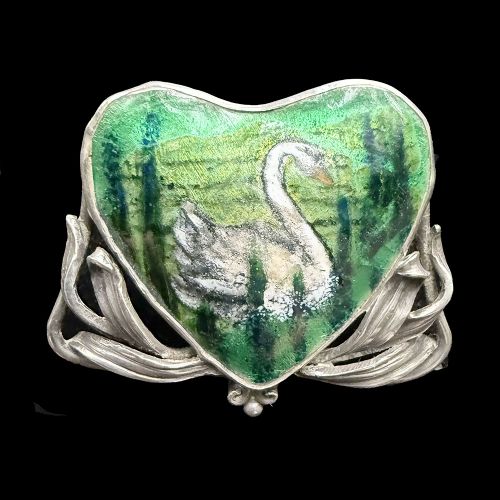
The aesthetic bridges several related stylistic movements including Arts and Crafts, Jugendstil and Sknvirke, reflecting an international turn away from industrial mass production toward handcrafted naturalism. Most examples met on this page date from around nineteen hundred, executed in sterling silver, pewter or gold with varied gemstone and enamel highlights.
Materials and Technique
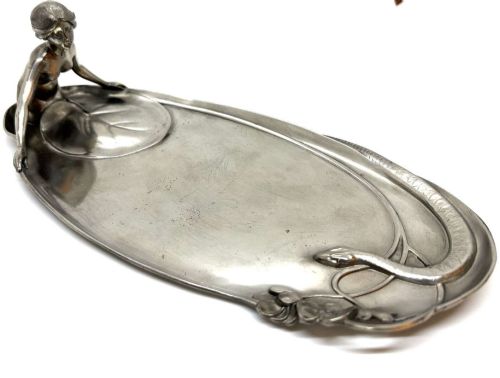
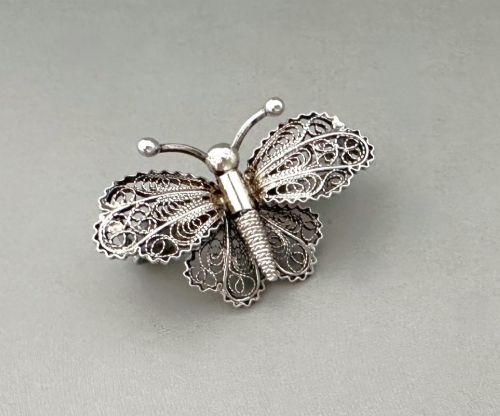
Metalsmiths utilised sterling silver, pewter, and gold ranging from nine to eighteen carats, shaping them through casting, piercing and delicate filigree work. Pewter and Britannia metal appear frequently in continental pieces, while British workshops relied heavily on cast silver and gold mountings.
Vivid colour came from enamel techniques such as guilloché and translucent plique-à-jour, which allows light to pass through the jewel-like cells much like stained glass. These vitreous layers were paired with pearls, peridots, amethysts, opals and diamonds, set securely into the flowing metallic frameworks.
Listings combine silver, gold, pewter and Britannia metal with natural pearls, opals, amethysts, diamonds and vibrant enamel.
Evaluating the Workmanship
Quality rests upon the crispness of the chasing and the precision with which the enamel fills its designated cells without pitting or discoloration. Superior pieces display intricate hand-finishing on the reverse as well as the front, with stones securely bezel-set rather than simply glued into place.
The distinction between standard commercial output and workshop pieces lies in the artistry of the design and the translucency of the plique-à-jour enamel. Maker attribution also elevates certain items, particularly when bearing the distinct hallmarks of renowned contemporary silver and jewellery houses.
Charles Horner·Georg Jensen·William Hutton·Murrle Bennet and Co·Mappin and Webb
The Art Nouveau Pin Glossary
- Plique-à-jour
- An enamelling technique similar to cloisonné but without a backing metal, creating a translucent, stained-glass effect that permits light to illuminate the coloured glass from behind.
- Guilloché
- A decorative mechanical engraving technique covered with translucent enamel layers, producing repetitive wave or sunburst patterns beneath the coloured glass surface.
- Jabot pin
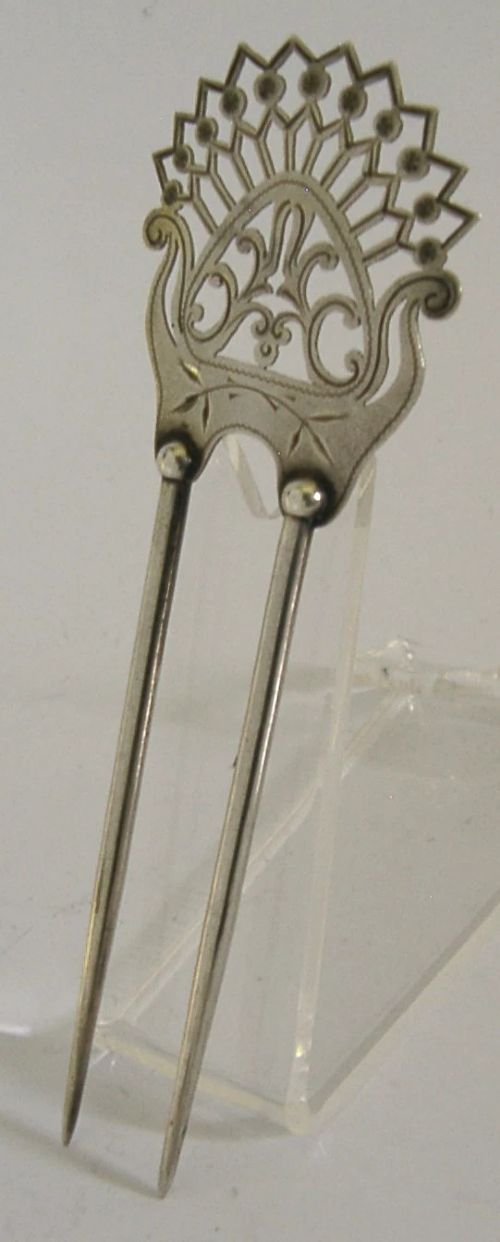
- A long decorative pin historically used to secure a jabot or lace ruffle on a garment, featuring an ornamental head and a protective catch.
- Jugendstil
- The German manifestation of the art nouveau movement, characterised by dynamic, undulating lines and strong botanical influences originating in Munich around eighteen ninety-six.
- Whiplash curve
- The characteristic asymmetrical, undulating line resembling the snap of a whip, which forms the foundational structural motif of art nouveau design.
Art Nouveau Pin: Frequently Asked Questions
How do I wear a vintage pin safely?
Secure the pin by fastening the safety catch firmly behind heavy fabrics, ensuring the stem passes cleanly through the weave rather than forcing it between tightly bound threads.
Store delicate enamel and pearl pieces away from harder jewellery in a lined box to prevent scratching the vitreous surfaces during movement.
What is the difference between a brooch and a stick pin?
Brooches are broader decorative ornaments featuring a hinged pin and catch mechanism on the reverse, designed to be pinned flat against the fabric of a lapel or bodice.
Stick pins feature a long straight shaft topped with a decorative finial, originally intended to secure neckties, scarves or lapel buttonholes by sliding directly through the material.
How do I clean enamel jewellery?
Wipe the metal and enamel surfaces gently with a soft, damp cloth, avoiding harsh chemical dips or ultrasonic cleaners that can dislodge fragile stones or ruin aged patinas.
Dry the piece thoroughly with a lint-free cloth immediately after cleaning to protect exposed silver or gold mountings from moisture retention.
Were these pieces made in Britain or abroad?
British production was prolific, with notable silversmiths operating out of Chester, Birmingham and London during the height of the Edwardian period.
Continental makers from Germany, France and Scandinavia also contributed heavily to the aesthetic, utilising distinct manufacturing techniques like pewter casting and plique-à-jour enamelling.