


Art Nouveau Hearth Surround
These art nouveau hearth surround pieces bring organic line and warmth to a room, catching the eye with polished copper and cast iron.
Art Nouveau Hearth Surround
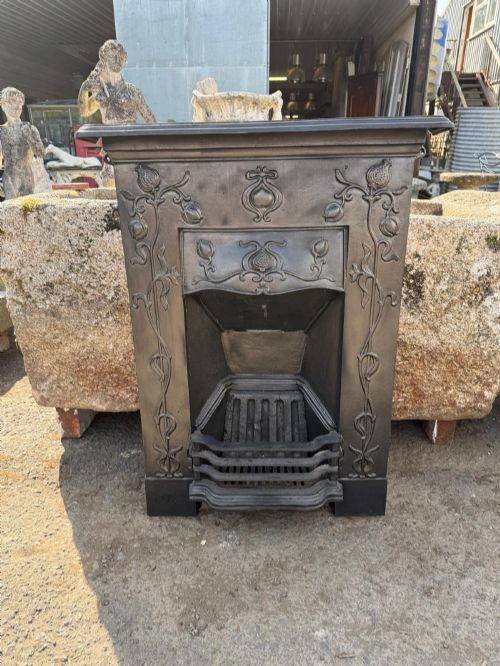
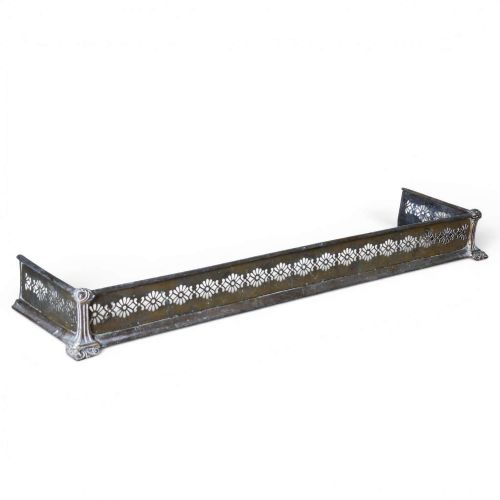
When you search for an art nouveau hearth surround, you encounter metal fireplace fenders, curbs, and combination fireplaces designed to frame a domestic hearth. These metal pieces define the fireplace perimeter and often incorporate low-profile seating edges or decorative corner motifs.
The versions most commonly met on this page are brass and copper fire fenders dating from the late nineteenth century into the Edwardian period. They span Victorian and Edwardian periods, maintaining the characteristic flowing lines associated with the style.
Makers utilised cast iron for structural grates and surrounds, whilst brass and copper form the decorative fenders and kerbs. These items originate from English workshops operating around eighteen-ninety and the surrounding decades.
Materials and construction
Makers constructed these hearth furnishings using heavy cast iron for structural fireplace units, paired with tubular brass and sheet copper for the accompanying fenders and curbs. Steel provides internal strength and stability in composite fender designs.
Surface patination develops through age and polishing, with brass and copper components showing varied tones from bright metallic lustre to deep oxidation. Metalwork relies on traditional joining and forming techniques appropriate to late nineteenth-century metalworking.
Materials documented across the page include brass, copper, cast iron, and steel.
Assessing quality
Quality rests in the weight and thickness of the metal, distinguishing solid cast iron and heavy gauge brass from lighter sheet construction. Superior examples show crisp definition in decorative metal motifs and robust corner joints.
The integrity of the original surface finish, whether patinated copper or polished brass, determines visual success. Fenders retaining their structural rigidity and original components stand apart from those with compromised frames.
The Art Nouveau Hearth Surround Glossary
- Fender
- A low metal guard placed on the floor in front of a fireplace to keep embers from rolling onto the carpet. They often double as a low seat or a decorative boundary.
- Kerb
- An alternative term for a fireplace fender, defining the physical stone or metal border enclosing the hearth area. It creates a formal separation between fire and room.
- Combination fireplace
- A complete single-unit fireplace where the mantel, insert, and grate are manufactured as one piece rather than assembled from separate components. They appeared frequently in Victorian interiors.
- Patination
- The natural surface change, softening, and oxidation that develops on metal over decades of exposure to air and cleaning. Collectors prize surfaces that show genuine age.
- Cast iron
- An iron-carbon alloy poured into moulds to create rigid, intricate structural and decorative objects. It forms the heavy core of many period hearth surrounds.
Art Nouveau Hearth Surround: Frequently Asked Questions
What is an art nouveau hearth surround?
It is a metal furnishing, typically a brass or copper fender, kerb, or cast iron fireplace, designed to frame the hearth in late nineteenth-century styles.
These pieces use organic curves and botanical motifs characteristic of the period to anchor the fireplace within the room.
How do I date an art nouveau fender?
Dating relies on stylistic markers combined with the specific metal combinations and construction methods recorded in late Victorian and Edwardian examples.
Items associated with eighteen-ninety frequently combine polished copper with tubular brass, whereas later Edwardian pieces show slight variations in proportion and finish.
What metals were used for these surrounds?
The listings show a primary reliance on brass, copper, and cast iron, sometimes supported by steel for structural strength.
Makers selected these metals both for their durability near a fire and for their ability to take a high polish or hold a rich patina.
How do I clean a brass hearth surround?
Cleaning requires careful maintenance to preserve the aged surface rather than stripping away the historic character that collectors value.
Many prefer gentle dusting and occasional light polishing, leaving the darker patinated recesses untouched to show the detail of the metalwork.