


Art Nouveau Fireplace Guard
An art nouveau fireplace guard is a screen or kerb that protects a room from stray sparks while bringing organic design into the hearth.
Art Nouveau Fireplace Guard
When you search for an art nouveau fireplace guard, you find pieces that span the Victorian, Edwardian, and turn-of-the-century periods, with dates stretching from 1880 into the 1900s. These items function primarily as fire screens, fire guards, reflectors, and fenders to manage hearths.
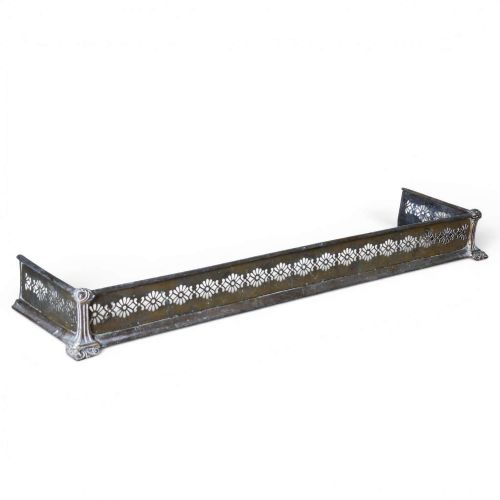
The objects appearing on this page originate from English and French makers who adopted the organic curvature of the Art Nouveau style alongside the simpler forms of the Arts and Crafts movement. Forms range from low brass kerbs to tall framed screens fitted with mirrors, glass, or textiles.
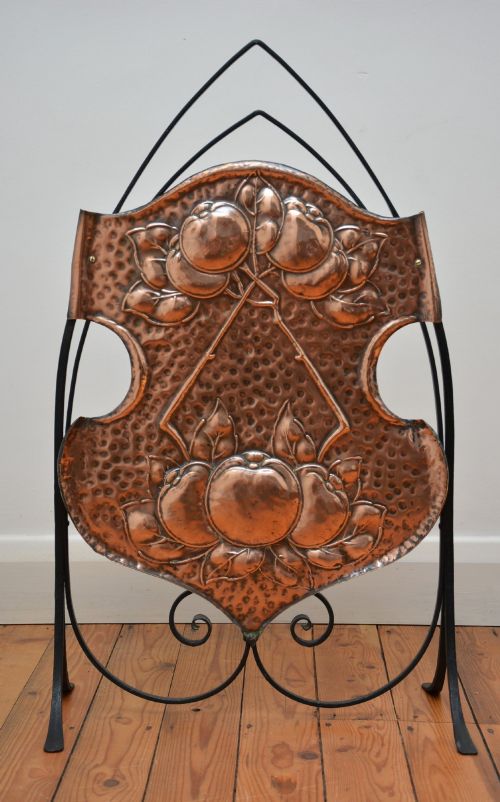
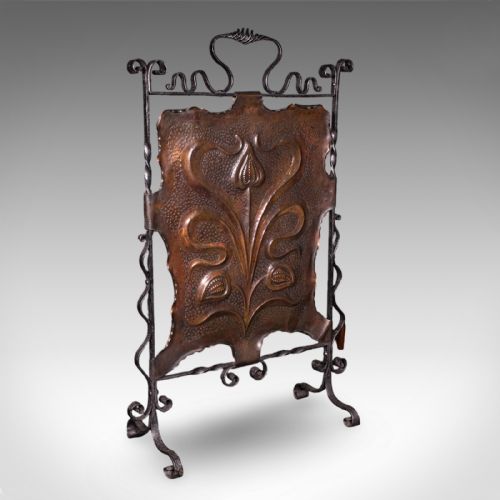
Most examples you meet here are screens and fenders, constructed as standalone panels or kerb surrounds that define the hearth space. They combine functional iron frames with decorative metalwork in copper and brass.
How they were made
Makers utilised metals such as brass, copper, wrought iron, and steel to build the structural frames and decorative panels of these guards. Iron and steel provide the sturdy armature, while brass and copper form the decorative surfaces.
Many screens incorporate additional materials including cut glass, mirrors, tapestries, and embroidered panels set into the metal frameworks. These mixed-media pieces rely on secure framing techniques to hold delicate glass and fabric within heavy metal borders.
Listings feature works from the Victorian and Edwardian eras, predominantly utilising brass, copper, and wrought iron in Art Nouveau and Arts and Crafts styles.
What varies in quality
The distinction between standard production items and finer examples lies in the depth of hand-hammered detail and the weight of the metal used. Heavier brass and copper castings maintain their structural integrity better over decades of hearth heat.
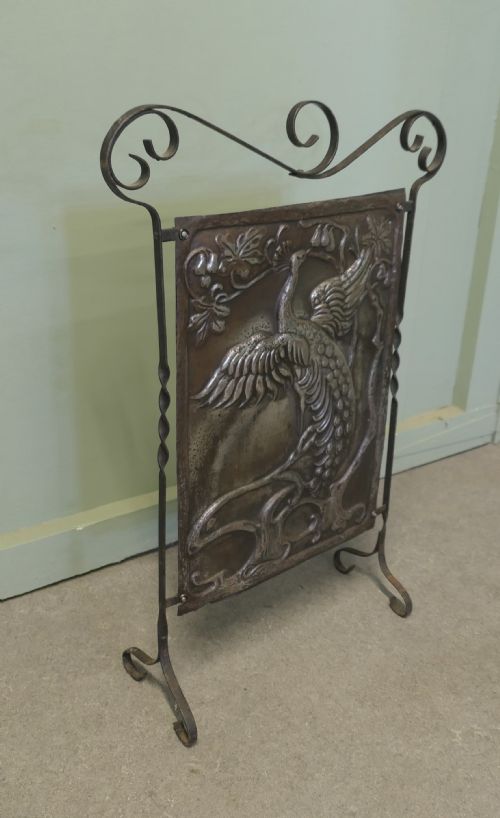
Subtleties in surface finishing, such as patination and the precise execution of organic motifs like the peacock or parrot design, separate simpler pieces from more ambitious artistic workshops.
The Art Nouveau Fireplace Guard Glossary
- Fire Screen
- A movable panel placed before a fireplace to intercept radiant heat or block stray sparks when the fire dies down. These often feature decorative glass, mirror, or metal panels.
- Fender
- A low metal frame placed on the floor around the hearth to keep burning coals and ash contained within the fireplace area. They are frequently made of polished brass or iron.
- Art Nouveau
- A design style characterised by flowing, asymmetrical lines inspired by natural forms such as plants and flowers. It dominated decorative arts around the turn of the twentieth century.
- Arts and Crafts
- A movement advocating traditional craftsmanship and simple forms using local materials, often overlapping with early twentieth-century metalwork. It emphasises honest construction.
- Patina
- The surface sheen and colour acquired by metal through age, use, and oxidation over many years. A desirable patina shows genuine history without excessive wear.
Art Nouveau Fireplace Guard: Frequently Asked Questions
How do I use an art nouveau fireplace guard?
Place a screen in front of the hearth opening when the fire is unlit or dying down to catch stray embers. Fenders sit directly on the hearth floor to frame the fireplace opening.
Ensure the guard matches the width of your hearth and provides stable positioning on the floor surface.
What materials are typical for these pieces?
Brass, copper, iron, and steel form the main structure of these guards, often combined with glass mirrors or textile inserts. The metal is frequently polished or left with an aged patinated finish.
Some incorporate specialised artistic motifs like peacock designs or tapestries within the metal frames.
How do I clean brass and copper guards?
Dust the metal surfaces regularly with a soft dry cloth to prevent the accumulation of soot and grime. Avoid harsh chemical abrasive cleaners that strip away historical patina.
If polishing is necessary, use a gentle metal cleaner suited to antique brass or copper.
How can I tell the period of a screen?
Examine the construction methods, screw types, and stylistic indicators such as floral motifs typical of the 1890s and 1900s. Victorian pieces often display heavier cast brass elements.
Dates generally range from the late nineteenth century through the Edwardian era.