
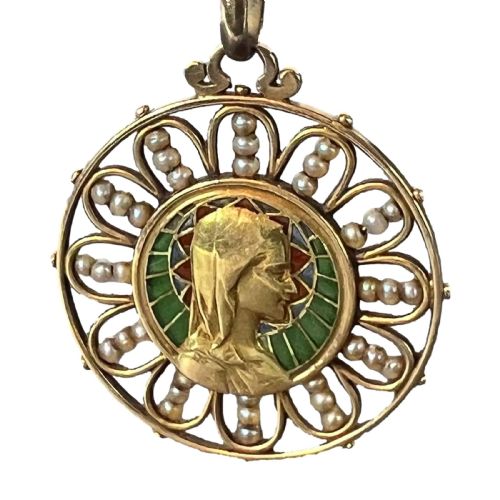


Art Nouveau Gold Charm
An art nouveau gold charm brings fluid botanical lines and symbolic miniature sculpture to a bracelet or chain.
Art Nouveau Gold Charm
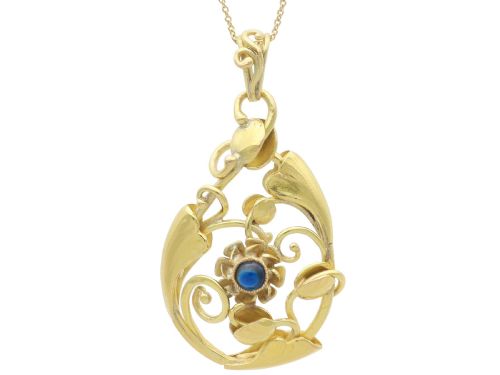
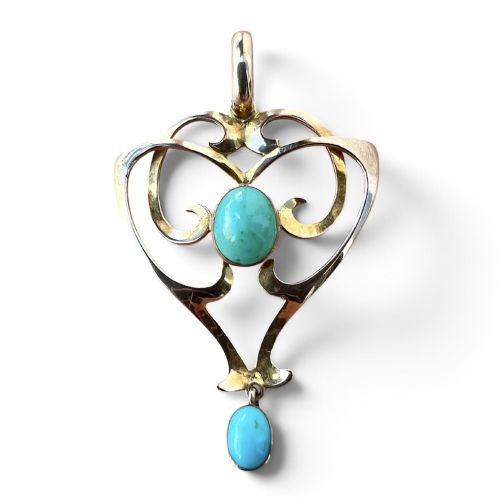
When you search for an art nouveau gold charm, you encounter miniature gold pieces shaped as pendants, medals and charms. These jewels emerge from periods spanning the late nineteenth century through the mid twentieth century, with a strong representation of French output.
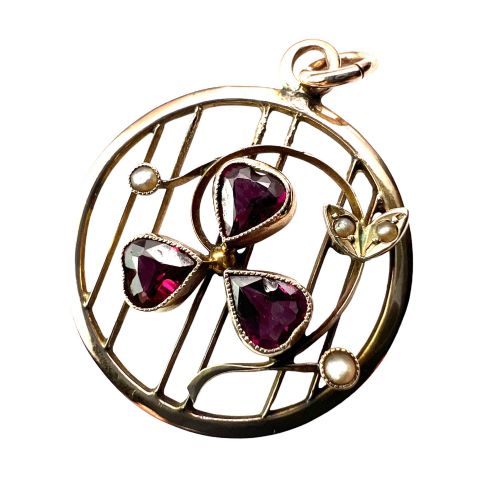
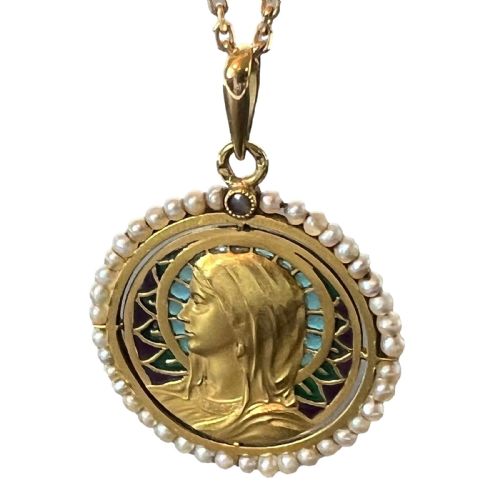
The selection ranges from British 9ct and 15ct gold gemstone pieces to French 18K yellow gold medallions. Buyers find both delicate floral necklaces and substantial pierced charms designed for daily wear.
How they were made
Craftsmen shaped these jewels primarily in 9ct, 15ct, and 18K yellow gold, often combining different gold colours within a single piece. The metalwork frequently utilises pierced techniques to create lightweight, intricate frames around central motifs.
Enamelling plays a significant role, particularly the translucent plique-a-jour technique which allows light to pass through the coloured glass enamel much like stained glass. Workshops set seed pearls, turquoise, garnets, amethysts, moonstones, rubies, and diamonds directly into the gold structures.
Materials recorded on this page include yellow gold, rose gold, seed pearls, turquoise, garnets, amethysts, moonstones, rubies, diamonds, and plique-a-jour enamel.
What varies in quality
The distinction between standard production and exceptional work lies in the crispness of the miniature sculpture and the complexity of the enamel work. Medals bearing the signatures of known French medallists display superior depth and facial detail in figures such as the Virgin Mary.
Plique-a-jour enamel requires immense skill to execute without cracking, so pieces maintaining intact, translucent cell work represent higher execution standards. The weight of the gold and the subtlety of organic botanical shaping further distinguish finer examples.
Deakin & Francis·Emile Monier·Emile Dropsy·Ovide Yencesse·Arnault
The Art Nouveau Gold Charm Glossary
- Plique-a-jour
- An enamelling technique where enamel is applied in cells without a backing, creating a translucent, stained-glass effect. This delicate method lets light shine straight through the coloured design.
- Medal
- A flat, coin-like charm or pendant stamped or cast with a figurative design, religious scene, or inscription. These often honour saints or commemorate significant events.
- Seed pearl
- A very small, natural or saltwater pearl used widely in late Victorian and Edwardian jewellery. Jewellers clustered them to form floral petals or borders.
- Pierced work
- Metal cutting technique where portions of the gold background are removed to leave an openwork design. This creates a lighter, lace-like appearance on charms and pendants.
Art Nouveau Gold Charm: Frequently Asked Questions
How do I wear these charms?
You can suspend these pieces from a suitable neck chain as a pendant or attach them securely to a gold bracelet. Ensure any jump ring is properly soldered or closed if worn on the wrist.
Because many feature delicate enamel or seed pearls, they benefit from being worn away from heavy friction or impact with other hard jewellery.
Are these charms French or British?
The pieces originate from both traditions, with a high concentration of French 18K gold religious medals and figural charms created by known medallists. British examples tend to feature 9ct or 15ct gold set with gemstones like turquoise, garnet, and pearl in floral arrangements.
Examining the metal hallmarks and the stylistic elements helps determine the specific country of origin.
What materials are used in these charms?
These jewels utilise yellow gold in various purities, ranging from 9ct and 15ct to 18K and 18ct, occasionally incorporating rose gold highlights. Artisans adorned the metal framework with seed pearls, diamonds, rubies, amethysts, moonstones, and colourful plique-a-jour enamel.
Precious stones are flush-set or claw-set into the organic gold contours to enhance the natural subject matter.